
Latest Sectors News

The President took to social media to reiterate his case that White House ballroom is a matter of national security in the wake of the press dinner shooting. View More
US President Donald Trump takes questions during a press briefing in the Brady Briefing Room at the White House in Washington, DC, shortly after a shooting incident at the White House Correspondents' Dinner on April 25, 2026.Mandel Ngan | Afp | Getty Images President Donald Trump on Sunday renewed his calls for construction to continue on the planned White House ballroom. Trump and members of his Cabinet were evacuated from the White House Correspondents' Dinner at the Washington Hilton hotel in Washington, D.C., on Saturday night after multiple gunshots were heard by attendees. The shooter was "taken down" by U.S. Secret Service agents, Trump said after the event. "What happened last night is exactly the reason that our great Military, Secret Service, Law Enforcement and, for different reasons, every President for the last 150 years, have been DEMANDING that a large, safe, and secure Ballroom be built ON THE GROUNDS OF THE WHITE HOUSE," Trump wrote on Truth Social. "This event would never have happened with the Militarily Top Secret Ballroom currently under construction at the White House. It cannot be built fast enough!"Trump was invited as an honoree to the annual White House Correspondents' Dinner, which is a privately held function. If a ballroom were constructed on the grounds of the White House, Trump or any future president would likely face political blowback for using taxpayer dollars to host and provide security for private events, such as the D.C. press dinner, there.The National Trust for Historic Preservation in the United States is suing the Trump administration to block construction of the planned $400 million, 90,000-square-foot ballroom on the site of the White House's former East Wing, which was demolished to make room for the project. On Sunday, the Department of Justice sent a letter to the lawyer representing the organization, demanding it drop its legal challenge and specifically citing Saturday night's shooting at the press dinner."Your client should voluntarily dismiss this frivolous lawsuit today in light of last night's assassination attempt on President Trump," says the letter signed by General Brett Shumate for the DOJ's civil division. "If your client doesn't dismiss the lawsuit by 9:00 AM on Monday, the government will move to dissolve the injunction and dismiss the case in light of last night's extraordinary events."Sen. Tim Sheehy, R-Mont., said Sunday in a post on X that he plans to introduce and seek unanimous consent this week for legislation granting approval for the ballroom's construction. "A President of any party should be able to host events in a secure area without attendees worrying about their safety," Sheehy wrote. For now, courts have allowed construction on the ballroom to continue. On April 16, a federal judge issued a revised order that largely blocked the administration from continuing above-ground construction. Underground construction, including work related to national security facilities, was allowed to continue, as well as above-ground work that is "strictly necessary to cover, secure, and protect such national security facilities," according to the order. The next day, a three-judge panel of the U.S. Court of Appeals for the District of Columbia Circuit put a temporary hold on the order and scheduled a hearing for June 5 to review the case.The National Trust for Historic Preservation argues that Trump overstepped his authority by proceeding with the project without congressional approval. In his Sunday post, the president said that the suit must be dropped and reiterated his stance that construction of the ballroom is a matter of national security. "Nothing should be allowed to interfere with with [sic] its construction, which is on budget and substantially ahead of schedule!!!" Trump wrote. Choose CNBC as your preferred source on Google and never miss a moment from the most trusted name in business news.

The visit had briefly come under scrutiny following the shooting near the White House Correspondents’ Association dinner, which forced Secret Service agents to rush Trump from the venue. View More

NRIs reportedly face higher tax implications when selling property in India due to revised capital gains tax rules and increased TDS rates. Proper planning, understanding exemptions, and compliance with regulations are essential to minimise tax liabilities and ensure smooth transactions. View More

Sen. Thom Tillis, R-N.C., talks with reporters outside the Senate Banking, Housing and Urban Affairs Committee confirmation hearing for Kevin Warsh, nominee to chairman of the Federal Reserve, in Dirksen building on Tuesday, April 21, 2026. Tom Williams | CQ-Roll Call, Inc. | Getty Images Sen. Thom Tillis said Sunday he is willing to end his blockade of Federal Reserve chair nominee Kevin Warsh after the U.S. Department of Justice dropped its criminal investigation of Fed Chair Jerome Powell. Warsh now has a clear path to replacing Powell as the next leader of the Fed when Powell's term expires in mid-May. The Senate Banking Committee is set to vote on his confirmation on Wednesday, and the full Senate could take it up shortly after. With Tillis's support, the confirmation of President Donald Trump's pick to lead the Fed is all but assured."I am prepared to move on with the confirmation of Mr. Warsh, I think he's going to be a great Fed chair," Tillis, R-N.C., said on NBC's "Meet the Press." "We were very clear that we have assurances from the DOJ that I needed to make sure they were not using the DOJ as a weapon to threaten the independence of the Fed. So this will allow Mr. Warsh to move on with his confirmation on time." Tillis had vowed to withhold his vote for Warsh, whom he supports, before the Senate Banking Committee until the DOJ dropped its investigation of Powell. The Justice Department was investigating Powell over alleged cost overruns related to renovations at the Federal Reserve building. The Fed declined to comment Sunday. Warsh didn't immediately respond to a request for comment. Tillis' vote is critical to Warsh's confirmation, as the Banking Committee is made up of 13 Republicans and 11 Democrats. One Republican defection would have deadlocked the panel and blocked Warsh from advancing. U.S. Attorney Jeanine Pirro, the top federal prosecutor in the District of Columbia, announced Friday that her office was turning the investigation over to the Fed inspector general's office.Tillis said he had spoken to DOJ officials after Pirro's announcement and had received assurances that "the only way an investigation would be open would be a criminal referral" from the IG. "They have made it very clear that the current investigation is completely and fully ended," he said. Acting Attorney General Todd Blanche also appeared on "Meet the Press." He was asked if the DOJ would consider reopening the investigation after Warsh was confirmed. Blanche said the investigation was in the hands of the inspector general. "If he uncovers evidence of criminal conduct, there is no doubt that we will investigate," he said.Pirro's office still plans to continue an appeal of a recent federal judge's decision quashing subpoenas issued to the Fed, Tillis said. Pirro has said the judge's decision interferes with her ability to lead grand-jury investigations in general. Tillis said he had received assurances on that issue as well. "Any appeal of Judge Boasberg's ruling will be with respect to legal principles and not for the purpose of reissuing subpoenas," Tillis said in a social-media post Sunday. Former federal prosecutors have said Pirro's chances of success in an appeal are slim. She has until May 4 to file it.Pirro's office didn't immediately respond to a request for comment.Warsh is likely to move quickly to implement significant change at the Fed. He said in his confirmation hearing on Tuesday that he wants "regime change." He noted that he would change the way the central bank measures inflation and how it communicates, among other issues. Warsh is expected to push quickly for rate cuts, though he would need to convince his fellow members of the Fed's rate-setting Federal Open Market Committee to join him. With energy prices rising sharply due to the war in Iran, many Fed members are likely to be skeptical.Tillis' decision also has implications for Powell. He can remain a voting member of the Fed's board until January 2028, even after he steps down as chair. Powell said recently he plans to do so while the threat of prosecution hangs over him. Powell will likely face questions about his plans at the Fed's next press conference, scheduled for Wednesday. Choose CNBC as your preferred source on Google and never miss a moment from the most trusted name in business news.

Leaders from the U.K., France, the EU and Pakistan react to a shooting at a high-profile dinner in Washington, D.C., with Trump and his cabinet members. View More
President Donald Trump on stage as gun shots heard at the White House Correspondents Dinner in Washington, D.C. on April 25th, 2026. World leaders reacted on Sunday with shock and support for U.S. President Donald Trump after a man armed with multiple weapons charged a security checkpoint at the White House Correspondents' Dinner in Washington, D.C., on Saturday before being apprehended by U.S. Secret Service agents.Trump, first lady Melania, and members of Trump's Cabinet were evacuated from the event. One officer was shot, but he was "saved by the fact that he was wearing obviously a very good bulletproof vest," Trump told reporters during a press conference in the White House briefing room following the incident.The suspected shooter was identified later Saturday as Cole Allen of Torrance, California. He is being held by authorities as they investigate the shooting.U.K. Prime Minister Keir Starmer said he was "shocked" by the scenes at the dinner."Any attack on democratic institutions or on the freedom of the press must be condemned in the strongest possible terms," said in a post on X.Starmer has faced repeated criticism by Trump for not being more supportive of the U.S. and Israeli-led war against Iran.King Charles III of the U.K. is "being kept fully informed of developments" in the U.S., according to media reports citing a statement from Buckingham Palace. The monarch is due to visit Trump in the U.S. on Monday."A number of discussions will be taking place throughout the day to discuss with U.S. colleagues and our respective teams to what degree the events of Saturday evening may or may not impact on the operational planning for the visit," the BBC quoted the palace as saying.Israeli Prime Minister Benjamin Netanyahu, in remarks at the start of a government meeting, said: "There is no place for violence, not against political leaders and not against anyone. This includes not only the United States; it includes, first and foremost, the State of Israel, from within."Lebanese President Joseph Aoun, whose country has been under attack as Israeli forces pursue Iran-backed Hezbollah forces, added to the condemnation of the shooting. U.S. House Speaker Mike Johnson (R-LA) is evacuated as a shooter opens fire during the annual White House Correspondents' Association dinner in Washington, D.C., U.S., April 25, 2026. Jonathan Ernst | Reuters Pakistan Prime Minister Shehbaz Sharif, who is mediating talks between the U.S. and Iran, also said he was shocked by the incident."Relieved to know that President Trump, the First Lady, and other attendees are safe. My thoughts and prayers are with him, and I wish him continued safety and well-being," Sharif said in a post on X.The U.S.'s other allies in the Middle East also voiced their support for Trump.The United Arab Emirates, which has suffered repeated retaliatory strikes by Iran, expressed its "strong condemnation of such criminal acts and its unwavering rejection of all forms of violence, extremism and terrorism aimed at undermining security and stability."Saudi Arabia's foreign ministry also denounced the shooting. 'Violence has no place in politics, ever' Leaders from the European Union reacted with unanimity to the shooting."Violence has no place in politics, ever," European Commission President Ursula von der Leyen said on X.EU foreign policy chief Kaja Kallas echoed those sentiments."An event meant to honour a free press should never become a scene of fear. I wish the injured officer a swift recovery," Kallas added in a social media post.Italian Prime Minister Giorgia Meloni, whose relationship with Trump has soured in recent months over the Iran war and Trump's attacks on Pope Leo, joined the chorus of support for Trump following the shooting."I wish to express my full solidarity and most sincere closeness to President Trump, to First Lady Melania, to Vice President Vance, and to all those present for what happened at last night's White House Correspondents' Dinner," Meloni said."No political hatred can find space in our democracies. We will not allow fanaticism to poison the places of free debate and information. The defense of the culture of confrontation must remain the insurmountable bulwark against every intolerant drift, to safeguard the values that found our Nations," Meloni added.South Korean President Lee Jae Myung, one of the U.S.'s staunchest allies in Asia, said: "Political violence is a grave threat that undermines the very foundation of democracy and can never be justified under any circumstances." Choose CNBC as your preferred source on Google and never miss a moment from the most trusted name in business news.

Several state legislatures have bills pending that would prohibit insurers from using consumers' credit history to determine how much their premiums are. View More
O2o Creative | E+ | Getty Images Some state lawmakers want to ban a common practice among insurance companies that can drive up costs for consumers.Bills are pending in several state legislatures â including in Iowa , New York, Oklahoma and Pennsylvania â that would generally prohibit insurers from using consumers' credit history to set their premiums for either homeowners or auto insurance policies, or both. The so-called credit-based insurance scores used by insurers measure whether someone is likely to file a claim â the lower the score, the higher the likelihood. And, in turn, the higher the premiums they might be charged."This is the case even if you have a perfect driving record or your risk is relatively low," said Michael DeLong, research and advocacy associate at the Consumer Federation of America, a nonprofit that advocates for consumer rights and supports legislative efforts to change the practice. Read more CNBC personal finance coverageAverage tax refund is 11.3% higher, IRS filing data through Tax Day showsFed is likely to hold rates steady â here's how that impacts your walletRetirees are thinking of annuities the wrong way â and it may trip them upWealth, millionaire tax push spreads to more states. What experts sayTrump officials give mixed guidance on new student loan cap: financial aid groupTrump's Fed pick Kevin Warsh signals approach to interest ratesGen Z looks for scholarships on TikTok. There's a better way, experts sayWhat a looming jet fuel shortage could mean for summer travelIncoming college freshmen may owe $43,000 in student loans by graduationRetirement savings for caregivers a focus of new bipartisan bills in CongressThis year's college graduates face a changed student loan landscapeThere's an 'art' to writing AI prompts for personal finance, MIT professor saysAs AI restructures workforce, some young adults turn to grad schoolAverage tax refund is 11.2% higher, latest IRS filing data showsCNBC's Financial Advisor 100: Best financial advisors, top firms ranked Credit-based insurance scores are "extremely unfair," DeLong said. "It results in people paying much higher premiums and makes insurance expensive or unaffordable for a lot of people." Only a few states ban insurers from using credit history Other state legislatures have considered similar proposals in past years, but efforts by supporters to stop the practice have largely been unsuccessful. Currently, only a few states ban the use of credit history in certain coverage decisions: California, Hawaii and Massachusetts prohibit it for auto insurance. In California, Massachusetts and Maryland, the use of it for homeowners insurance is banned.There are limits elsewhere, however. In most states, insurers are banned from using credit-based insurance scores as the only reason to increase rates or to deny, cancel or refuse to renew a policy, according to the National Association of Insurance Commissioners, a group comprised of state insurance regulators. Additionally, many states require insurers to notify a consumer when credit information was used in an adverse decision. Insurers' use of credit-based insurance scores is one tool to "fairly and accurately assess an individual's risk to help keep premiums low," said Bob Passmore, department vice president of personal lines for the American Property Casualty Insurance Association, which represents home, auto and business insurers."Eliminating the use of credit-based insurance scores [would] result in the loss of savings for many consumers and result in rates that are less fair and accurate for all," Passmore said.A 2007 study from the Federal Trade Commission found that when credit-based insurance scores were applied to a database the agency created using policy and claim information, 59% of consumers in its database would be predicted to see their premiums decrease, and 41% would see an increase. The difference in premiums can be stark While each insurer decides what a "good" credit-based insurance score is, your regular credit score can often give you an idea of what your insurance score is, according to NerdWallet. Generally, a standard credit score of 300 to 579 is considered poor credit and 580 to 669 is fair credit, according to Experian. Good credit involves a score of 670 to 739; very good credit, 740 to 799; and 800 to 850 is exceptional credit.Various research shows that a low credit-based insurance score can result in much higher premiums. For example, homeowners with a low score pay 24% more than high-score homeowners for identical coverage, according to recent research from the National Bureau of Economic Research.Rates for drivers with poor credit are 69% higher, on average, than for people with good credit, according to a NerdWallet report from March. In some cases, poor credit can result in a higher premium than a recent DUI would, the study shows."You can have poor credit for a variety of reasons," DeLong said. "You can be irresponsible and not pay your bills on time, or you can have poor credit because, say, you lost your job through a big layoff, and that was not your fault ⦠or maybe you went through a divorce or a financial hardship. It's not fair to penalize people." Choose CNBC as your preferred source on Google and never miss a moment from the most trusted name in business news.

The new leadership team headed by Mehul H Doshi, President, CREDAI Chennai, includes Suman Voora – Secretary; SS Prasad Babu – Treasurer; TSS Krishnan – Vice President and Viswajith Kumar – Vice President View More
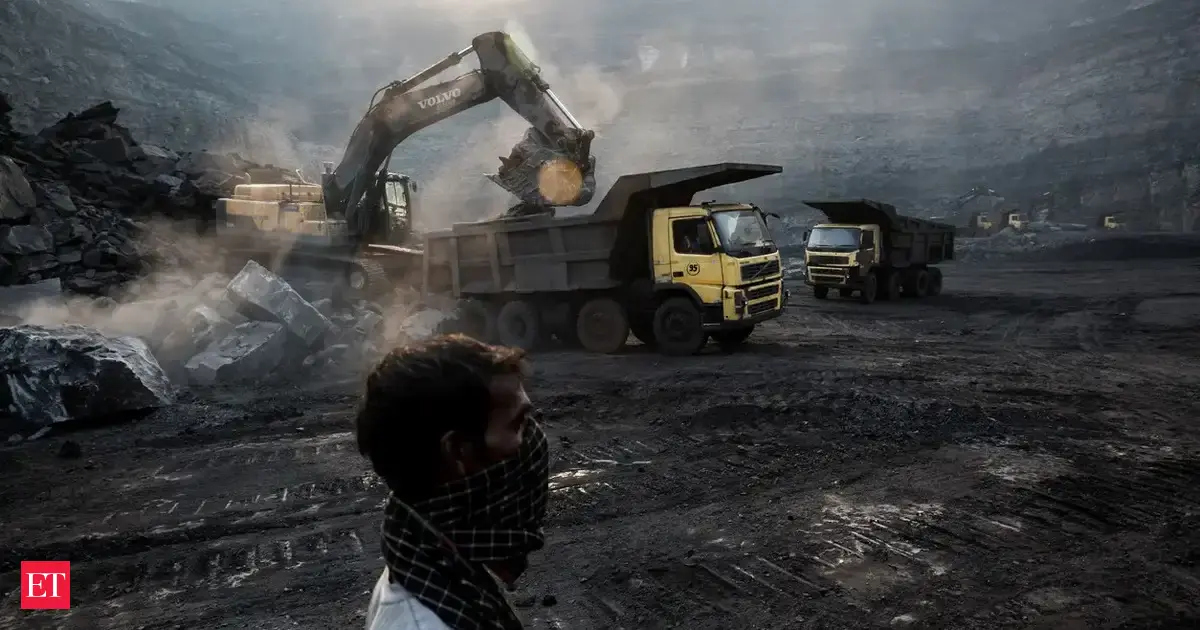
Coal India Ltd is developing a 10-year roadmap to eliminate 243 MT of coal imports by boosting domestic production, improving coal quality, and achieving logistics cost parity. The plan includes a forensic audit of imports, sector-specific policies, and a National Washery & Logistics Grid to address supply chain bottlenecks and enhance energy security. View More
New Delhi: State-owned Coal India Ltd is planning a comprehensive 10-year roadmap to slash the current 243 MT coal import volume through ramped-up domestic production, coal quality upgrades , and logistics cost parity . The proposed roadmap targeting coal import cuts includes a detailed forensic audit of imports, backed by sector-specific policies and phased shift strategies to boost local supply, a source said. It will also include the National Washery & Logistics Grid to streamline coal washing and transport, addressing key bottlenecks in the supply chain. Coal India Ltd ( CIL ), which accounts for over 80 per cent of domestic coal output, also plans to engage a consultant for preparation of the roadmap and suggesting measures relating to non-tariff barriers . The coal behemoth plans "to develop and execute a comprehensive Ten-Year Roadmap (2026-2036) for the total substitution of all 'substitutable' coal imports, targeting a reduction in the current 243 MT import volume through domestic augmentation, quality enhancement (beneficiation), and logistical price-parity," the source added. Live Events The development gains significance as the country aims to cut coal imports to support energy security , lower forex outflows, and align with green transition goals under the national coal gasification mission . Industry experts view this as a timely move to fortify CIL's role in India's energy mix, potentially saving billions in import costs and boosting domestic mining ecosystem. Coal India, which produced 768.1 million tonnes (MT) of coal in FY26, aims to increase coal production to 1 billion tonnes (BT) by 2028-29 to reduce dependence on coal imports and meet domestic demand. The company said its all key projects and enablers -- including environmental and forest clearances, land acquisition, and evacuation infrastructure -- have been identified for achieving the same. .Pbanner{display:flex;justify-content:space-between;align-items:center;background-color:#ec1c40;margin-top:20px;padding:5px 10px;border-radius:4px;color:#fff;line-height:10px;} .Pbannertext{display:flex;align-items:center;font-size:16px;font-weight:600;font-family:'Montserrat';} .Pbannertext img{height:20px;margin:0 6px} .Pbannerbutton a{display:flex;align-items:center;background-color:#fff;color:#ec1c40;text-decoration:none;font-weight:600;padding:4px 8px;border-radius:6px;font-size:15px;font-family:'Montserrat';} .Pbannerbutton img{height:20px;margin-right:6px} .Pbannerbutton a:hover{background-color:#f7f7f7} Add as a Reliable and Trusted News Source Add Now! (You can now subscribe to our Economic Times WhatsApp channel) (You can now subscribe to our Economic Times WhatsApp channel)

The Iran war wasn't the only focus. Corporate earnings and a split between hardware and software stocks caught our attention as well. View More
It was another week under the thumb of the Iran war. The S & P 500 and Nasdaq each finished Friday at record closing highs after whipsawing on Middle East developments throughout the week. Oil prices also swung sharply as Iran and the U.S. imposed blockades in the Strait of Hormuz, a critical oil shipping route. Nevertheless, the record-breaking gains ensured another positive week for the S & P 500 and the Nasdaq, which climbed 0.6% and 1.5%, respectively. The Iran war wasn't the only focus. Corporate earnings and a split between hardware and software stocks also caught our attention. Here's a breakdown of the three themes that swayed Wall Street over the past five sessions. War headlines With little progress in peace talks last weekend, Monday was a down day for stocks. Tuesday wasn't much better after President Donald Trump told CNBC the U.S. was "ready" to bomb Iran if a deal wasn't made by Wednesday's ceasefire deadline. The tide turned Wednesday when the S & P 500 and Nasdaq closed at records after Trump announced a two-week ceasefire extension. Just when the market had finally caught its bearings, another reversal came Thursday. Stocks came under pressure, and oil spiked, when Trump said he had ordered the U.S. Navy to "shoot and kill any boat" laying mines in the Strait of Hormuz. Still, stocks managed to end the week strong. Investors bet on peace talks restarting soon. The S & P 500 and Nasdaq on Friday rose 0.8% and 1.63%, respectively, to their new highs. We'll have to see if peace talks happen this weekend. U.S. special envoy Steve Witkoff and Jared Kushner are going to Pakistan to hopefully meet with their Iranian counterparts. All war developments reminded us of one thing: Don't make any big trades on the Mideast conflict alone. There's way too much uncertainty and volatility that isn't grounded in stock fundamentals. We've been saying this since the war started on Feb. 28. Dichotomy in tech The buy hardware, sell software trade is back on. Investors bought tech stocks viewed as supporting the AI infrastructure buildout and dumping those seen as threatened by its adoption. The week's biggest winners? Chip stocks. The group rallied for its 18th consecutive session Friday supported by a blowout earnings report from Intel . Great news for us as investors in Nvidia , Broadcom, and most recently, Arm. On Monday, we started a position in Arm on the belief that the stock will be a winner in the era of AI agents. Shares have jumped around 33% since then. For the week, Nvidia gained 3.2% and closed Friday at a record high, while Broadcom rose nearly 4%. On Friday, we booked profits again in Broadcom, locking in gains on the stock's recent parabolic moves higher. Broadcom finished the week at a new high. On the other side of the trade was software. This group was beaten down after earnings from IBM and ServiceNow . Investors were disappointed that IBM didn't raise guidance after beats on the top and bottom lines. Margins for ServiceNow were a concern, and so was subscription revenue growth, which was dented by the war. Software stocks cascaded lower as a result, which meant a bad Thursday for Salesforce and Microsoft . For the week, Salesforce lost 2%, while Microsoft rose 0.4%. Our cybersecurity names, Palo Alto Networks and CrowdStrike , got unfairly grouped into the sell-off, but each managed to gain around 6% on the week. Earnings IBM and ServiceNow weren't the only quarterly earnings on our radar. GE Vernova and Dover showed us the importance of the AI buildout, while aerospace was key for reports from Boeing and Honeywell . Insatiable demand for energy fueling the AI boom was a financial windfall for GE Vernova and Dover. Shares of GE Vernova jumped nearly 14% on Wednesday's monster earnings. The Club took GE Vernova's price target up to $1,300 from $1,000. Orders for its heavy-duty natural gas turbines aren't slowing down anytime soon as hyperscalers pour billions into data center construction. "This one may be one for the ages," Jim said during Wednesday's Morning Meeting. Dover stock jumped almost 6% on Thursday's results. It was an impressive quarter that reminded us why the company belongs in the portfolio. We raised our PT to $245 from $230. Order growth was amazing. Dover's able to ride the AI wave because it plays a role in the liquid cooling of data centers. GE Vernova closed Friday at a record high. Dover ended the week about 3% shy of its Feb. 20 record close. Investors came into earnings worried about Boeing and its aerospace peers on the belief that war-induced higher jet fuel prices would hurt demand and profits. That proved to be untrue for Boeing, which reported better-than-expected revenue on Wednesday. The stock jumped 5.5% up in a session as a result. It was also a step in the right direction for the turnaround under Boeing CEO Kelly Ortberg. Honeywell shares tumbled on Thursday's release that showed Middle East disruption in its aerospace unit did hurt sales. But the quarter was more encouraging than the market made it out to be. The more important developments were Honeywell agreeing to sell its Warehouse and Workflow Solutions unit and setting June 29 as the date to spin off its aerospace business into a separate company. Automation will be the focus of the second remaining company. (See here for a full list of the stocks in Jim Cramer's Charitable Trust.) As a subscriber to the CNBC Investing Club with Jim Cramer, you will receive a trade alert before Jim makes a trade. Jim waits 45 minutes after sending a trade alert before buying or selling a stock in his charitable trust's portfolio. If Jim has talked about a stock on CNBC TV, he waits 72 hours after issuing the trade alert before executing the trade. THE ABOVE INVESTING CLUB INFORMATION IS SUBJECT TO OUR TERMS AND CONDITIONS AND PRIVACY POLICY , TOGETHER WITH OUR DISCLAIMER . NO FIDUCIARY OBLIGATION OR DUTY EXISTS, OR IS CREATED, BY VIRTUE OF YOUR RECEIPT OF ANY INFORMATION PROVIDED IN CONNECTION WITH THE INVESTING CLUB. NO SPECIFIC OUTCOME OR PROFIT IS GUARANTEED.

U.S. special envoy Steve Witkoff and Jared Kushner had been expected to arrive in Islamabad on Saturday. View More
Pakistan's Army Chief and Field Marshal Syed Asim Munir (3rd R) meets with Iran's Foreign Minister Abbas Araghchi (3rd L) upon his arrival in Islamabad on April 25, 2026.- | Afp | Getty Images President Donald Trump on Saturday said he has canceled plans to send U.S. special envoy Steve Witkoff and Jared Kushner to Pakistan after Iran's chief negotiator left Islamabad after speaking only to Pakistani officials.Trump said he canceled the U.S. delegation's trip to Islamabad, Pakistan, to meet with the Iranians. "Too much time wasted on traveling, too much work! Besides which, there is tremendous infighting and confusion within their "leadership," the president wrote in a post on Truth Social. "Nobody knows who is in charge, including them. Also, we have all the cards; they have none! If they want to talk, all they have to do is call!!!Before boarding Air Force One for a return flight to Washington, Trump said Iran had improved an offer to resolve the conflict after he canceled the visit, "but not enough."Witkoff and Kushner, the president's son-in-law, had been scheduled to head to Pakistan earlier in the day to engage in "direct talks" with their Iranian counterparts, according to the White House.Iranian Foreign Minister Abbas Araghchi met with the head of Pakistan's military, Asim Munir, the Iranian embassy in Pakistan said in a post on X on Saturday. A senior Iranian official said his government's representatives had no plans to meet with U.S. negotiators. "No meeting is planned to take place between Iran and the U.S. Iran's observations would be conveyed to Pakistan," Iranian Foreign Ministry spokesperson Esmaeil Baqaei said in a post on X late Friday.Reuters, citing two Pakistani government sources, said the Iranian delegation had flown out of the country on Saturday.Araghchi, in a post on X, praised Pakistani leaders but appeared to dismiss talks with the Americans. "Very fruitful visit to Pakistan, whose good offices and brotherly efforts to bring back peace to our region we very much value," he wrote. "Shared Iran's position concerning workable framework to permanently end the war on Iran. Have yet to see if the U.S. is truly serious about diplomacy."Trump had told Reuters in a phone call on Friday that Iran would be "making an offer," adding that he did not yet know what it would be and that "we'll have to see."Araghchi, earlier Friday, said he was "embarking on a timely tour" of Islamabad, Muscat and Moscow in order to "closely coordinate with our partners on bilateral matters and consult on regional developments." He made no remarks indicating that a meeting with U.S. officials was planned.The first round of peace talks, held two weeks ago in Islamabad and led on the U.S. side by Vice President JD Vance ended with no deal. Vance was not expected to accompany Witkoff and Kushner on Saturday's trip to Pakistan. A U.S. delegation, including Vance, had been expected to travel to Pakistan earlier this week for further negotiations, but the trip was delayed after Iranian officials reportedly said they would not attend.Much of the mutual disagreement has centered on the Strait of Hormuz, the major oil-shipping route that has seen traffic slow to a trickle amid Iranian threats and, as of last week, a retaliatory U.S. naval blockade.Trump told Reuters that the U.S. will not lift its blockade of Iranian ports until a deal with Iran is struck. Oil waiver The U.S. is also maintaining other forms of economic pressure on Tehran.Treasury Secretary Scott Bessent told The Associated Press on Friday that the U.S. does not plan to renew a one-time waiver allowing the purchase of Iranian oil at sea."Not the Iranians," Bessent said. "We have the blockade, and there's no oil coming out.""And we think in the next two, three days, they're going to have to start shuttering production, which will be very bad for their wells."Bessent also said the U.S. does not plan to renew a waiver allowing the purchase of Russian oil and petroleum products that are currently at sea, according to the AP.Meanwhile, the U.S. said it has sanctioned Hengli Petrochemical (Dalian) Refinery, an independent "teapot" oil refinery in China, for buying Iranian oil products."China-based independent teapot refineries continue to play a vital role in sustaining Iran's oil economy, and Hengli is one of Iran's largest customers for crude oil and other petroleum products, having purchased billions of dollars' worth of Iranian petroleum," the Treasury Department said in a statement.The tensions have further strained an already-fragile ceasefire, which was announced on April 7 amid threats by Trump that Iran's "whole civilization will die" unless a deal is struck.Despite the continued stress in the strait, Trump on Tuesday unilaterally extended the ceasefire shortly before it was set to expire.After the war began on Feb. 28, the Trump administration repeatedly said it expected the operation to be brief, concluding within four to six weeks.Since passing that deadline, the administration has reframed its timeline, while stressing that prior U.S. conflicts have lasted far longer."Unlike the endless wars of the past that dragged on for years and for decades with little to show for it, Operation Epic Fury has delivered a decisive military result in just weeks," Defense Secretary Pete Hegseth said at a press briefing Friday morning.â CNBC's Terri Cullen, Reuters and The Associated Press contributed to this report. Choose CNBC as your preferred source on Google and never miss a moment from the most trusted name in business news.