
Latest Sectors News

Trump has rarely visited Camp David during either of his presidential terms, though he frequently spends time outside the White House at his own properties. View More
US President Donald Trump gestures as he speaks to reporters after arriving on the South Lawn of the White House in Washington, DC, on May 15, 2026. Alex Wroblewski | AFP | Getty Images President Donald Trump on Tuesday said he and his Cabinet will no longer meet at Camp David on Wednesday, and will instead convene at the White House.The trip was scrapped "based on the possible bad weather conditions," Trump said in a Truth Social post.CNBC had confirmed the planned trip to the woodsy Maryland retreat on Tuesday morning, hours after new U.S. strikes in Iran raised concerns about an anticipated peace deal.The president and his top officials were poised to discuss issues both foreign and domestic, a White House official told the New York Post, which first reported the planned trip earlier Tuesday.They include the "recent successes of the administration including economy and small business wins, Task Force to Eliminate Fraud highlights, and foreign policy updates," the official told the Post. The White House confirmed the Post's report to CNBC.While Trump frequently leaves the White House to spend time elsewhere, he usually opts to travel to his own properties, only rarely visiting Camp David in either of his presidential terms.The presidential property has historically been the site of some significant U.S. policy developments â including the 1978 Camp David Accords, which were signed by President Jimmy Carter, Egyptian President Anwar Sadat and Israeli Prime Minister Menachem Begin and laid the groundwork for an Israel-Egypt peace treaty.The U.S. and Israel's current war in the Middle East is widely expected to be a main topic of discussion at Wednesday's Cabinet meeting.Mounting signs of diplomatic progress in recent days, including Trump's claim in a Truth Social post Saturday that a U.S.-Iran deal "has been largely negotiated," led many observers to believe that an end to the nearly three-month war was imminent.But no deal emerged over the weekend, and Trump later appeared to qualify his language, writing on Monday that an eventual agreement with Iran "will either be a great and meaningful one, or there will be no deal."If the negotiations fail, it will be "Back to the Battlefront and shooting, but bigger and stronger than ever before â And nobody wants that!" he wrote in another post Monday morning.U.S. forces later conducted strikes in southern Iran early Tuesday local time. U.S. Central Command said the actions were taken in self-defense to "protect our troops from threats posed by Iranian forces." Read more CNBC politics coverageJudge tosses Kilmar Abrego Garcia charges, calls prosecution 'vindictive'Trump skipping wedding of son Donald Jr. to Bettina AndersonTulsi Gabbard resigning as Trump's intelligence chiefKevin Warsh sworn in as Fed chair as Trump seeks interest rate cutsNew lawsuits against Trump's DOJ 'lawfare' fund Administration officials continue to insist that at least a short-term deal is in view, even as news outlets report that some of the biggest sticking points are still being hashed out.The Strait of Hormuz, the vital trade route whose de facto closure amid the war has caused a historic global energy supply shock, has to be reopened "one way or the other," Secretary of State Marco Rubio said Tuesday, according to Reuters.Rubio also said that further talks on the language of a deal could "take a few days."Trump threw a curveball into the mix when, in one of his social media posts Monday, he said he was "mandatorily requesting" that a slew of Middle Eastern nations "immediately sign the Abraham Accords" to normalize relations with Israel as part of a deal with Iran. Pakistan already rejected the proposal, Reuters reported.Director of National Intelligence Tulsi Gabbard, who announced last week she would resign in late June due to her husband's illness, was poised to attend the Camp David meeting. It was not immediately known if she would attend the White House Cabinet meeting. Choose CNBC as your preferred source on Google and never miss a moment from the most trusted name in business news.

Shares of luxury carmaker Ferrari fell sharply on Tuesday morning, shortly after the company launched its first fully electric vehicle. View More
In this articleRACEFollow your favorite stocksCREATE FREE ACCOUNT Ferrari unveiled the Ferrari Luce electric vehicle in the symbolic setting of the Vela di Calatrava, Città dello Sport in Rome in May, 2026. (Ferrari S.p.a.)Ferrari S.p.a. Shares of luxury carmaker Ferrari fell sharply on Tuesday shortly after the company launched its first fully electric vehicle.The Maranello, Italy-based sports car manufacturer unveiled the Luce, which translates as "light," at a venue in Rome, describing the choice of name as one that "evokes clarity and direction."The highly anticipated model marks a departure from the aesthetic of typical Ferraris and comes even as other luxury car manufacturers, notably Porsche and Lamborghini, have scaled back on plans to launch their own EVs due to weak demand.Shares of Ferrari in Milan fell Tuesday about 8%, while U.S.-listed shares dropped 5.3%. The Milan-listed stock is down more than 32% over the last 12 months.Ferrari CEO Benedetto Vigna described the launch of the Luce model as a "very, very important day" for the company, one that symbolizes the opening of "a new chapter" in its history. When asked whether the company could satisfy both new customers and its typical clientele, Vigna told CNBC's Charlotte Reed, "Look, when you do a new technology, you need always to keep in mind a word that is called respect.""Respect of the technology, because when you have a new technology, you need to make sure that that technology is properly represented in the design, so the design must be different," he added. watch nowVIDEO10:4410:44Ferrari shares plunge after launch of first EVSquawk Box Europe Vigna said the carmaker also respects the different needs and wishes of its customers, adding that existing clientele will be interested in the Luce and the company will welcome new buyers thanks to the fully electric model.Ferrari's first-ever five-seater car, the Luce model can hit 60 mph in around 2.5 seconds and has a maximum speed of roughly 192 mph.The Luce is priced at around 550,000 euros, (roughly $640,000), with customer deliveries scheduled to begin from the fourth quarter of the year.Ferrari said it had chosen to develop and manufacture all components in house in Maranello, while the design was entrusted to LoveFrom, an agency founded by former Apple design chief Jony Ive. Why are shares falling? Analysts attributed the share price reaction to a mix of "design hate" and the classic market adage of "travel and arrive," noting that Ferrari's stock price had risen significantly ahead of Monday's launch."Ultimately many fans are disappointed that Ferrari is embracing the EV concept, believing it dilutes the supercar brand, which has modelled itself around classic design and raw, combustion-engine power," Michael Field, chief equity strategist at Morningstar, told CNBC by email."From an investment perspective, many investors had feared the development of an EV model, on the basis that the research and development costs are materially high, putting a lot of pressure on the brand to recoup these, and potentially diluting investment returns for the business," Field said.In a sign of the criticism the EV was receiving, former Ferrari chairman Luca di Montezemolo, who held various leadership positions in the automaker for decades until 2014, described the vehicle to Italian media as a disgrace to the company's storied history."I hope that they take off the prancing horse [logo] from that car," he said on the sidelines of a business conference in Rome, according to Reuters.Ferrari declined comment on di Montezemolo's remarks. Montezemolo last year joined the board of rival McLaren Group Holdings Limited, which makes competing sports cars and has focused on hybrid engines. McLaren also competes with Ferrari in Formula 1.Italian Deputy Prime Minister and Transport Minister Matteo Salvini also criticized the Luce."Electric, outrageously expensive (550 thousand euros!) and, from an aesthetic point of view, it speaks for itself... It looks like anything but a car from the Prancing Horse. And this is supposed to be 'innovation'? Who knows what [Ferrari founder] Enzo Ferrari would say... ," he wrote on X.Anthony Dick, an auto analyst at Oddo BHF, said the stock price response is "by far the sharpest reaction we've seen for a car design â the market has spoken." watch nowVIDEO4:0404:04Ferrari's electric ambitions with the Luce launchEurope Early Edition Reflecting on market concerns and risks to the business if Ferrari's launch of the new model was to fail, Dick cited the impact on brand equity, noting Luce marks "the furthest deviation from the brand's ethos we've ever seen," and the potential hit on profitability if the model really does not sell. Ferrari's Vigna said the Luce model would provide Ferrari drivers with "the same sensation" as a typical model but the all-important sound of the car was one associated with an electric engine and "each engine has its own sound.""What is important is the emotion that is [being given] to the driver," he added.â CNBC's Michael Wayland and Robert Frank contributed to this report.Disclosure: CNBC is a sponsor of McLaren Racing. Choose CNBC as your preferred source on Google and never miss a moment from the most trusted name in business news.

Vice President JD Vance is leading an initiative by the Trump administration to reduce fraud in federally funded programs that are administered by states. View More
U.S. Vice President JD Vance holds a press conference to discuss "anti-fraud initiatives" in the Indian Treaty Room at the White House complex in Washington, D.C., U.S., May 13, 2026. Evelyn Hockstein | Reuters Democratic state attorneys general declined an invitation to Vice President JD Vance's anti-fraud initiatives roundtable at the White House on Tuesday, citing the fact that they were only invited on Friday, days after their Republican counterparts were asked to attend."While we would appreciate the opportunity to engage in serious discussions, the invitation was provided with less than one business day's notice with no agenda," the 24 attorneys general wrote Vance in a letter dated Tuesday, after the Memorial Day holiday."This short notice does not match the spirit of collaboration that has long defined our joint efforts with federal partners," the letter said. "Accordingly, we respectfully decline to attend at this time."Among the attorneys general who declined to attend is Keith Ellison of Minnesota, whose state has been the focus of Trump administration actions targeting alleged Medicaid fraud schemes involving day care centers.Some of the Democratic attorneys general scheduled a press conference about the situation for 4:15 p.m. ET on Tuesday, about two hours after the roundtable is scheduled to begin at the White House.A person familiar with the situation, who asked not to be named in order to speak about non-public details of the event, told CNBC that Tuesday's event was originally planned only for Republican attorneys general but that Vance personally said it would be a shame if Democrats did not participate. That person said the offices of multiple Democratic attorneys general would be represented at the event by their chiefs of staff or principal deputy attorneys general."This should not be a partisan effort," Vance said at the beginning of the event."Everybody should care about fraud. Everybody should care about rooting out fraud," Vance said. "Everybody should care about saving the American taxpayers money, and importantly, everybody should care about actually protecting the programs that only work and are only properly funded."The vice president also said that representatives from the offices of the attorneys general of Connecticut and Oregon were in attendance.Politico first reported the decision by the Democratic attorneys general not to attend and their letter to Vance, whom President Donald Trump in March appointed as chairman of the new Task Force to Eliminate Fraud.In addition to Vance, the event included Federal Trade Commission Chairman Andrew Ferguson, who is vice chair of the task force, and White House advisor Stephen Miller.As of Monday, 16 Republican attorneys general had said they would attend.Vance on Tuesday touted the administration's fraud prevention efforts, which have included creating a new division for national fraud enforcement within the Department of Justice."In just two months, we exposed billions of dollars in benefits that had been stolen from the American people," Vance said. "We referred over $22 billion in fraudulent small business loans back to the Treasury for collection. We deferred more than $1.3 billion in fraudulent Medicaid reimbursements that were coming from various states, particularly California. We put a six-month hold on enrollments for new hospice and home health care providers, because so many of the newer hospice providers were not actually providing hospice services, but were just focused on fraud."In their letter to Vance, the Democratic attorneys general said, "We are committed to stopping fraud, waste, and abuse in all government programs across our states, and are proud of our continued partnership with the federal government in this mission.""The social safety net is critical â especially given today's affordability crisis â and we are dedicated to ensuring these crucial programs operate with integrity and efficiency," the letter said. The White House did not comment on the letter. Read more CNBC politics coverageJudge tosses Kilmar Abrego Garcia charges, calls prosecution 'vindictive'Trump skipping wedding of son Donald Jr. to Bettina AndersonTulsi Gabbard resigning as Trump's intelligence chiefKevin Warsh sworn in as Fed chair as Trump seeks interest rate cutsNew lawsuits against Trump's DOJ 'lawfare' fund "With appropriate notice and a genuine opportunity for engagement, we would welcome the chance to participate in a future meeting and contribute to a productive dialogue," the letter said. Trump's executive order creating the task force said it would target fraud in the "vast benefits system for citizens in need that includes housing, food, medical care, cash assistance, and more."Individual states administer those programs, which receive federal funding."The staggering fraud and waste in Minnesota alone is a case in point," the order said. "Federal prosecutors in the State estimate that Medicaid fraud in recent years could total in the billions. Nearly 9 percent of the roughly $866 million spent on food stamps in Minnesota each year is estimated to be spent in error." Choose CNBC as your preferred source on Google and never miss a moment from the most trusted name in business news.

Dropbox CEO Drew Houston, who started the cloud storage company when he was 24, plans to step down and assume the role of executive chairman. View More
In this articleDBXFollow your favorite stocksCREATE FREE ACCOUNT Dropbox Co-CEOs Ashraf Alkarmi and Drew Houston. Houston will eventually step down and assume the role of executive chairman at the company he helmed for 19 years.Courtesy: Dropbox Drew Houston founded Dropbox nearly two decades ago at age 24, eventually becoming a household name in Silicon Valley and the first tech entrepreneur to take a company from the Y Combinator incubator program all the way to the public market. Now, at 43, Houston is ready to do something else. He's informing staffers on Tuesday that he'll be transitioning into an executive chairman role after an initial period sharing the co-CEO title with Ashraf Alkarmi, who is being promoted from product chief. Alkarmi will eventually take over the top job on his own. By almost any measure, Houston has had a great run at Dropbox, helping pioneer the cloud storage market, competing head-to-head with Google and Apple and building a net worth of more than $2 billion, thanks to substantial ownership in his company. But in the land of outsized expectations, Houston has overseen a company that peaked too soon and never became a generation-defining brand. Dropbox's current market cap of just over $6 billion is down by half from the high price on its first day of trading in 2018, and is below the $10 billion valuation it was ascribed by private market investors in 2014. Meanwhile, Airbnb, another early breakout hit from Y Combinator, has a market cap of close to $80 billion, and CEO Brian Chesky is credited with upending the hospitality industry. Houston, who created Dropbox due to a "personal frustration" with constantly losing USB sticks when he was in college at the Massachusetts Institute of Technology, brushed off the Airbnb comparison. "I think my 18-year-old self would be high-fiving me," Houston told CNBC in an exclusive interview, noting that Dropbox is "something that a percentage of the planet still uses." In its latest quarterly earnings report, Dropbox said it has more than 18 million paying users, and the service remains popular with media professionals, graphic designers, architects, and others who share files and photos as part of their daily work. Dropbox CEO Drew Houston Dropbox and co-founder Arash Ferdowsi (together at center) celebrate the launch of Dropbox's initial public offering as they ring the opening bell at Nasdaq MarketSite, March 23, 2018 in New York City. Drew Angerer | Getty Images News | Getty Images Dropbox topped $1 billion in annual revenue in 2017 and surpassed $2 billion four years later. But revenue is roughly flat over the past two years and declined slightly in 2025. The company's perpetual challenge has been to distinguish itself from the swarm of competition, which includes Apple and Google as well as Amazon and Microsoft. Then there's longtime rival Box, which is still run by founder Aaron Levie and faces similar obstacles. Box is valued at just over $3.5 billion. The latest hurdle for Dropbox, and the whole category of subscription software, is artificial intelligence, which has swept across the tech industry over the past three-plus years. The software space has been hammered due to concerns that foundation models from OpenAI and Anthropic will enable simpler tools that displace existing products.Dropbox shares have held up better than many in the enterprise space. The stock is down less than 5% in the past year, while companies like Monday.com, HubSpot and Asana have lost more than 60% of their value. "Whenever there's a new technology, people extrapolate very quickly," Houston said. They make assumptions that may be "directionally correct" but take years or even decades longer to play out than they predict.Regarding "this concept of SaaS Apocalypse or whatever," Houston said he's "never met a Dropbox customer who's like, 'I'm just using so much ChatGPT I'm going to cancel my Dropbox subscription.'" 'Unanswerable question' John Lovelock, an analyst at Gartner, sees parallels between the current AI era and the early days of cloud computing, when companies like Salesforce ballooned at the expense of legacy vendors like Oracle and SAP. The traditional players didn't collapse but saw growth slow as they tried to pivot to the cloud, despite businesses spending more on technology. The market is trying to predict how things will play out with AI, Lovelock suggested. "AI is going to bring more value, therefore there's going to be more money spent," Lovelock said. "Where everybody seems to get very excited is who's going to make that money and that, in some ways, is the unanswerable question right now."Analysts at Monness, Crespi, Hardt & Co. wrote in a report earlier this month after earnings that Dropbox is "making progress," highlighting its AI-powered Dash feature that customers can use to more easily search and interact with documents and messages across third-party apps. The analysts, who have the equivalent of a hold rating on the stock, said the AI opportunity and the company's valuation are two reasons that "value investors may be drawn to Dropbox."Dash lets users quickly query and manipulate content that goes beyond text and into video and audio.  Houston said advancements in AI models mean that "suddenly we can build the version of this that I would have loved to build 10 years ago." watch nowVIDEO4:5104:51Dropbox CEO on A.I. tool launch, A.I. competition and staying in San FranciscoTechCheck Houston now plans on building something in AI, just not at Dropbox."I'm not going to be racing sailboats," said Houston, who's also a board member at Meta, joining in 2020.Houston said he wants to do something entrepreneurial in AI because "there's never been a more exciting period to be building things.""It's all cliche, right?" Houston said. "AI is reshaping every aspect of how we live, and I'm sure that I'll have no shortage of ideas and stuff to work on."Along with Houston's planned move, Dropbox said on Tuesday that Mike Torres is joining the company from Google as chief product officer in July. Torres is currently vice president of product for Google's Chrome. As for when and why Houston made the decision to leave, he said there was no specific reason for the timing."Part of me has always thought, oh yeah, I'll be the CEO of Dropbox until my last gasp of my career," he said. "There's never a perfect time, there was no part of me where I was like, 'oh, this date is the date where it's going to happen.'" Since Alkarmi joined Dropbox from Vimeo in late 2024, the company has "become a lot more responsive to our customers and is taking bigger swings on innovation," Houston said. "I trust the right leader," he said. "The company's in the right place."WATCH: Dropbox CEO Drew Houston on subscribers and AI-powered tools. watch nowVIDEO3:1103:11Dropbox CEO Drew Houston: Subscribers are using AI-powered tools to solve new problemsTechCheck Choose CNBC as your preferred source on Google and never miss a moment from the most trusted name in business news.

Mike Khouw is long Zscaler into earnings after the close. View More
In this articleZSFollow your favorite stocksCREATE FREE ACCOUNT watch nowVIDEO3:2603:26This cybersecurity stock is showing signs of a bearish to bullish reversalOptions Action Zscaler reports after the close. I'm leaning long the stock, which appears to be in the midst of a bearish-to-bullish reversal, but not long premium (the options). At a 12.2% implied move versus an 11.3% long-term average, options aren't cheap. I want to be relatively net flat premium with a bullish tilt/sentiment (aka "delta"). A call spread risk reversal, selling an out-of-the-money put and using the proceeds to buy a call spread, gives me long exposure, little to no premium outlay, while taking slightly less risk than purchasing the stock outright in the event earnings aren't well-received. The selling of the downside put will tie up cash, but no more than if you simply bought the stock. Revenue is growing 26% year-over-year, trailing 12-month revenues are expected to hit $3.32 billion, and free cash flow margins are running at roughly 27%. With ~$1 billion in NTM free cash flow and nearly 24% expected YoY FCF growth, this may well become a cash compounding machine, and the $1.7 billion in net cash means no lurking balance sheet land mines. The Zero Trust Exchange platform is the linchpin for AI security, and that's not marketing language â it's architecture. When every enterprise AI agent needs a secure, inspectable pathway to cloud resources, Zscaler's inline proxy model is structurally positioned in a way that legacy firewall vendors simply cannot replicate. Palo Alto and Fortinet are retrofitting on-premise mindsets onto a cloud-native problem. ZS was born in the cloud, which is one reason why this is a SaaS business that can succeed in an AI world.The AI agent exposure is the under-appreciated catalyst. Every new AI workload â Copilots, autonomous agents, LLM API calls â is a new traffic stream that needs to be inspected, secured, and governed by policy. Zscaler's AI Guardrails for public and private apps, along with its expanding AI security portfolio, are being built specifically to address the emerging risks posed by AI models and applications. None of this suggests there aren't any business risks. Net retention could decelerate if enterprise budget cycles tighten. Hyperscaler competition, macro headwinds, and unmonetized AI features. The GAAP losses, while narrowing, give ammunition to critics who argue the profitability story keeps getting pushed out. This is an important quarter because the street's expectation is for reported profits. The stock has already recovered meaningfully from its lows on this expectation, so some of the good news may already be priced in.The bottom line: The fundamentals are compounding, the AI security thesis is real and accelerating, the balance sheet is clean, and the market has already told me the fear is fairly priced. I'll take the other side of that fear all day. Choose CNBC as your preferred source on Google and never miss a moment from the most trusted name in business news.

The board of British energy major BP on Tuesday announced it had unanimously decided to remove Chairman Albert Manifold with immediate effect. View More
In this articleBPFollow your favorite stocksCREATE FREE ACCOUNT Trowbridge in Somerset, England, on March 15, 2025.Anna Barclay | Getty Images News | Getty Images Shares of British energy major BP fell sharply on Tuesday after the board announced it had removed Chairman Albert Manifold in a surprise move.The decision to oust Manifold with immediate effect followed "serious concerns" related to governance standards, oversight and conduct, the company said in a statement, without elaborating."Albert has helped bring a welcome focus and pace to bp's transformation," said Amanda Blanc, senior independent director at BP. "However, the board has been surprised and disappointed to learn of governance oversight and conduct issues it deems unacceptable and has taken decisive action."London-listed shares of BP fell as much as 9% on the news, before paring losses. The stock was last seen trading off by around 4%. BP said it has appointed Ian Tyler as interim chair with immediate effect, noting that a succession process for a permanent chair is set to get underway."The Board and leadership team have deep conviction in the strategic direction we have laid out, and the company is moving at pace to deliver it," Tyler said."bp is building a track record of strong underlying operational performance and a tight focus on financial discipline - all in the pursuit of growing shareholder value and returns," he added. The U.K.'s Serious Fraud Office declined to comment. The Metropolitan Police Service declined to comment. watch nowVIDEO2:4402:44BP board suffers investor rebellion over climate and governance issues at AGMSquawk Box Europe Manifold, who had only been in the post as chair since October, had received lower-than-typical support at BP's annual general meeting last month following an investor rebellion. A majority of 81.8% of shareholders voted in favor of electing the former boss of Irish building materials giant CRH as BP chair. Board members require 50% of the vote to be elected, and they typically receive close to 100% support.Some activist investors had said that even a 5% vote against Manifold would have marked a severe reprimand, particularly after a historic 24% vote against outgoing chair Helge Lund last year. Changing personnel The dismissal of Manifold comes as the energy major pivots back to its core business of oil and gas and away from renewables â and as former Woodside Energy boss Meg O'Neill takes the reins as CEO.O'Neill assumed the role as CEO on April 1, replacing Murray Auchincloss after less than two years in the role."The announcement of Albert Manifold's departure is certainly a surprise, albeit BP has had more than its fair share of senior personnel leaving the company abruptly over the past 20 years, including former CEOs Lord Browne, Tony Hayward, Bernard Looney and Murray Auchinchloss, albeit all with very different individual circumstances leading to their departure," said Maurizio Carulli, global energy analyst at Quilter Cheviot."Whilst the news is obviously a short-term negative, it is important to remember that BP has made significant operational improvements and strategic refocusing over the past year, and this is the result of the successful efforts of the entire organisation and its management, not just of one person," he added. Albert Manifold, chief executive officer of CRH Plc, speaks during a Bloomberg Television interview in London, U.K., on Tuesday, Aug. 19, 2014.Bloomberg | Bloomberg | Getty Images Lindsey Stewart, director of institutional investor content at Morningstar, described Manifold's dismissal as proof that BP has "the most volatile boardroom" of the oil supermajors."The company's decision to exclude a shareholder proposal that appear to have ticked all the boxes to be voted by shareholders needlessly antagonised a wide swath of investors and again raised questions about governance and oversight at the company," Stewart said, referring to BP's contentious decision to block a proposal put forward by Dutch activist group Follow This at its AGM."With a resurgent share price so far this year, BP should be taking credit for the rewards of its strategic reset," Stewart continued. "Instead, the company is on its third CEO and now it's third chairman in under three years. It's clear that getting a grip on corporate governance and strategy at the company must be a priority of the interim chair and his eventual successor."Climate group ACCR called on BP's board to provide "a full and transparent account" of exactly what led to Manifold's dismissal, while Follow This said the new chair must bring "real expertise" in governance, climate risk and transition risk. Choose CNBC as your preferred source on Google and never miss a moment from the most trusted name in business news.
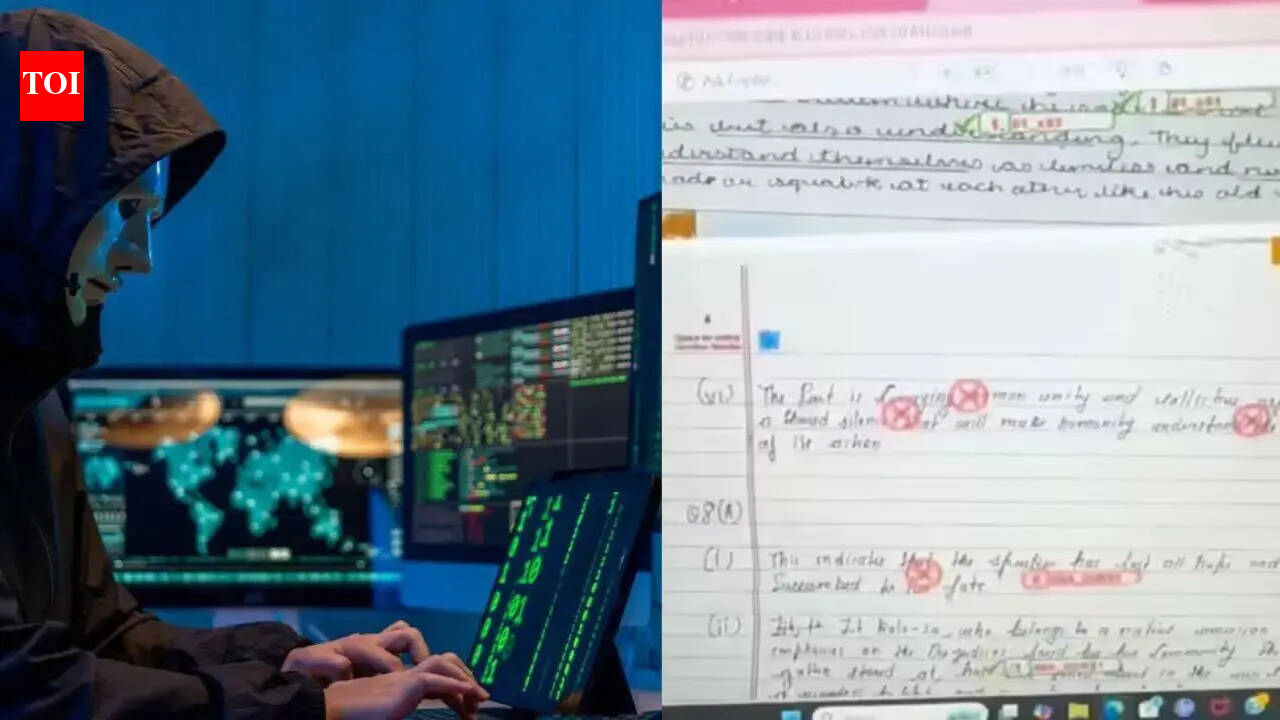
CBSE has refuted claims of a security breach in its On-Screen Marking system, stating the compromised portal was a mere testing site with sample data. This clarification follows a student's allegations of "critical vulnerabilities." Separately, the board acknowledged a technical glitch in a student's answer sheet mix-up, which has since been rectified. View More

Zee Entertainment Enterprises Ltd. has officially confirmed it is in talks with FIFA to broadcast the 2026 World Cup in India. The FIFA World Cup 2026 starts on June 12 in the United States, Mexico and Canada. View More

At the same time, emerging corridors such as Devanahalli, Hoskote and peripheral stretches of South Bengaluru are increasingly being viewed as the next growth frontiers View More

Markets are overwhelmingly pricing in a rate hike from the central bank at its next meeting. View More
watch nowVIDEO1:3801:38ECB 'will do what is necessary' to tame inflation, Bank of France governor saysSquawk Box Asia The European Central Bank "will do what is necessary" to keep inflation on target, one of its top policymakers has told CNBC.Speaking to CNBC's Lisa Kim in Singapore on Tuesday, Bank of France Governor Francois Villeroy de Galhau sought to reassure sovereign debt markets that central bankers in Europe were committed to minimizing the impact of the Iran war.Spiking oil prices, a result of the effective closure of the Strait of Hormuz, have fueled concerns that an energy crisis could lead to a resurgence of inflation in various markets.Villeroy de Galhau, who is a member of the ECB's Governing Council, added that European policymakers "will do what is necessary as an independent central bank to bring inflation back to target.""If I speak on behalf of the ECB, this means do what is necessary to bring inflation back to 2% in the medium term. Markets can be assured of that," he told CNBC. Eurozone inflation had dipped below the ECB's target to 1.9% before the war in the Middle East began with joint U.S. and Israeli strikes on Iran on Feb. 28. Inflation in the eurozone jumped to 3% in April, up from 2.6% in March. Europe is particularly vulnerable to energy shocks as a major net energy importer. Prices of gasoline, diesel and jet fuel have surged in recent months, prompting government intervention in some countries and warnings of flight cancellations over the summer.Villeroy de Galhau told CNBC that there was a fear of inflation permeating financial markets, which was particularly visible in government bonds.  "The effect of the Middle East conflict is clear," Villeroy de Galhau told CNBC. "In the short run, there are significant upward pressure first round effects due to energy prices, but it's our responsibility, I would even say our commitment to prevent second round effects." Francois Villeroy de Galhau, governor of the Bank of France, during the 2025 IIF annual membership meeting in Washington, D.C.Aaron Schwartz | Bloomberg | Getty Images Global government bonds have been volatile since the war began. Germany's 10-year bund, a benchmark for the euro zone, has surged by around 32 basis points, while other eurozone bonds have seen even bigger swings. Bond yields and prices move in opposite directions. The rise in yields has come as investors price in higher inflation and more hawkish monetary policy.Villeroy de Galhau said that the ECB held its key interest rate steady at 2% last month because officials lacked sufficient data on the risk of so-called second-round inflation effects.These include figures on underlying inflation without energy and food, inflation expectations from both households and businesses, and wage growth."The data so far are telling that it's mainly a first-round effect, but we should be extremely vigilant about possible second-round effect," he said. "So, again, have no doubt we will act as much as necessary."Markets are overwhelmingly pricing in a rate hike at the ECB's June meeting, according to LSEG data, with most traders anticipating a rise of at least 50 basis points by the end of the year. watch nowVIDEO2:1102:11ECB Governing Council members on future path for interest ratesEurope Early Edition At the end of March, ECB President Christine Lagarde said the central bank was ready to hike interest rates, even if an expected rise in inflation proved temporary."If the shock gives rise to a large, though not-too-persistent, overshoot of our [inflation] target, some measured adjustment of policy could be warranted," Lagarde told an audience at "The ECB and Its Watchers" conference in Frankfurt, Germany."To leave such an overshoot entirely unaddressed could pose a communication risk: the public may find it difficult to understand a reaction function that does not react."Speaking to CNBC at the IMF's Spring Meeting in Washington, DC, last month, Joachim Nagel, president of Germany's Bundesbank, said oil price volatility had left the ECB "between our baseline and our adverse scenario." Martins Kazaks, the governor of Latvia's central bank who sits on the ECB's Governing Council, warned of a potential "layer cake" of economic shocks. Choose CNBC as your preferred source on Google and never miss a moment from the most trusted name in business news.