
Latest Sectors News

Delta's president, Peter Carter, told CNBC that the carrier wants to take United on over the Pacific. View More
In this articleDALUALAXPFollow your favorite stocksCREATE FREE ACCOUNT United Airlines and Delta Airlines jetsSam Hodgson | Bloomberg | Getty Images RIO DE JANEIRO â Delta Air Lines is the nation's most profitable carrier, but its hungry rival, United Airlines, is far bigger over the Pacific. Delta's new president, Peter Carter, says that just won't stand."We want to become stronger, better, faster in the trans-Pacific, and we want to become the leading U.S. carrier" across the Pacific, Carter told CNBC in an interview here during the International Air Transport Association's annual meeting. "Ultimately ... the real goal is to become the leading global carrier, which is a pretty audacious goal."Carter, who was promoted in March, said some of that will come from Delta's joint venture with Korean Air, which is merging with Asiana Airlines. Delta posted a net profit of more than $5 billion last year, compared with United's earnings of about $3.35 billion. However, for its trans-Pacific business, Delta's smaller network generated just $2.79 billion in revenue, compared with United's roughly $6.89 billion, according to company filings.Trans-Pacific flying is often highly profitable, with long-haul flights commanding a premium and served by planes with dozens of premium seats. Both carriers are adding new routes. Earlier this month, Delta launched nonstop service between Los Angeles and Hong Kong. United Airlines, meanwhile, is planning a nonstop between its San Francisco hub and Sapporo, Japan â a play for premium-ski traffic. Read more about airlines' race to win over big spendersUnited ditches more economy seats to make room for bigger premium cabins with new layoutsWhy airline class wars will intensify in 2026Caviar and privacy: Airlines' business-class wars are hereDelta says premium travel is set to overtake coach cabin sales next yearAmerican Airlines is arriving late to the luxury travel boom. Can it catch up?First-class seats are getting so fancy theyâre holding up new airplanesAirlines canât add high-end seats fast enough as travelers treat themselves to first class Delta and United account for most of the U.S. airline industry's profits. Delta spent the better part of the last two decades fashioning itself the luxury airline of the U.S., from high-end lounges to a lucrative partnership with American Express.United has launched its own campaign using similar tactics, including a heavy investment in technology, massive aircraft orders, and an international network with new destinations from Mongolia to Croatia to Greenland.The U.S. air travel market â the world's largest â is mature, meaning there's little room for significant annual growth. "Really, when we think about the future, it's all about international," Delta's Carter said.United CEO Scott Kirby said Sunday that he was flattered by Delta's ambitions.On the sidelines of the same conference, Kirby said he has "a lot of respect for Delta, and what they have done, and I take it as a huge compliment that Delta is beginning to acknowledge that they have an equal that they're worried about and trying to compete with us."When asked what he wants to beat Delta on, Kirby replied: "Everything."Carter said in the interview that Delta can't rest on its current success. "We always have to be hungry to win, and I say that because I know United is out there competing against us and replicating the playbook a little bit," he said. "Bring 'em on." Choose CNBC as your preferred source on Google and never miss a moment from the most trusted name in business news.

Earnings season for Club names has come to an end, but that doesn't mean the excitement has. View More
Earnings season for Club names has come to an end, but that doesn't mean the excitement has. This coming week is packed with market-moving inflation data and two key corporate events. Apple's Worldwide Developers Conference starts its five-day run on Monday, and Apple is expected to raise the curtain on a new, conversational Siri assistant, powered by Google's powerful Gemini artificial intelligence model. CEO Tim Cook will deliver one last major AI update to the Apple ecosystem before handing over the reins to incoming CEO John Ternus. The confab comes as the iPhone maker's stock is on a roll, up more than 20% since the end of March. Since soaring more than 3% after near-perfect earnings on April 30, the stock has tacked on another 12.5% as of Tuesday's record-high close of $315 and is just shy of that level heading into the week. So investor expectations are high, which could trigger selling if they are not fully met. Just look at the action from Broadcom and CrowdStrike this week after they both delivered strong quarters. Also on Monday, Club holding Honeywell hosts a 2026 guidance update for its Honeywell Technologies division â the remaining business after Honeywell Aerospace is spun off on June 29 â followed by an investor day on Thursday. Last week, we covered Honeywell Aerospace's Investor Day in Wednesday's HomeStretch , noting that the company expects to generate at least $6.5 billion in adjusted earnings before interest and taxes (EBIT) by 2030. That could prove conservative, as many companies tend to underpromise ahead of becoming a separate company. Outside of the portfolio, Oracle reports on Wednesday evening, giving yet another look at demand for AI data center infrastructure. Homebuilder Lennar reports after Thursday's closing bell, providing a window into the housing market and whether builders are considering adding more supply. On Friday, SpaceX, Elon Musk's rocket company, will become the first of three monster initial public offerings expected this year. The other two are Anthropic, which dropped its confidential IPO filing last week, and OpenAI, which is expected to file its paperwork any day now. With so much hype heading into the SpaceX IPO, it will be interesting to see how the market absorbs such a huge influx of equity. While Anthropic and OpenAI will no doubt be watching the market reaction closely, we imagine a few hyperscalers might be considering a move similar to Alphabet , which did a fantastic job placing and pricing its own $85 billion stock sale. Last week, Jim Cramer talked about all this supply coming to market. "We have to recognize that there are a lot of companies raising cash. That's typically not a great time to buy stock," Jim said Tuesday on CNBC. Jim came away Tuesday morning surprised that the stock was "hanging in here," suggesting that the news should have been more of a drag on shares. For the week, Alphabet shares only fell about 3%. The May consumer price index , out on Wednesday, will be the marquee data point of the week. While the Federal Reserve tends to prefer the core personal consumption expenditures (PCE) price index as its proxy for inflation, the CPI is a close second. According to FactSet, economists expect a 4.3% annual increase in the headline rate and a 2.9% increase in the core rate, which strips out the impact of food and energy costs because of their inherent volatility. The CPI might get a bit more attention than usual because of last Friday's jobs report. Wage inflation ticked down, a positive only in that the consumer feeling a bit more strained acts as a natural counterbalance to inflation. The number of jobs added was well above expectations. Put it all together, and the odds of two interest rate hikes this year increased to 20%. The market has already pretty much dismissed the idea of a rate cut, even though President Donald Trump wants lower borrowing costs â and his pick to lead the Fed, Kevin Warsh, has only been chairman of the central bank for just over two weeks. The May producer price index is out on Thursday, and estimates call for a 0.6% month-over-month increase at the headline level and a 0.3% increase for the core rate. FactSet does not provide year-over-year estimates on PPI. The PPI, which measures wholesale inflation, tracks multiple stages of the supply chain and provides insight into the price actions that producers may be forced to take in the future to protect profit margins â or, on the other hand, if they are seeing any relief that could help slow the rising costs of goods. While both the CPI and PPI are closely watched, the market is always more concerned with future expectations than with past data. Expect any updates on the Iran war â and oil prices â to influence investor expectations on the future path of interest rates. If we get the sense that energy prices are coming down, then a hot CPI could be forgiven. Likewise, if it seems negotiations with Iran are deteriorating and that the prospects for reopening the Strait of Hormuz are diminishing, cool inflationary data could be overlooked. Week Ahead Monday, June 8 Before the opening bell: Campbell Soup (CPB) After the closing bell: Vail Resorts (MTN) Apple's Worldwide Developers Conference Honeywell guidance update Tuesday, June 9 10 a.m. ET: Existing Home Sales Before the bell: Academy Sports & Outdoors (ASO), United Natural Foods (UNFI), JM Smucker (SJM) After the bell: Casey's General Stores (CASY), Cracker Barrel (CBRL) Honeywell 8:30 am ET: Consumer Price Index Before the bell: Chewy (CHWY), Core & Main (CNM) After the bell: Oracle (ORCL), Stitch Fix (SFIX) Thursday, June 11 8:30 am ET: Producer Price Index After the bell: Adobe (ADBE), Lennar (LEN) Friday, June 12 SpaceX set to start trading (Jim Cramer's Charitable Trust is long AAPL, HON, GOOGL. See here for a full list of the stocks.) As a subscriber to the CNBC Investing Club with Jim Cramer, you will receive a trade alert before Jim makes a trade. Jim waits 45 minutes after sending a trade alert before buying or selling a stock in his charitable trust's portfolio. If Jim has talked about a stock on CNBC TV, he waits 72 hours after issuing the trade alert before executing the trade. THE ABOVE INVESTING CLUB INFORMATION IS SUBJECT TO OUR TERMS AND CONDITIONS AND PRIVACY POLICY , TOGETHER WITH OUR DISCLAIMER . NO FIDUCIARY OBLIGATION OR DUTY EXISTS, OR IS CREATED, BY VIRTUE OF YOUR RECEIPT OF ANY INFORMATION PROVIDED IN CONNECTION WITH THE INVESTING CLUB. NO SPECIFIC OUTCOME OR PROFIT IS GUARANTEED.
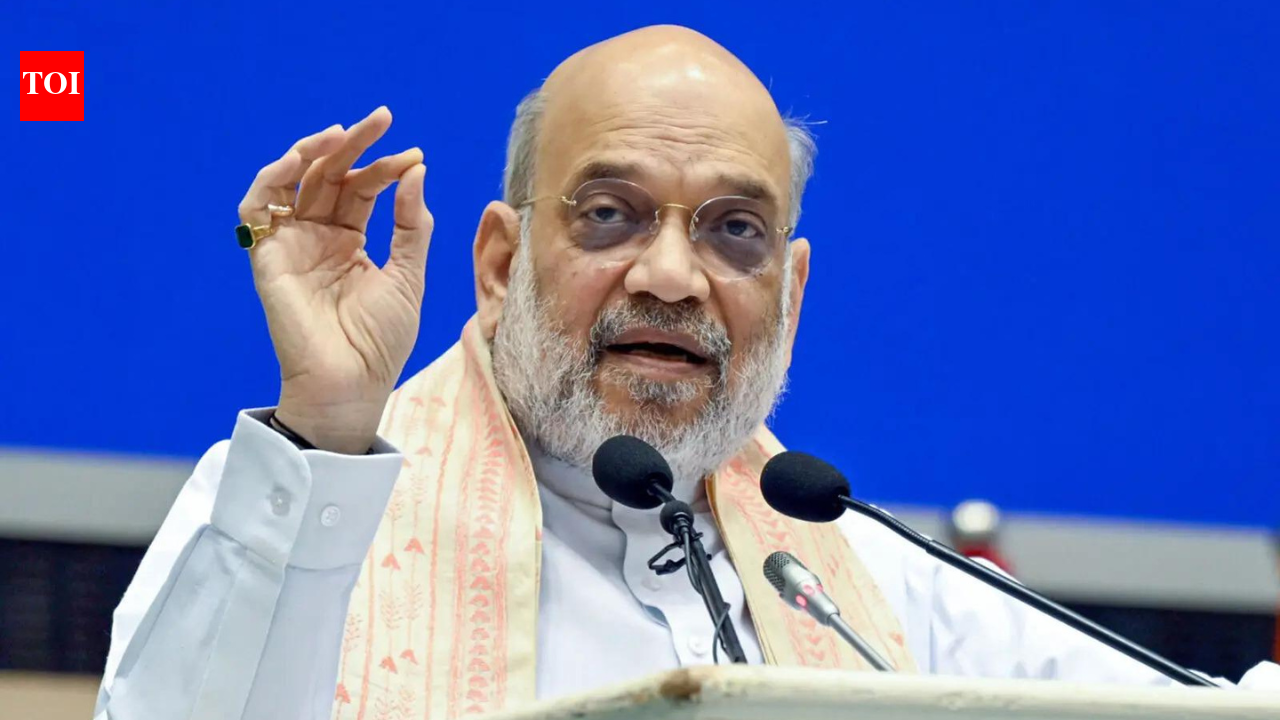
Home minister Amit Shah is set to launch the Land Port Management System (LPMS), a digital platform designed to streamline cargo and passenger processing at all land ports. This initiative aims to enhance efficiency, transparency, and security in cross-border operations, bringing them on par with airport and seaport systems. View More

In addition to typically living longer than their husbands, women also are more likely to need long-term care, which can be costly. View More
Halfpoint Images | Moment | Getty Images For women, living longer than men on average comes with a financial risk that experts say is worth preparing for â outliving their spouses and needing long-term care services.About 57% of Americans who reach age 65 will develop a disability serious enough to require long-term care, according to a 2022 report from the Health and Human Services Department. Roughly 1 in 4 women â 26% â will need such care for longer than five years, compared with 17.5% of men. The average duration of care for women is 3.6 years, compared with 2.5 years for men."Women aren't just more likely to need care. They're more likely to need care last," said certified financial planner Laura Mattia, senior vice president and financial advisor with Wealth Enhancement's Atlas Team in Sarasota, Florida. More from Women and Wealth:Women tend to be 'risk-appropriate' investors, expert says: How that helps35% of Gen Z homebuyers are single women. Here's why they need an estate planMillions of people with disabilities may be missing out on this little-known savings toolOlder women may inherit most of $54 trillion in spousal 'great wealth transfer''Survivor's penalty' can affect retirees after a spouse dies. What to expect "In many cases, a couple's assets are first used to cover the husband's care, and then the woman enters the highest-risk stage of her life with fewer resources and no partner to share the burden," Mattia said. 'There's not a one-size-fits-all answer' Long-term care is generally defined as assistance with daily living tasks such as bathing, dressing, eating or other things that the person can no longer do on their own. It can be provided in an institutional setting, such as a nursing home or assisted living facility, or in the person's home.Women, on average, live longer than men. At birth, the average life span for males in the U.S. is 76.5 years as of 2024, according to the Centers for Disease Control and Prevention. For women, that average is 81.4 years.The gap shrinks once you reach age 65. At that point, life expectancy for men is another 18.4 years, or to age 83.4, according to the CDC data. For women, that average is 20.8 years, or age 85.8. watch nowVIDEO1:2801:28Women under pressure in K-shaped economy as lower pay and affordability issues reduce spendingNews Videos Medicare, the federal health insurance program for individuals age 65 or older, generally does not cover long-term care. This leaves a possible expense later in life that is a big unknown, but should be planned for, experts say.Some people in need of long-term care rely on unpaid caregivers, such as family or friends, or, if their assets and income are minimal, they may qualify for Medicaid. Others self-insure â meaning they have enough assets to cover the potential cost. And still others rely on some type of insurance."There's not a one-size-fits-all answer," said CFP Patti Black, a financial advisor with Savant Wealth Management in Birmingham, Alabama. "It depends on their resources, what income they have available." Annual nursing home costs run above $100k The cost of long-term care also depends on the type of services needed, which can make a large difference. For example, for in-home help, the 2025 national median hourly rate for non-medical caregiver services was $35 hourly, and for a private-duty nurse, $90 an hour, according to a March report from Genworth Financial, an insurance company.For a semi-private room in a nursing home, the median daily rate in 2025 was $315 per day, or $114,975 annually, and for a private room it was $355 daily or $129,575 annually, according to Genworth. For an assisted living facility, the monthly cost was $6,200 or $74,400 annually. For insurance coverage, there are standalone long-term care policies or hybrid options that combine long-term care coverage with life insurance or an annuity."You don't need something that covers every dollar that you're going to spend in a nursing home or having somebody come to your house," said CFP Jeff Judge, a managing partner with Chesapeake Financial Planners in Forest Hill, Maryland. "You just need to bridge the gap between your guaranteed income â pensions, annuities, Social Security â and what the cost might be." Women pay more for coverage than men About 5.8 million individuals have standalone long-term care insurance coverage through a private policy as of 2024, according to Milliman, a business consulting firm. The average age in 2023 for a new policy was 57. However, depending on your age, health and amount of coverage you're purchasing, these policies can be expensive. And, women generally will pay more for coverage than men.For example, $165,000 worth of initial coverage with a 3% inflation protection for a healthy 55-year-old woman costs an average of $3,750 annually, according to the American Association for Long-Term Care Insurance, a trade group. That compares with $2,200 for a healthy 55-year-old man. For healthy 65-year-olds who purchase a policy, the cost averages $5,290 and $3,280, respectively. "Explore the options and understand what the history of premium increases have been and what they might be going forward."Patti BlackFinancial advisor with Savant Wealth Management Either way, those premiums are likely to rise the way most types of insurance do, experts say. In the past, some of the price hikes have been steep, Black said."Explore the options and understand what the history of premium increases have been and what they might be going forward," Black said.Additionally, if you wait to purchase coverage after you've already started having health problems, an insurer may deny coverage, she said.Hybrid policies â life insurance that comes with a long-term care benefit â have become a more popular choice compared with standalone policies since about 2014, according to LIMRA, a research and professional organization for the insurance and financial services industry. These policies generally provide coverage if care is needed, and if it is not, a death benefit to your beneficiaries. "These are still expensive, but at least there will be some benefit, whether it's long-term care or a death benefit," Black said. In other words, if you buy a standalone policy and never use the benefits, there is no payout. Sharing a policy with spouse can reduce cost It's also possible to purchase a shared policy, which can help reduce the cost, Judge said. These policies may have an individual benefit for each spouse that the other can tap if they exhaust their own benefits. Coverage also could include a shared pool of benefits available to either person."A policy with a husband and a shared pool gets a minimum amount of protection for a reasonable price," Judge said. "It's potentially the better choice for budget-conscious clients or those with a younger husband."However, he said, it's important to remember that the husband may need care first and exhaust the shared pool.Nevertheless, this is "the right solution for most clients as opposed to having no coverage," Judge said. "They just need to understand what could happen and be willing to accept the trade-offs in exchange for a lower monthly premium."The most important thing, Black said, is to start exploring your options long before you need them."Nobody wants to talk about 'Gosh, what happens if I need help going to the bathroom or getting dressed later in life,' but it is so critical to think through it," Black said. "I encourage people just to take a step forward, have conversations and investigate the options because their family will be grateful down the road." Choose CNBC as your preferred source on Google and never miss a moment from the most trusted name in business news.

Mammoth's direct-to-consumer brands have helped upend the razor, diaper and deodorant categories. View More
In this articleULPGULKMBEPCFollow your favorite stocksCREATE FREE ACCOUNT Mammoth Brands wants to take on traditional consumer packaged goods companies, armed with a portfolio of disruptors in the personal and baby care categories that have won over consumers and retailers alike.For the last decade, upstarts like those owned by Mammoth have challenged the relevance and longstanding dominance of legacy giants like Procter & Gamble, Unilever and Kimberly-Clark. The trend has also played out across packaged food and beverage companies, like Poppi and Olipop taking on Coca-Cola and PepsiCo. Consumers' loyalty no longer draws on just brand recognition. Newcomers can offer shoppers something different: better prices, higher quality or fewer ingredients that scare them."A lot of these companies call these smaller brands 'ankle biters' â tells you exactly what you need to know about how they view the threat," said Nik Modi, co-head of global consumer and retailer research for RBC Capital Markets. "But I think that they're taking it a lot more seriously. I think it's gotten to a tipping point."With brands like Harry's razors, Lume Deodorant and Coterie diapers, Mammoth is reshaping the consumer goods landscape, and it has ambitious plans."We're trying to build a leading modern [consumer packaged goods] company, like if Procter & Gamble and Unilever were getting built today," Mammoth co-founder and co-CEO Andy Katz-Mayfield told CNBC.In 2024, Mammoth saw revenue of $835 million and almost $100 million in adjusted earnings before interest, taxes, depreciation and amortization, according to a statement from the company. While legacy consumer giants still dwarf the company with their tens of billions of dollars in annual revenue, Mammoth said it has seen a greater than 20% revenue compound annual growth rate over the prior five years through 2024.Soon, a wider swath of investors could bet on the company's vision. Mammoth is weighing an initial public offering as soon as the second half of this year, according to a Bloomberg report. "Today, our private company, we make money, which is great, and we have opportunity to continue to invest in the brands in our portfolio," said Mammoth's other co-founder and co-CEO Jeff Raider. "We'll continue to evaluate the right capital structure for the business over time to enable us to achieve that long-term outcome."In the meantime, Mammoth seems focused on challenging existing CPG giants. Harry's began as a razor brand but has expanded into a skincare and men's personal care.Source: Mammoth Brands From start-up to Mammoth The early seeds of Mammoth began in 2013, when Katz-Mayfield and Raider founded Harry's. Katz-Mayfield came up with the idea for the startup based on his frustration with the status quo of buying $20 replacement razor blades. "I called up Jeff," Katz-Mayfield said. "We decided to build a men's grooming brand that was a really high quality product at great value, a better overall experience, online led, and I really do think that's really at the core of everything that guides Mammoth Brands."Katz-Mayfield and Raider had previously worked together at Charlesbank Capital Partners and Bain & Company. Before founding Harry's, Raider co-founded Warby Parker. Like the glasses startup, Harry's began online, becoming another disruptor during the era of direct-to-consumer brands. By 2016, it had gained enough customers to land on Target shelves. Harry's DTC origins allowed it to tweak its razors and win over customers who were previously loyal to the traditional grooming giants. Its DTC operating model also helped underscore who the company views as its core customer: the shopper. But traditional CPG companies typically view retailers as their customer, not the person that eventually buys and uses their products.That perspective influences those companies' innovation strategies, according to Katz-Mayfield. For example, a CPG company could make a few small tweaks to create a new SKU, or stock keeping unit, to replace an underperforming product SKU, allowing that brand to hold onto its existing shelf space and placate its retail customer, according to Katz-Mayfield."It's not that some of those brands aren't great and some of those products aren't great, but ... the innovation was driven by a strategy which is, the only way we can grow is to increase prices, and so on," Katz-Mayfield said. "The only way we can justify price increases is to add bells and whistles that consumers don't actually want."Harry's made its way to more retailers after Target. The brand stuck to its DTC roots though, insisting on launching new products online first to get feedback from loyal customers. In 2018, Harry's launched Flamingo, a women's shaving and body care brand with the same ethos.Then the legacy giants came knocking. In 2019, Schick owner Edgewell Personal Care announced it was buying Harry's for $1.37 billion. Three years earlier, Unilever had bought Dollar Shave Club, another razor disruptor, for $1 billion. (In 2023, Unilever sold the razor brand to a private equity firm.) Edgewell offered Harry's the chance to use its expertise in the direct-to-consumer business model and apply it to the company's brands, according to Raider. But the Federal Trade Commission sued to block the deal on antitrust grounds, which led Edgewell to walk away from the acquisition.Still, Katz-Mayfield and Raider held onto their vision of helping other brands achieve success. "The barriers to starting a brand are lower than they've ever been," Katz-Mayfield said. "Our perspective is that really scaling and maintaining these brands is still really hard."Harry's created an incubator lab, launching cat care brand Cat Person and haircare brand Headquarters. It has since sold Cat Person to Weruva and wound down Headquarters, teaching the Harry's team the value of staying more focused on what it considers core personal care categories. Harry's Labs also invested in the seed round of Hims, but has since sold its minority stake."Investing is not really part of the strategy," Katz-Mayfield said. "We did that at the time as we were testing and learning how we're going to build the platform. It was a great outcome for us, because [Hims] had a lot of success and the investment was worth a lot."In 2021, the company bought Lume Deodorant, which sells sticks, tubes and spray that can be used all over the body. The brand is widely credited with establishing the whole-body deodorant segment. Within two years of the deal, Lume's sales had more than doubled, according to Mammoth.The Lume acquisition helped Mammoth learn more about selling on Amazon, where the brand had more experience than Harry's and Flamingo did, according to Katz-Mayfield.Building off of the Lume acquisition, Harry's launched Mando deodorants in late 2022, marketing the same concept to men. In April 2025, Harry's Labs officially rebranded as Mammoth Brands. And its next acquisition further demonstrated its desire to be the next big CPG company. Coterie's range of premium diapersSource: Mammoth Brands Growing with a baby business In late 2025, Mammoth bought Coterie, a high-end diaper brand founded in 2019 with celebrity investors like Karlie Kloss and Ashley Graham. The deal was reportedly valued at over $1 billion and involved a mix of cash and stock. Mammoth said in October that Coterie surpassed $200 million in net revenue over the previous 12 months, a nearly 60% jump from the prior-year period.Coterie's premium diapers can cost as much as $1 per unit, a steep price for some parents. But the brand has found many consumers are willing to pay more for the product, which promises high absorbency without added fragrance, latex, rubber, parabens, pesticides or chlorine bleaching. Coterie has been "very profitable" over the last three years, according to the brand's CEO Jess Jacobs."Seventy-four percent of parents are willing to pay more for better-for-you products," she told CNBC. "Parents are looking for better and deserve better, and they're questioning the status quo, just like we are as a brand and as a company."Forty-three percent of the brand's new customers come from word of mouth alone, according to Coterie.Under Mammoth, Coterie now has the advantages of being a part of a bigger company; it can learn from e-commerce strategies for Amazon that currently work for Mammoth's brands. As Coterie broadens its retail exposure beyond higher-end grocers like Whole Foods and Erewhon, Mammoth can introduce it to more retailers. And diapers are complicated to manufacture, so Mammoth can help support that process as Coterie continues to create innovate on its diapers.For example, Coterie is currently in talks to add more retail partners. And Mammoth sees bigger potential for the brand, too."Coterie is a brand that can really extend across baby care," Katz-Mayfield said. "It's not just a diaper brand."But Coterie's success has caught the attention of legacy players, who are eager to adapt some of the upstart's playbook. Threat to legacy players For decades, a handful of companies have dominated the household goods and family and personal care categories. Their portfolios are chock-full of iconic brands used every day by Americans, and their histories often stretch back more than a century.In 1837, soap maker James Gamble and candlemaker William Procter became business partners, creating the company that still carries their names today.Originally founded as a paper mill company in 1872, Kimberly-Clark now owns a host of brands like Kleenex, Huggies and Cottonelle. It went public nearly a century ago.In 1930, a merger between a Dutch margarine producer and a British soap maker gave birth to Unilever.While those massive companies competed with each other, it was nearly impossible for a newcomer to gain a foothold in their well-established categories. For a nascent company, launching a new product was pricey and difficult, as legacy brands held onto their shelf space with a death grip and retailers were reluctant to take a chance.But over the last decade, these consumer giants have faced a new threat from upstarts."We are really seeing competition in CPG has fundamentally intensified, and it's coming everywhere," said Sally Lyons Wyatt, chief advisor for Circana's consumer goods and foodservice insights division. "Small manufacturers are gaining share. Digital and social platforms are lowering the barrier for entry for a lot of these smaller brands."The rise of e-commerce meant launching a new consumer packaged good was not the daunting task it used to be. A successful direct-to-consumer business often leads retailers to come knocking on the newcomers' doors."The big retailers have also made the case that they want these culturally relevant brands in their stores to bring in consumers," RBC Capital Markets' Modi said.And social media has also transformed how consumers think about what products to buy."Cultural relevance is now equal to or superseded brand equity," Modi said. "If you think about it, most of the big brands are not losing share to other big brands. They're losing share to the smaller disruptive brands."Look no further than diapers, a $5.43 billion market in the U.S., according to Euromonitor International data.In Procter & Gamble's fiscal second quarter, which ended in December, its U.S. diaper volume shrank 2%. Its Pampers had fallen to second place in U.S. diaper sales, trailing Kimberly-Clark's Huggies for the first time since 2021, according to Euromonitor data."I don't want to gloss over the fact that we have work to do to recover share," P&G CFO Andre Schulten told analysts on the company's earnings conference call in January.While Coterie is growing fast, it remains a much smaller diaper brand than Huggies and Pampers. Still, it looks like P&G has taken note of its success.P&G had challenged Coterie's claim that its diapers were up to four times more absorbent than leading brands. A year ago, the Better Business Bureau's National Programs' National Advertising Division recommended that Coterie stop using the claim, which the diaper brand followed.In March, P&G launched Pampers Amore, a line of premium diapers that it touts as "microbiome compatible" and "hypoallergenic." Most tellingly, the line's own packaging directly pits it against Coterie; it claims that its liner keeps babies three times drier than Coterie."The reality is, they are chasing something that is already gone," Coterie's Jacobs said. "We carved out that premium category, we've grown it. It's growing 20% since 2020 and 10% year over year. And they're late. So it's a question of, can they move faster? Can they be more nimble, and can they get ahead? And the reality is, at this point, and certainly in diaper, it does not seem like they can."Jacobs estimates that Coterie is roughly 18 months ahead of legacy diaper brands.But CPG giants still have some advantages, according to Modi. For example, the war with Iran is complicating supply chains for key components like packaging materials. While still a headache for legacy brands, they are able to navigate the challenge more nimbly thanks to their size and bargaining power. And then there is innovation. Modi said that he thinks that big brands still have better research and development teams, which should help them create the best product possible. And Kimberly-Clark's exposure to the very competitive Asian diaper market is fueling its innovation, CEO Michael Hsu said that Barclays Americas Select Conference in May. "We're going to go through these trial cycles where people are going to try these new things, and they're like 'Yeah, maybe I don't like this as much,'" Modi said. "And they start switching back to some of the bigger brands where the products actually work."Rather than trying to beat them, some legacy players have decided to join the upstarts instead. Procter & Gamble bought Native deodorant for $100 million and turned it into one of the company's dozens of billion dollar brands, by Modi's estimate. Unilever has snapped up a number of challenger brands, like Gruns, the DTC supplement gummy brand, and Squatch, which sells personal care products aimed at men.But those deals aren't always a success for the buyer â or the seller. Sometimes their corporate cultures don't mesh, or the new owner does not know how to incubate a smaller brand, according to Modi.For many legacy players, Modi thinks that the best strategy is to create new brands, rather than trying to bring existing lines up to speed."It's about how quickly they can move and how willing they are to be patient and develop a brand," Modi said, adding that many companies lack the willingness to wait for a small brand to grow into one worth $1 billion. Becoming a giant? For its part, Mammoth is trying to prove itself as the kind of company with the ability to help upstarts become personal care powerhouses."We would rather have a small portfolio of large brands than a large portfolio of small brands," Katz-Mayfield said.Going forward, he and Raider want to add more brands in what they call the "everyday care and wellness" categories. They are looking to add more products to their portfolio that are in "consumable consumer categories," barring human food and beverages."We're really dogmatic about some of these things that we would never do M&A just to do M&A and buy scale and growth, because we're not trying to flip these things. We're trying to own them forever," Katz-Mayfield said.Unlike traditional consumer goods companies, Mammoth is less focused on entering specific categories to complement its overall portfolio and instead more interested in customer retention and its growth prospects across e-commerce and brick-and-mortar retail, according to Katz-Mayfield."We have to believe that something is online-led but has big omnichannel potential," he said. "It can be a big $200, $300 million-plus brand because that's where we're going to add the most value, helping those brands scale on that journey."Mammoth has a team that tracks new brands, starting when they begin to gain traction on social media or Amazon. But every potential acquisition is likely also getting attention from legacy CPG companies or venture capital and private equity firms.To founders, Mammoth gives its pitch as an owner that offers independence and autonomy, with the infrastructure and corporate support that can introduce upstarts to big retailers like Target. Mammoth also wants the founders and executive teams to stay on for a while."We kind of view ourselves as a little of a Goldilocks," Katz-Mayfield said.And a new acquisition is likely coming to Mammoth sooner rather than later. The company is primarily focused on growing its portfolio through dealmaking, according to Katz-Mayfield."For us, I think like one or two deals a year is probably the right pace," he said, adding that he believes that Mammoth will have portfolio of eight to 10 brands within the next three or four years.For all the focus on M&A, innovation hasn't stopped at Mammoth's existing brands. For example, Harry's has been expanding its range of skincare for men. "The way we think about it, these brands are still pretty early in their journey," Katz-Mayfield said. "They all have tremendous potential."Mammoth still launches new products online first, demonstrating the company's continued belief in the DTC business model, despite rumors of its demise. About half of Mammoth's revenue still comes from online sales, according to the company."I think DTC is the single greatest place on the planet to build products and brands," Raider said. But the buzziest news for Mammoth will likely be its initial public offering, although the co-CEOs played coy about those potential plans."Don't know where that came from," Katz-Mayfield said when asked about the Bloomberg report about a potential IPO as soon as this year that identified four banks reportedly working on the deal."We're fortunate that we make money as a company, and we're able to use some of that cash flow," he added. "We've always been sort of more agnostic to what the structure is, but we certainly want a set up that allows us to have access to capital, whether that's privately or publicly, at some point in the future to pursue that strategy." Choose CNBC as your preferred source on Google and never miss a moment from the most trusted name in business news.

The Category II AIF follows its maiden debt fund, which has committed ?1,000 crore so far and is on track to reach ?1,200 crore by July, as Arnya deepens its play in residential real estate credit. View More

The Hexagon Nutrition IPO was fully subscribed within hours, attracting bids for 3.55 crore shares against 2.16 crore available. Retail and NII categories saw high interest, while QIBs did not bid. The IPO runs from June 5-9, 2026, with shares expected to list on June 12. View More


Reporting capital gains correctly is essential for investors who sold shares, mutual funds or property during FY26. Here's a guide to tax rates, ITR forms and capital gains reporting requirements for AY 2026-27. View More