
Latest Sectors News
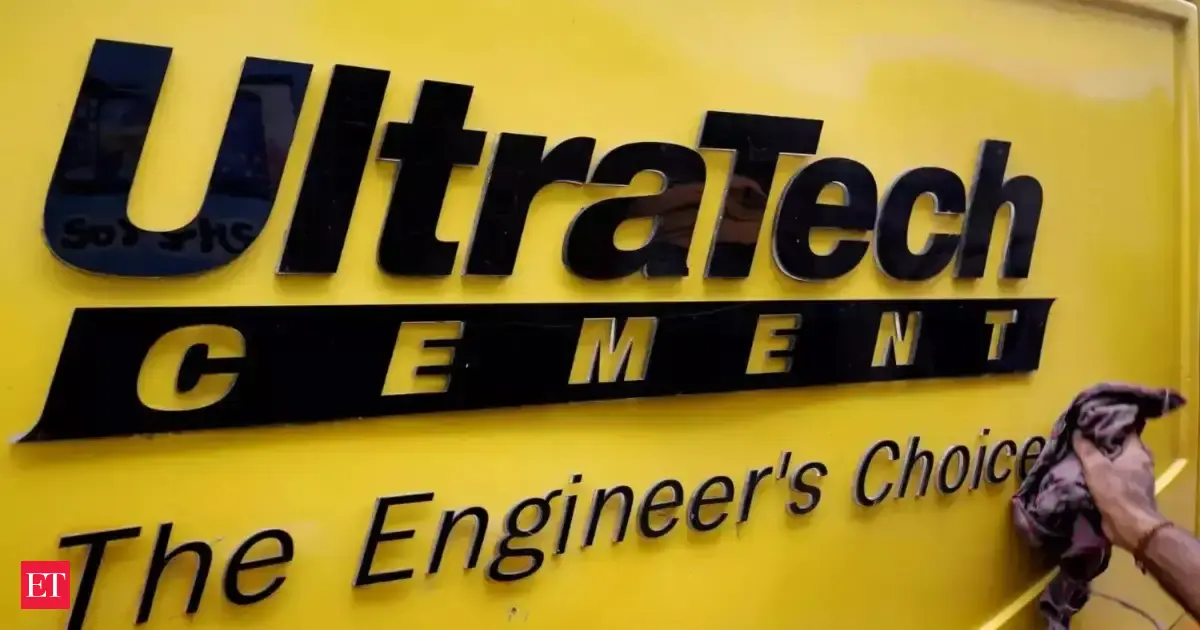
UltraTech Cement has achieved a significant milestone, crossing 200 million tonnes in production capacity in India. This expansion solidifies its leadership in the Indian market and positions it as the world's largest cement producer outside China. The company plans further growth, aiming for 240 million tonnes by FY28. View More
MUMBAI: UltraTech Cement crossed 200 million tonnes production capacity in India, bolstering its leadership of the world’s second largest market for the building material. The Aditya Birla Group company has more than tripled its capacity in a decade, and is also the world’s largest cement producer, outside of China. UltraTech Cement’s annual capital expenditure of about Rs 16,000 crore currently is expected to expand capacity further to 240 million tonnes by FY28. The company currently controls about a fourth of the Indian market. Live Events Also Read:Cement makers set to see sharp Q-o-Q growth in profits About 110 million tonnes of the existing capacity comprises greenfield and brownfield expansions, with the rest 90 million tonnes coming in through acquisitions. Over the past few years, some of the company’s key acquisitions are L&T Cement, Jaypee Cement, Binani Cement , Century, Kesoram Industries , and India Cements . “It took us 36 years to reach 100 million tonnes,” said chairman Kumar Mangalam Birla. “The next 50 million followed in five. The 50 after that, in just over two. No cement company in the world has added capacity at this pace in the last decade.” During the day, the company commissioned three additional cement grinding units at Shahjahanpur in Uttar Pradesh, Patratu in Jharkhand, and Visakhapatnam in Andhra Pradesh. At a consolidated level, UltraTech’s capacity is now at 205.5 million tonnes, including 5.4 million tonnes from its operations in the UAE, Bahrain, and Sri Lanka. “The 200 MTPA number in my view does not represent only our capacity, but also India’s place in the world,” said Birla. “It describes an India that carries scale with confidence – in its ambitions, its execution, and its sense of self.”. .Pbanner{display:flex;justify-content:space-between;align-items:center;background-color:#ec1c40;margin-top:20px;padding:5px 10px;border-radius:4px;color:#fff;line-height:10px;} .Pbannertext{display:flex;align-items:center;font-size:16px;font-weight:600;font-family:'Montserrat';} .Pbannertext img{height:20px;margin:0 6px} .Pbannerbutton a{display:flex;align-items:center;background-color:#fff;color:#ec1c40;text-decoration:none;font-weight:600;padding:4px 8px;border-radius:6px;font-size:15px;font-family:'Montserrat';} .Pbannerbutton img{height:20px;margin-right:6px} .Pbannerbutton a:hover{background-color:#f7f7f7} Add as a Reliable and Trusted News Source Add Now! (You can now subscribe to our Economic Times WhatsApp channel) (You can now subscribe to our Economic Times WhatsApp channel)

About 90 mt capacity came via acquisitions, starting with L&T Cement and expanding through Jaypee, Binani, Century, Kesoram and India Cements View More

The company adds 8.7 MTPA through three new grinding units as it targets 240 MTPA with ?16,000 crore capex View More
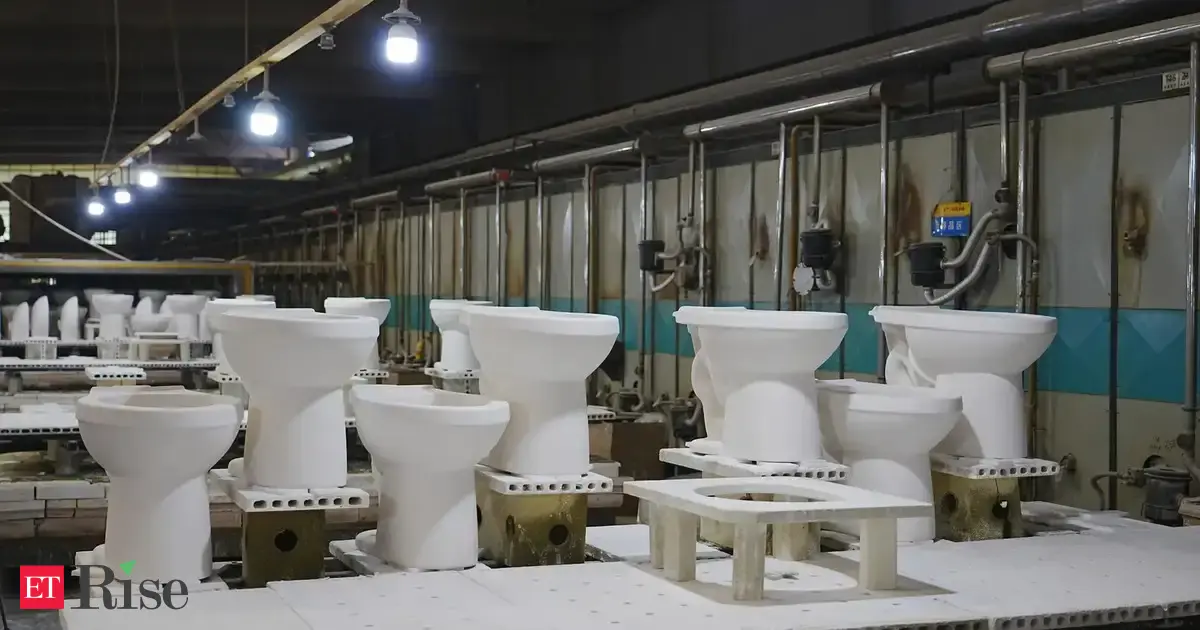
Since the beginning of the war, these two clusters are struggling due to a shortage of propane, with many units closing shops. View More
The war in West Asia has posed major challenges for the Morbi and Thangadh clusters in Gujarat, the world’s second-largest ceramics hub, which produces 90% of the world’s ceramics. While Morbi is known as the ceramic capital of India, Thangadh exports ceramic sanitary ware and tiles to a host of developing countries. However, the current situation in both these clusters remains grim. Since the beginning of the West Asia war, involving the US, Israel and Iran, on February 28, the situation has been dire for these clusters, which are struggling to make ends meet, while clinging to hope for the future. The war has shaken up the global trade and energy markets. Shipping has faced severe disruptions; oil prices have spiked; there are labour unrest and price surges, all stemming from the conflict and its impact on the Strait of Hormuz. While a ceasefire has been in place for two weeks, uncertainty continues to loom. This disruption has directly impacted domestic industries that depend on a steady gas supply. The ceramic industry in Morbi relies on propane or natural gas for its operations, which has not been available, says Ajay Marvania, President, Sanitarywares Division, Morbi Ceramic Manufacturers Association. Live Events India depends on imports through the Strait of Hormuz to meet its gas and energy requirements. Due to the war, shipments through the Strait are nearly halted. “We had to shut down the factories for one month because the rate was too high and our industry could not absorb it. Only a few units were open,” says Marvania. Offering a snapshot of the industry, Marvania notes that the total ceramics market size in Morbi is Rs 60,000 crore and exports account for over 25% valued at Rs 16,000 crore. “Within exports, around Rs 5,000 crore is via Middle Eastern geographies, such as Saudi Arabia and Kuwait, which is totally at a standstill now. The freight costs have increased so much that no customer is willing to buy the goods at present,” he says. On an average, Morbi, as a cluster, was able to achieve a monthly total business of Rs 6,000-7,000 crore earlier, which is down to Rs 1,000 crore now. We are in wait-and-watch mode,” he adds, ruefully. The industrial city of Thangadh, which is well known for producing wall tiles, sanitaryware and pottery, faces a similar challenge. Out of approximately 250 factory units, only 10% are currently operational due to a shortage of gas. Rajendra Raithatha, Director of sanitary unit Luxur Ceramics in Thangadh, says that the price of gas has increased 1.5 times, which is a big blow for the industry. “The price of gas was Rs 41/kg earlier. At present, it is around Rs 70/kg. This makes it difficult for the industry to sustain,” he explains. A direct fallout of the gas price impact has been on the labour force, which is currently unemployed. “More than 40,000 workers are sitting at home right now in Thangadh because the units are shut. We are supporting them in this period, but if the situation continues indefinitely, it will get difficult for us. We urgently seek government intervention to support our industry,” Raithatha says. The affordable sanitaryware manufacturing sector directly generates employment for these workers, which include skilled ceramic craftspeople, semi-skilled workers in moulding, kiln operation, and finishing, unskilled labourers in material handling, packaging, and logistics and support staff in quality control, maintenance, and administrative functions. In clusters such as Thangadh and Morbi, sanitaryware production is an avenue of critical livelihood support to worker communities with limited alternative employment opportunities. Incidentally, the Panchal Ceramic Association Vikas Trust, an association of ceramic units in Thangadh, in a letter to Finance Minister Nirmala Sitharaman in January, had earlier urged for a reduction in goods and services tax (GST) from 18% to 5% on affordable sanitary ware (sale price below Rs 500). Now the association has again reached out to the government to help their industry as well as the labour which is dependent on it. “Every week we are writing to the government so that some help can come from a price standpoint. It is a 1,200-crore turnover industry in Thangadh, all of which is impacted right now due to shuttered units and price escalations. We have a human approach in this area of Thangadh where we support the labour that has been with us for so long. But the question is, till when?” he says. The cluster exports low-cost sanitary ware to African countries and Sri Lanka. While manufacturers, exporters, and workers in Morbi and Thangadh are hopeful that orders will pick up once the war situation eases, it is only uncertainty for now that is looming large. “There is no clarity right now on when operations can resume. We are just waiting,” says Raithatha. .Pbanner{display:flex;justify-content:space-between;align-items:center;background-color:#ec1c40;margin-top:20px;padding:5px 10px;border-radius:4px;color:#fff;line-height:10px;} .Pbannertext{display:flex;align-items:center;font-size:16px;font-weight:600;font-family:'Montserrat';} .Pbannertext img{height:20px;margin:0 6px} .Pbannerbutton a{display:flex;align-items:center;background-color:#fff;color:#ec1c40;text-decoration:none;font-weight:600;padding:4px 8px;border-radius:6px;font-size:15px;font-family:'Montserrat';} .Pbannerbutton img{height:20px;margin-right:6px} .Pbannerbutton a:hover{background-color:#f7f7f7} Add as a Reliable and Trusted News Source Add Now!

Input cost pressures from energy, fuel and packaging are expected to push prices closer to four-year highs amid steady demand. View More
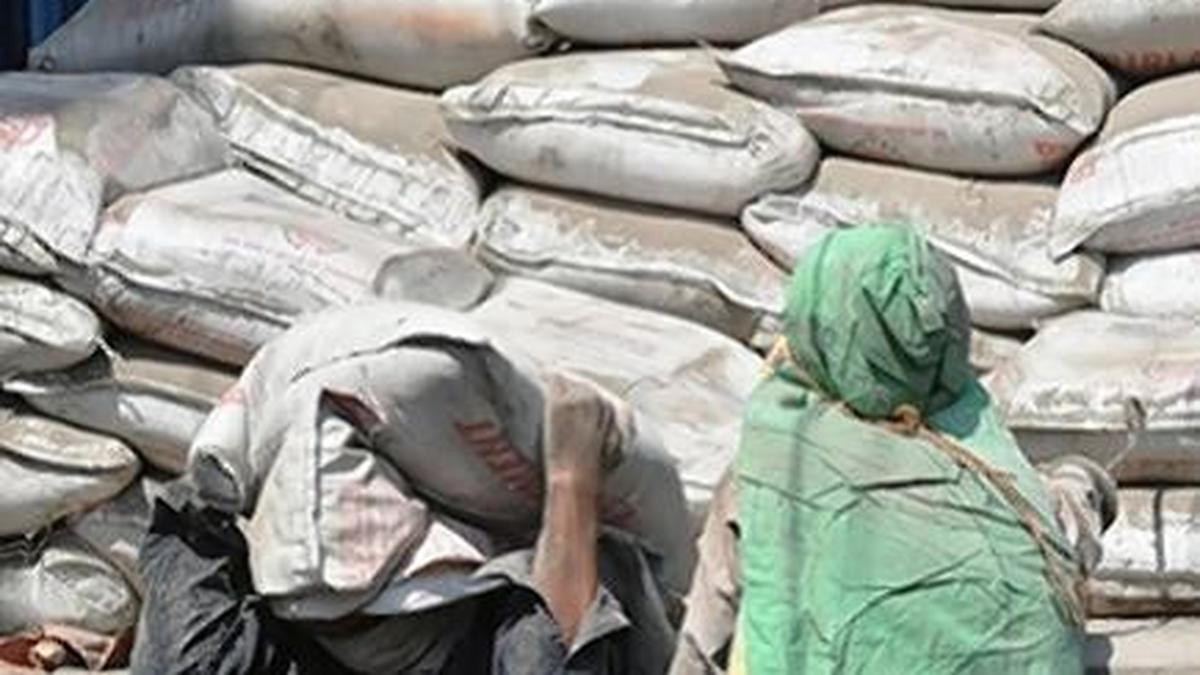
The cost pressure intensified after polymer granule prices—used to manufacture cement packaging bags—jumped sharply due to crude-linked disruptions View More

Cement companies are poised for a strong performance in the January-March quarter. Profits are expected to surge significantly compared to the previous quarter. This improvement is driven by better profit margins and robust volume growth. Analysts anticipate a healthy conclusion to the fiscal year. View More
Mumbai: Cement producers are likely to report a 50-100% sequential jump in bottom line in the January-March quarter as margins improve for the first time in three quarters, even as prices remain below expectations. Operating profit, or earnings before interest, tax, depreciation and amortisation (Ebitda), is expected to be supported by strong double-digit volume growth, analysts said. Ebitda per tonne is estimated at ₹800-1,200 for the March quarter, compared with ₹600-1,000 in the December quarter and ₹800-1,100 in the September quarter. Volumes are seen rising 12-25% sequentially, with average growth for the sector at about 16%. On a year-on-year basis, volumes are likely to increase 7-9%. “The cement industry is set to conclude FY26 on a healthy note, with Q4FY26 showing broad-based improvement across most parameters,” analysts at Centrum Broking said. “This healthy performance is expected to come on the back of strong volume, better realisation and a stable cost trend.” While the ongoing Iran conflict has raised power and fuel costs, analysts do not expect any impact on March quarter earnings as companies typically maintain inventory for six to eight weeks. Live Events The average cement price stood at ₹338 per 50 kg bag in the March quarter. This was higher than ₹333 in the December quarter, which was affected by GST-led price cuts, but lower than ₹363 in the year-ago period. Cement prices “disappointed” in the March quarter, rising just 1% sequentially against expectations of a 3-4% increase, analysts at HDFC Securities said. Following price cuts from late September due to lower GST rates, only the non-trade segment saw some recovery, they said. While earnings for the March quarter and FY26 are expected to be strong, performance in the current fiscal will depend on companies’ ability to manage pricing amid rising raw material costs and additional capacity coming on stream. .Pbanner{display:flex;justify-content:space-between;align-items:center;background-color:#ec1c40;margin-top:20px;padding:5px 10px;border-radius:4px;color:#fff;line-height:10px;} .Pbannertext{display:flex;align-items:center;font-size:16px;font-weight:600;font-family:'Montserrat';} .Pbannertext img{height:20px;margin:0 6px} .Pbannerbutton a{display:flex;align-items:center;background-color:#fff;color:#ec1c40;text-decoration:none;font-weight:600;padding:4px 8px;border-radius:6px;font-size:15px;font-family:'Montserrat';} .Pbannerbutton img{height:20px;margin-right:6px} .Pbannerbutton a:hover{background-color:#f7f7f7} Add as a Reliable and Trusted News Source Add Now! (You can now subscribe to our Economic Times WhatsApp channel) (You can now subscribe to our Economic Times WhatsApp channel)

Trump said the U.S. blockade will stop Iran from policing the strait and benefiting economically while the rest of the world suffers from its closure. View More
In this article@CL.1Follow your favorite stocksCREATE FREE ACCOUNT U.S. President Donald Trump speaks to reporters before boarding Air Force One on April 10, 2026 at Joint Base Andrews, Maryland. Win McNamee | Getty Images President Donald Trump on Sunday said the U.S. will blockade the Strait of Hormuz after talks held in Pakistan to end the Iran war hit the skids."Effective immediately, the United States Navy, the Finest in the World, will begin the process of BLOCKADING any and all Ships trying to enter, or leave, the Strait of Hormuz," Trump said in a post to his social media platform Truth Social. "The Blockade will begin shortly. Other Countries will be involved with this Blockade. Iran will not be allowed to profit off this Illegal Act of EXTORTION."The U.S. Central Command said in a post on X late Sunday that the U.S. military would begin implementing the blockade on Monday at 10 a.m. ET. CENTCOM said additional information would be provided to commercial vessels prior to the start of the blockade.The blockade of vessels transiting the strait appeared to be somewhat more limited than the broad enforcement action Trump initially announced. CENTCOM said the U.S. will not impede vessels transiting the strait to and from non-Iranian ports. The blockade will only be enforced against vessels entering or departing Iranian ports or coastal areas, including all Iranian ports on the Arabian Gulf and Gulf of Oman.The announcement of a U.S. blockade has dimmed hopes that the war would end in the coming days following peace talks in Islamabad. It also threatens to exacerbate the economic crisis that has gripped global economies since the war broke out and Iran began restricting access to the strait, a chokepoint which carries about a fifth of the world's oil. Trump said the U.S. blockade is an effort to stop Iran from policing the strait and benefiting economically while the rest of the world suffers from its closure. "At some point, we will reach an 'ALL BEING ALLOWED TO GO IN, ALL BEING ALLOWED TO GO OUT' basis, but Iran has not allowed that to happen by merely saying, 'There may be a mine out there somewhere,' that nobody knows about but them," he said. "THIS IS WORLD EXTORTION, and Leaders of Countries, especially the United States of America, will never be extorted."Trump, speaking on Fox News' "Sunday Morning Futures," said the effort will be a "complete blockade" and "all or none," meaning no ship will be allowed to pass until Iran relents. Trump also announced in the post that the U.S. Navy will "seek and interdict every vessel in International Waters that has paid a toll to Iran."Iran was preparing to toll vessels seeking passage through the strait, a move that invoked Trump's ire as Tehran tries to cement its grip on the passage amid a two-week ceasefire in the conflict. "No one who pays an illegal toll will have safe passage on the high seas," the president said. Trump and his advisers are also reportedly considering the resumption of limited military strikes in Iran, to put additional pressure on the regime to break the peace talk stalemate, The Wall Street Journal reported, citing officials and people familiar with the situation.In an interview on Fox News, Trump appeared to once again threaten strikes on Iran's critical infrastructure."I would hate to do it, but it's their water, their desalinization plans, their electric-generating plants, which are very easy to hit," Trump said.Peace talks hosted by Pakistan broke down over what the U.S. described as Iran's unwillingness to give up its efforts to obtain a nuclear weapon. Tehran's demands include control of the Strait of Hormuz, payment of war reparations and a ceasefire across the region, including in Lebanon, according to Iranian state TV and officials. It is also seeking the release of its frozen assets abroad.The U.S. delegation, led by Vice President JD Vance, met with Iranian and Pakistani negotiators for more than 21 hours during the rare face-to-face summit.The war, and nearly complete closure of the strait, have put immense pressure on oil prices and the global economy. Markets have whipsawed throughout the campaign, and oil has at times rocketed to more than $100 per barrel. Read more CNBC politics coverageTrump: U.S. will blockade Strait of Hormuz after Iran talks failVance heads back to the U.S. after Iran peace talks break downAllies pull support for Swalwell after sex assault allegationsJudge told to reconsider halt on Trump's White House ballroomRep. Eric Swalwell denies sexual assault allegationsTrump's 250-foot 'triumphal arch' would loom over PotomacEpstein victims will get House committee hearing, Comer saysWhite House warned staff against Iran war bets on prediction markets Trump on Fox said the U.S. needs to weather the storm to prevent Iran from obtaining a nuclear weapon, arguing that energy prices will fall when the war is over. "It might not happen initially, but it's going to go down," he said. The president also said that any country â potentially including China â that assists Iran will be slapped with a 50% tariff levied by the U.S. "If we catch them doing that, they get a 50% tariff, which is a staggering, that's a staggering amount," Trump said.Trump is set to meet with Chinese President Xi Jinping next month. Iran responds Iran said it will view the entry of military vessels near the strait as a breach of the two-week ceasefire and will respond accordingly, according to a Reuters report citing Iranian state media. A statement issued by the Iranian Revolutionary Guard Corps said the strait is "open for âthe safe passage âof â non-military vessels in accordance with specific â regulations," Reuters reported. U.S. military vessels entered the strait on Saturday to clear mines, according to The New York Times. Mohammad-Bagher Ghalibaf, speaker of Iran's parliament and chief negotiator at the weekend peace talks, posted a picture on X of gas prices near Washington, D.C., with the caption: "Enjoy the current pump figures. With the so-called 'blockade', Soon you'll be nostalgic for $4â$5 gas." Help on the way? Trump said that allies will assist in the blockade of the strait, but which American allies he was referring to remains unclear. The president said on Fox that the United Kingdom and "a couple of other countries" are sending mine sweepers to help free the strait for safe passage. Trump also criticized the North Atlantic Treaty Organization for not offering assistance in policing the strait, which he has repeatedly done throughout the war. "We're very disappointed with NATO, we're very, very disappointed they didn't come," Trump said. "Now they want to come and they want to help with the strait," he added, without providing any evidence.The BBC later reported that the U.K. would not be assisting with the blockade. "We continue to support freedom of navigation and the opening of the Strait of Hormuz, which is urgently needed to support the global economy and the cost of living back home," a spokesperson for the U.K. government told the BBC. Trump also suggested that he expects U.S. allies in the Gulf to assist. "They've already started," he said, without providing details. "They're much closer, so maybe they have to do it ... but [Iran] made a big mistake when they started lobbing missiles at them." U.S. threatens to prosecute Iranian oil buyers The U.S. Justice Department threatened to prosecute anyone who purchases sanctioned Iranian oil, according to a social media post from Acting Attorney General Todd Blanche. "The Department of Justice will vigorously prosecute anyone who buys or sells sanctioned Iranian oil," Blanche said in the post. The Trump administration has recently waived sanctions on oil stranded at sea belonging to adversaries, including Iran and Russia. The sanctions relief was an apparent effort to lower oil prices, but was met with fierce resistance from Democratic lawmakers who said the president was giving a windfall to the enemy.â CNBC's Terri Cullen contributed to this report Choose CNBC as your preferred source on Google and never miss a moment from the most trusted name in business news.

Two American warships transited through the Strait of Hormuz for the first time since the start of the conflict. View More
ISLAMABAD, PAKISTAN - APRIL 11: U.S. Vice President JD Vance (C) walks with Pakistan's Chief of Defence Forces and Chief of Army Staff Field Marshall Asim Munir (L), and Pakistani Deputy Prime Minister and Foreign Minister Mohammad Ishaq Dar after arriving for talks with Iranian officials on April 11, 2026 at Islamabad, Pakistan. (Photo by Jacquelyn Martin - Pool/Getty Images)Pool | Getty Images News | Getty Images The first round of peace talks between the United States and Iran on Saturday went on well into the evening and face-to-face meetings concluded without the announcement of a resolution.In a post on X, Iran's government said that after 14 hours, the talks had ended for now."Negotiations will continue despite some remaining differences," the post said. An Iranian state TV reporter said the talks would continue on Sunday.The high-stakes negotiations, which involved three rounds of discussions, had been expected to last for just one day. Text discussions continued on after the in-person meetings ended and further talks were planned during the night, Iranian state TV reported, citing a source."15 hours and counting!" a senior White House official told a pool of reporters. There has been no official word on the status of the negotiations from either side.The peace summit took place as two American warships transited through the Strait of Hormuz for the first time since the start of the conflict. The U.S. Central Command said the warships were taking part in a mission to clear the waterway of sea mines put in place by Iran.The tri-lateral negotiations that began in Islamabad seek to cement a two-week ceasefire that began Tuesday but which has come under strain as Iran continues to block most shipping traffic through the Strait of Hormuz, the world's most critical chokepoint for oil and gas supplies. Tehran also reiterated a list of preconditions for the talks.The U.S. delegation, led by Vice President JD Vance, and the Iranian one, led by Parliament Speaker Mohammad Bagher Qalibaf, discussed with Pakistan how to advance the ceasefire already threatened by deep disagreements and Israel's continued attacks against the Iranian-backed Hezbollah in Lebanon, whose health ministry said the death toll has surpassed 2,000.The âIranian delegation arrived dressed in black in mourning for late Supreme Leader Ayatollah Ali Khamenei and others killed in the war. They carried shoes and bags of some students killed during the U.S. bombing of a school next to a military compound, the Iranian government said. The Pentagon has said the strike is under investigation."There were mood swings from the two sides and the temperature went up and down during the meeting," âone Pakistani source told Reuters in reference to the first round of talks.For the U.S.-Iran âtalks, Islamabad, a city of more than 2 million people, was locked down with thousands of paramilitary personnel and army troops on the streets. Since the Islamic Revolution in Iran in 1979, the most direct U.S. contact had been in 2013 when then-President Barack Obama called newly elected President Hassan Rouhani to discuss Iran's nuclear program. The most recent highest-level meetings were between Secretary of State John Kerry and counterpart Mohammad Javad Zarif during negotiations over the program.Now talks feature Vance, a reluctant defender of the war who has little diplomatic experience and warned Iran not to "try and play us," and Qalibaf, a former commander with Iran's powerful Revolutionary Guard who has issued some of Iran's most fiery statements since fighting began. U.S. destroyers transit the Strait of Hormuz The meeting comes amid heightened tensions over conflicting reports concerning the Strait of Hormuz.U.S. Central Command said on Saturday that forces began setting conditions for clearing mines in the strait, as two U.S. Navy guided-missile destroyers conducted operations. The USS Frank E. Peterson and the USS Michael Murphy transited the strait and operated in the Arabian Gulf as part of a broader mission to clear sea mines previously laid by Iran's Islamic Revolutionary Guards Corps, Defense Secretary Pete Hegseth said in a post on X."Today, we began the process of establishing a new passage and we will share this safe pathway with the maritime industry soon to encourage the free flow of commerce," Adm. Brad Cooper, commander of CENTCOM, said in a statement."We're sweeping the strait. Whether we make a deal or not makes no difference to me," U.S. President Donald Trump told journalists as high-stakes talks continued into the night and the time approached 2 a.m. in Pakistan.Iran's state media, however, earlier said Iran forced a U.S. military ship that was attempting to cross the strait to turn around. MS Now later reported that commercial maritime traffic systems showing the USS Michael Murphy crossing the Strait of Hormuz into the Persian Gulf weren't reliable.Late Saturday, Iran's Islamic â Revolutionary Guard Corps âwarned âthat âany attempt by â military âvessels to â transit the Strait of Hormuz would âbe met with "a âstrong response." Only non-military â vessels would âbe âallowed to pass â under specific regulations, the â IRGC â said in a statement âcarried âby Iranian media.Separately, a senior Iranian source told Reuters the U.S. had agreed to release frozen assets held in â Qatar and other foreign banks, but a U.S. official immediately denied the report. Iranian preconditions But question marks hang over the ceasefire and the talks' ultimate outcome. Iran's Tasnim news agency said Tehran has presented negotiators with four "non-negotiable conditions" to mediators in Islamabad.They include: "[F]ull sovereignty over the Strait of Hormuz, complete war reparations by the aggressor, unconditional release of blocked assets, and a durable ceasefire across the entire West-Asia Region," Tasnim said on its X account.Ghalibaf warned Friday that the scheduled negotiations to end the war with the U.S. cannot begin unless Israel halts attacks on Lebanon and unless the U.S. releases Tehran's frozen assets.Ghalibaf issued the ultimatum after the American delegation led by Vance left for Islamabad to attend the talks."Two of the measures mutually agreed upon between the parties have yet to be implemented: a ceasefire in Lebanon and the release of Iran's blocked assets prior to the commencement of negotiations," Ghalibaf said in an X post."These two matters must be fulfilled before negotiations begin," he wrote. Tankers exit the Gulf via the strait Three supertankers passed through the Strait of Hormuz on Saturday, shipping data showed, marking what appeared to be the âfirst vessels âto exit the âGulf since the U.S.-Iran ceasefire deal.Tehran's blockade of â the âstrait, a chokepoint for about â 20% of global oil and liquefied natural gas shipments, since the start of the Iran war at the end of âFebruary, has disrupted global energy supplies and sent oil prices soaring.The Liberia-flagged Very âLarge Crude Carrier (VLCC) Serifos and China-flagged VLCCs Cospearl Lake and He Rong Hai, entered and exited the "Hormuz Passage trial anchorage" that â bypasses Iran's Larak Island on Saturday, LSEG data showed. watch nowVIDEO6:1706:17Captain on what Hormuz Strait blockage means for shippers stranded in the gulfSquawk Box Asia Each vessel âis capable of carrying 2 âmillion barrels of oil.Serifos, carrying crude loaded from Saudi Arabia and the United Arab Emirates in early â March, is expected to arrive at Malaysia's Malacca â port on April 21, data from â LSEG and analytics firm Kpler showed.Cospearl Lake is laden with Iraqi oil and He âRong Hai is carrying âSaudi crude, the same data showed.Both VLCCs are chartered by Unipec, the trading arm of Chinese energy giant Sinopec, according to the data. Trump's frustration with Iran Trump has expressed frustration with Iran continuing to block most shipping traffic through the Strait of Hormuz.In an announcement Tuesday evening, Trump said that the U.S. would agree to a two-week suspension of hostilities subject to Iran agreeing to a complete and immediate reopening of the Strait of Hormuz.But since then, vessel traffic through the strait remains nearly as tightly throttled as it has been since the war began on Feb. 28.In a Truth Social post on Thursday evening, Trump fumed, "There are reports that Iran is charging fees to tankers going through the Hormuz Strait â They better not be and, if they are, they better stop now!"Iran "is doing a very poor job, dishonorable some would say, of allowing Oil to go through the Strait of Hormuz," the president wrote in a follow-up post. "That is not the agreement we have!" Israel and Lebanon will have direct negotiations Negotiations between Israel and Lebanon are expected to begin Tuesday in Washington, Lebanese President Joseph Aoun's office said Friday, after Israel's surprise announcement authorizing talks despite the countries' lack of official relations.But thousands in Lebanon protested the planned negotiations, and Prime Minister Nawaf Salam said he had postponed a planned trip to Washington "in light of the current internal circumstances." It was not immediately clear what that meant for the talks. Read more CNBC politics coverageRep. Eric Swalwell denies sexual assault allegationsTrump's 250-foot 'triumphal arch' would loom over PotomacEpstein victims will get House committee hearing, Comer saysWhite House warned staff against Iran war bets on prediction marketsIran speaker: Peace talks can't start without Lebanon ceasefire, asset releaseXi invokes 'threat' of Taiwan independence in first cross-strait talks in a decadeKevin Warsh Fed chair confirmation plan hits snag as nomination hearing is delayed Israel wants the Lebanese government to assume responsibility for disarming Hezbollah, much like was envisaged in a November 2024 ceasefire. But it is unclear whether Lebanon's army can confiscate weapons from the militant group, which has survived efforts to curb its strength for decades.Israel's insistence that the ceasefire in Iran does not include a pause in its fighting with Hezbollah has threatened to sink the deal. The militant group joined the war in support of Iran in the opening days. Israel followed up with airstrikes and a ground invasion.The day the Iran ceasefire deal was announced, Israel pounded Beirut with airstrikes, killing more than 300 people in the deadliest day in Lebanon since the war began, according to the country's Health Ministry. Qatar to fully resume maritime navigation activities Qatar's Ministry of Transport announced the full resumption of maritime navigation activities effective Sunday from 6 a.m. to 6 p.m. local time, extending the decision to "all categories of marine vessels and transport modes."The ministry urged operators in a statement to comply with safety protocols.It was not immediately clear whether the decision meant that Qatari vessels would be allowed to transit the Strait of Hormuz, which remained effectively closed. Pope Leo blasts 'delusion of omnipotence' fueling war In his strongest words yet, Pope Leo XIV denounced the "delusion of omnipotence" that is fueling the U.S.-Israel war in Iran and demanded that political leaders stop and negotiate peace.Leo presided over an evening prayer service in St. Peter's Basilica on the same day the United States and Iran began face-to-face negotiations in Pakistan and as a fragile ceasefire held.History's first U.S.-born pope didn't mention the U.S. or Trump in his prayer, which was planned before the talks were announced. But Leo's tone and message appeared directed at Trump and U.S. officials, who have boasted of U.S. military superiority and justified the war in religious terms."Enough of the idolatry of self and money!" Leo said. "Enough of the display of power! Enough of war!"In the basilica pews was the archbishop of Tehran, Belgian Cardinal Dominique Joseph Mathieu. The U.S. was represented in the diplomatic corps by its deputy chief of mission, Laura Hochla, the U.S. Embassy said.â Reuters and the Associated Press contributed to this report Choose CNBC as your preferred source on Google and never miss a moment from the most trusted name in business news.
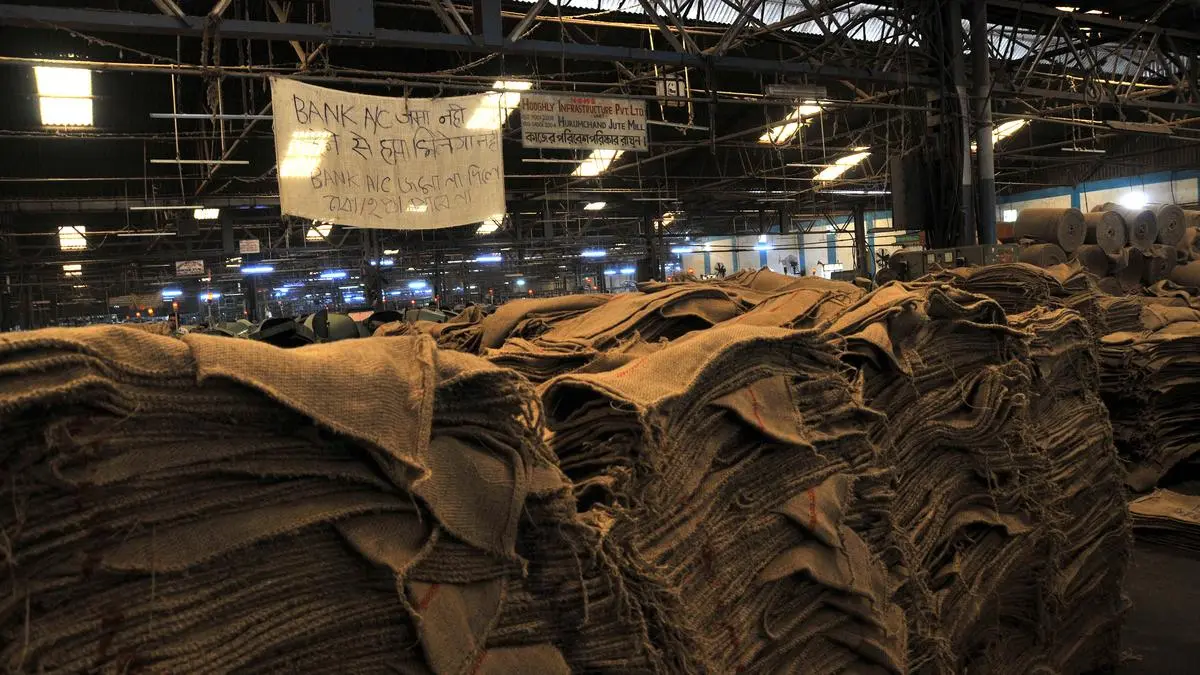
The brokerage further said that Despite a resilient demand outlook, the sector is expected to face headwinds in the coming quarters, with energy and packaging costs projected to rise View More