
Latest Sectors News

The groundbreaking for the integrated solar manufacturing facility by SAEL Solar P6 was held Saturday in Jewar, attended by the Uttar Pradesh Chief Minister View More

India's MSMEs may power the country's manufacturing ambitions, but their competitiveness ultimately depends on something far more basic—reliable electricity. View More
There is a sound every small manufacturer dreads. Not a machine breaking down, because that can be planned for. It is a CNC line going silent mid-cycle. A moulding batch lost to a voltage dip that lasted less than a second. A heat-treatment run ruined. A die damaged. For a large plant, that may be an inconvenience. For an MSME, it can mean losing an entire day's output. The cost lands in rejected products, idle labour, delayed dispatches and difficult conversations with customers who expect reliability and have little patience for excuses. That is why, on MSME Day , perhaps the most important question is not how much power India has added, but whether that power reaches factory floors when production lines need to run. The question matters because MSMEs are not a side story in India's manufacturing journey; they are its foundation. India's 63 million MSMEs contribute more than 36 percent of manufacturing output, account for nearly 45 percent of exports and support over 110 million jobs. They form the supplier networks behind the country's automotive, engineering, electronics and industrial sectors. Every ambition around Make in India , every effort to attract global supply chains and every vision of India as a manufacturing powerhouse ultimately depends on whether these businesses can remain competitive. And competitiveness, at its most basic level, begins with whether the lights stay on. India deserves credit for the progress it has made in expanding power generation and accelerating renewable energy adoption. By mid-2025, the country had crossed a landmark threshold: over 50 percent of installed electricity capacity now comes from non-fossil sources, reaching that milestone roughly five years ahead of its 2030 Paris commitment. The National Electricity Plan 2023 charts an ambitious path forward, targeting a renewable share of around 57 percent by 2026–27 and 66 percent by 2031–32. These are significant achievements, and they demonstrate that India can build energy infrastructure at scale. Yet manufacturers do not consume installed capacity; they consume reliable power. A factory does not become more productive because another gigawatt has been added to the grid. It becomes more productive when machines run without interruption, production schedules hold and quality remains consistent. Over the last five years, India has met roughly 80 percent of its transmission targets. That 20 percent gap is not a planning statistic. For the MSME at the end of an overloaded feeder, it is the difference between a productive shift and a wasted one. As renewable capacity grows, the challenge is no longer limited to generation. Power must be transmitted, absorbed and delivered where economic value is actually created. China's recent experience is worth studying closely. Having added more renewable capacity in a single year than most countries have ever built, China found itself in early 2026 curtailing significant volumes of solar and wind because the grid could not absorb it. The outcome was counterintuitive: emissions rose and coal generation climbed, because when renewable supply could not be firmed up, the system fell back on fossil fuels. Generation alone does not create reliability. Without adequate transmission, storage and flexible capacity, even abundant power can struggle to reach users when they need it most. For India's MSMEs, this is not an abstract energy-sector debate. The sector generates roughly Rs 29 lakh crore in annual output, yet the cost of unreliable power rarely appears in official statistics. It is hidden in rejected batches, equipment stress, lower yields, unplanned maintenance and missed delivery schedules. Most businesses negotiate hard on tariffs, but far fewer calculate the true cost of disruption. In practice, a single unplanned outage can cost a manufacturing unit far more than a month of higher electricity bills. The tariff is visible. The disruption is not. But it is the disruption that quietly erodes margins, competitiveness and growth. Live Events Over the years, I have seen manufacturers improve profitability not by changing products or expanding capacity, but simply by improving the quality and consistency of their power supply. Injection moulding units report better yields and fewer losses. Precision manufacturers, particularly those supplying Japanese electronics companies, see lower rejection rates and longer component life when power is clean and stable. Production becomes more predictable. Customers become easier to retain. Reliable power does more than keep the lights on. It protects equipment, reduces waste and quietly determines whether a supplier holds an OEM account or loses it. This is also where the conversation around sustainability needs greater nuance. Reliable energy and cleaner energy are not competing objectives. Renewable power will remain central to India's growth story, but renewables deliver their full value only when supported by infrastructure that allows them to perform consistently. Storage systems, hydro power, gas-based generation and other dispatchable resources are not alternatives to the transition. They are what make the transition work. The opportunity to invest in this supporting infrastructure exists today. What is needed is the policy urgency to match it. The conversation therefore needs to move beyond capacity targets alone. Generation, transmission and distribution cannot be treated as separate scoreboards. A megawatt generated but not delivered creates little value. The real measure of success is whether power reaches businesses in a form they can depend on. That means building transmission alongside generation, accelerating storage deployment, preserving the flexible capacity needed to balance the grid and strengthening the distribution networks that connect power to industry. These are not aspirational goals. They are the unglamorous, essential work that determines whether India's energy ambitions translate into manufacturing competitiveness. For policymakers, reliability must be planned alongside capacity. For utilities, flexibility and network quality are no longer optional investments. For business owners, my advice is direct: do not wait for the grid to catch up. Treat energy as a strategic input, not just a utility expense. Build a balanced portfolio, pair whatever renewables you can access with firm dispatchable backup, and cost your power on the full bill including rejects, downtime and missed dispatches, not the tariff line alone. The manufacturers who understand this will outcompete those who do not. On MSME Day, India rightly celebrates the 110 million people whose livelihoods depend on small manufacturing holding its ground and growing. The pledge worth making today is a concrete one; build the transmission, invest in storage, protect the dispatchable backbone of the grid, and fix the last mile. MSMEs did not build this economy by waiting for conditions to improve. They built it in spite of them. The least we owe them is an energy system that finally works as hard as they do. The author is CEO, Caparo Power Limited. .Pbanner{display:flex;justify-content:space-between;align-items:center;background-color:#ec1c40;margin-top:20px;padding:5px 10px;border-radius:4px;color:#fff;line-height:10px;} .Pbannertext{display:flex;align-items:center;font-size:16px;font-weight:600;font-family:'Montserrat';} .Pbannertext img{height:20px;margin:0 6px} .Pbannerbutton a{display:flex;align-items:center;background-color:#fff;color:#ec1c40;text-decoration:none;font-weight:600;padding:4px 8px;border-radius:6px;font-size:15px;font-family:'Montserrat';} .Pbannerbutton img{height:20px;margin-right:6px} .Pbannerbutton a:hover{background-color:#f7f7f7} Add as a Reliable and Trusted News Source Add Now!

Temperature records were smashed across Europe this week, prompting several countries across the continent to issued high-level warnings about danger to life. View More
In this articleINFFF0Y2S-GBSIE-DEVWSB-DEVWSB-DEIBE-ESTOTZFABB.N-CHSU-FRFollow your favorite stocksCREATE FREE ACCOUNT People jump in the Trocadero Fountain near the Eiffel Tower during a heatwave in Paris on June 22, 2026. Julien De Rosa | Afp | Getty Images LONDON â Multiple Western European countries have spent this week grappling with record-smashing heatwaves, with red alerts issued in the U.K., France, Germany, Switzerland and Italy that warn of "a risk to life for even the healthy population."Temperatures soared well above 40 degrees Celsius (104 degrees Fahrenheit) in various regional towns and cities, with "tropical nights" offering little respite from the well-above-average June heat. Old buildings and infrastructure, limited uptake of air conditioning and little acclimatization to those highs mean European populations are less equipped to cope with such temperatures than other parts of the world.  Amid warnings that climate change means scorching temperatures are set to become the norm, some investors are rethinking how to prepare their portfolios for the societal changes anticipated alongside a future of sweltering summers. Building resilience Stephanie Niven, co-portfolio manager of the Global Sustainable Equity strategy at Ninety One, told CNBC on a call on Friday that her team took the view that the rise of intense weather conditions in Europe was creating a structural growth opportunity for investment.The Global Sustainable Equity Fund's management seeks out companies that have products and solutions that "lean into helping people respond and build resilience in a challenging time," she said. Its investments include companies focused on decarbonization, climate adaptation, water and pollution management, financial inclusion, and healthcare impact.One of the broad areas the fund is focused on is insurance, Niven said, naming broker and reinsurer Aon and Canadian insurer Intact Financial as two of its holdings in the sector. She told CNBC that Ninety One's team is particularly interested in firms "with policies that help those struggling with climate change and allowing the world to become more responsive.""We're seeing insurers [creating] more up-to-date climate modeling in their risk systems," she said. Tourists with umbrellas and fans in St Mark's Square, at the height of a severe heatwave, on June 24, 2026 in Venice, Italy.Simone Padovani | Getty Images News | Getty Images An anticipated El Niño event, expected to occur later this year, could also disrupt weather norms and shake up the insurance industry in a way that investors should watch, Niven added. "This could be the shock that disrupts what's been a soft cycle for a number of years," she said. "A stronger El Niño could have quite an interesting impact on the insurance cycle â fewer but more powerful hurricanes and an increased likelihood of huge loss events, which would be quite a shock to the insurance cycle. A very large event could mean a large opportunity in the sector.""We like companies that lean into the protection gap and enable the matching of risk and coverage," she added. Alongside insurance, Niven's fund looks for firms that can offer physical climate adaptations, such as New York-listed Trane Technologies, which manufactures cooling and refrigeration systems. Financial inclusion is another area the fund is focused on, with Niven saying its management team looks for companies that can assist with "financial resiliency that brings new people and communities into financial infrastructure to keep businesses alive." Energy shift Michael Field, chief equity strategist at Morningstar, agreed that there were companies poised to benefit from hotter summers on the continent. "Certainly, industrial firms like Johnson Controls and Siemens would be huge beneficiaries," he said in an email on Friday. "Both firms operate in the HVAC space, specifically the manufacture of commercial heat pumps. Modern pumps can double as cooling devices, which could provide an effective solution in more intense summer weather."Field added that with more intense weather and the associated damaging effects, particularly on emerging countries, the move away from fossil fuels and the push into cleaner energy could benefit utility firms. "Names like Vestas and Iberdrola, with exposure to cleaner wind energy could be direct beneficiaries," he said. "Similarly, the move to upgrade the grid to deal with renewable energy sources could benefit companies like National Grid in the U.K. Oil majors like Shell and Total, with large exposure to solar projects and biofuels, could also benefit." watch nowVIDEO4:1704:17Swiss Re: Extreme heat has economic impact on vast range of sectorsSquawk Box Europe Matthew Donen, Morningstar's director of equity research, added that the current heat wave has placed additional pressure on Europe's electricity grid, which has seen spot power prices rise amid surging cooling demand. "Aging electrical infrastructure has been unable to cope, with several plants forced to reduce output due to increased demand," he said via email. "This highlights the long-term need for grid modernisation. ABB, Schneider Electric and Siemens are key beneficiaries of this structural investment theme, providing the switchgear, transformers, grid automation and power management equipment that utilities need to strengthen and expand aging electrical infrastructure." Economic impact In a note on Friday, UBS strategists said the heatwave, which has pushed temperatures to as much as 18 degrees Celsius above normal levels, will have direct economic consequences â presenting investment opportunities as populations and authorities race to adapt. "Western Europe is in the grip of a heatwave that has disrupted power supplies, closed schools, and affected transport and cultural landmarks," they said. "French nuclear power plants cut output by around 7% of total demand as high temperatures limited access to cooling water, while rail networks, schools, and working hours were disrupted across several countries. The episode could add further political momentum behind decarbonization, climate adaptation, electrification, and energy-efficiency investment."UBS's team also noted that the continent's decarbonization strategy and energy policy "are among the most ambitious globally.""While we are Neutral on Eurozone equities overall, we believe decarbonization is just one of several secular trends that investors should be paying attention to," they said. Choose CNBC as your preferred source on Google and never miss a moment from the most trusted name in business news.

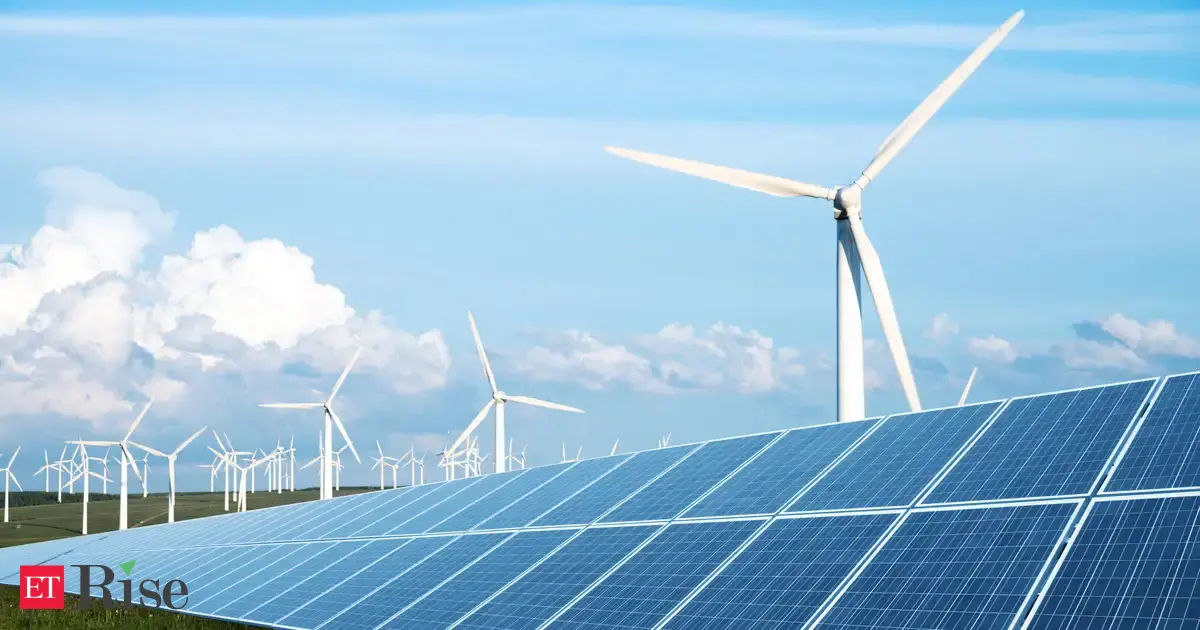
Despite political headwinds and global challenges, the sector's rapidly improving economics and falling costs signal a durable foundation, making it a compelling investment opportunity. View More
An old knock on renewable energy and other planet-friendly endeavors is that they can’t stand on their own without financial props from the government. Ironically, it took the second presidency of Donald Trump, in which those supports have turned to mule kicks, to kill this trope once and for all. Not only can the green economy sustain itself, but it trounces many other sectors. A recent report from the London Stock Exchange Group Plc (LSEG) found that “green economy” companies, or those that derive a significant portion of their revenue from stuff like clean energy, efficiency and water management, now have a total stock market value of $10 trillion. If this were a standalone sector, it would be bigger than healthcare and third in the world only to technology and industrials. Since 2008, valuations for these companies have grown by 18% a year, compared with 12% for the broader market, the report found. Their stocks have outperformed global equities by 133%. A representative sample of these companies, the FTSE Environmental Opportunities All Share Index, topped the FTSE Global All-Cap Index by 12% last year. In fact, this stealth sector just had one of its best years on record despite many of the world’s governments and the corporate sector abandoning their pre-Trump pledges to zero out carbon emissions to stave off the worst of global heating. Green revenues grew 5.3% last year, the fastest since 2022, the year of President Joe Biden’s Inflation Reduction Act (IRA). Evidence keeps mounting that the green economy has entered a new phase, one where its rapidly improving economics give it lasting immunity from fickle political sentiments. Even as the dreams of the 2015 Paris Agreement, net zero, the IRA and more have crumbled, the technology with the power to make some of those dreams come true has only gained momentum. Live Events “What the LSEG data shows us is that the green economy’s resilience is no longer dependent on politics,” Matthew Roling, assistant professor and founding executive director of the Abrams Climate Academy at the Kellogg School of Management at Northwestern University, said in a statement. “Energy security, grid reliability and supply chain security are now the primary drivers. Those are arguments that resonate in boardrooms. That’s a materially more durable foundation than Paris Agreement consensus ever was.” Bloomberg To be sure, the past year’s stellar market performance was due in part to the Iran war, when everybody relying on fuel that must be transported through war zones realized they might need a Plan B. The green-economy index has been volatile, the LSEG report warns, and there might be a brief but unpleasant snapback. But that 5.3% revenue growth happened before the Iran war during a year when Trump adopted a whole-of-government approach to squashing clean energy and efficiency and boosting rival fossil fuels. At the same time, green stocks have also reached a maturity level that suggests some staying power. Their price-earnings ratio premium over the broader market has fallen from a somewhat lofty 26% in 2022 to just 13% at the end of 2025, according to the LSEG report. More important, green business has a mature industry’s profitability, too. Companies whose revenue is more than 50% green have earnings before interest, taxes, depreciation and amortization, or ebitda, margins that are 2 to 4 percentage points higher than those of non-green companies, the LSEG report found. And there is still plenty of room to grow. Take data centers. (Please.) Their hunger for power will likely double by 2027, Goldman Sachs has estimated, accounting for 8.5% of the country’s total peak summer demand, up from 4.1% in 2025. More than half of these things are still being powered by fossil gas and coal, which is far too many. But new gas power could take five years to build, Roling told me in a Zoom call, compared with 18 months for a new solar farm. Projects that want to start churning out hallucinations quickly should favor renewables. Meanwhile, though battery storage costs have tumbled by about 20% a year over the past decade, according to the research group Ember, they still have much further to fall. The cheaper they get, the cheaper it will be for entire nations and industries to switch to combined solar-and-battery power that can be as responsive to demand as fossil gas. The LSEG report is only the latest proof that green money is smart money. A climate-related disaster-industrial complex was a $1 trillion business in the year through June 2025, Bloomberg Intelligence has estimated. Green-debt issuance set a record last year, and banks made more money arranging financing for clean energy than for fossil fuels for the fourth consecutive year. The S&P Global Clean Energy Transition Index thumped the broader market in 2025, up 45% compared with 16% for the S&P 500. The data-center boom, unfavorable political winds and the supply-chain disruptions of the Iran war have conspired to keep coal and other dirty fuels afloat temporarily. Global carbon emissions are still rising. The green economy doesn’t yet have the power to overcome all that. But its relentlessly falling costs are bringing that day closer. Any investor who keeps dismissing green investments as fragile niche products, good for nothing more than virtue signaling, will be left behind. .Pbanner{display:flex;justify-content:space-between;align-items:center;background-color:#ec1c40;margin-top:20px;padding:5px 10px;border-radius:4px;color:#fff;line-height:10px;} .Pbannertext{display:flex;align-items:center;font-size:16px;font-weight:600;font-family:'Montserrat';} .Pbannertext img{height:20px;margin:0 6px} .Pbannerbutton a{display:flex;align-items:center;background-color:#fff;color:#ec1c40;text-decoration:none;font-weight:600;padding:4px 8px;border-radius:6px;font-size:15px;font-family:'Montserrat';} .Pbannerbutton img{height:20px;margin-right:6px} .Pbannerbutton a:hover{background-color:#f7f7f7} Add as a Reliable and Trusted News Source Add Now!

Jupiter International inaugurates its Unit IV at its Baddi manufacturing campus, adding 1.25 GW of TOPCon solar cell manufacturing capacity View More

Sunsol to aid India’s transition to distributed solar energy by providing a single-window platform for rooftop and on-ground solar installations View More

The appellate tribunal has put on hold the NCLT Kolkata order admitting CIRP against the company until the next hearing. View More

The Centre’s flagship rooftop solar initiative is proving effective in reducing household electricity costs View More

The collaboration will focus on solar, wind, hybrid power and energy storage solutions, including battery and pumped storage systems, strengthening India’s clean energy transition View More