
Latest Sectors News

Deon Energy, an Ahmedabad-based solar EPC firm, is set to launch an IPO to gather capital. This offering will feature a fresh equity share issue coupled with a promoter's sale of shares. The funds raised aim to establish a 30 MW solar power plant in Gujarat while also boosting working capital and covering essential corporate expenses. View More
Solar engineering, procurement and construction (EPC) company Deon Energy has filed draft papers with the market regulator Sebi to raise funds through an initial public offering (IPO). The Ahmedabad-based company's proposed IPO comprises a fresh issue of up to 72 lakh equity shares and an offer for sale (OFS) of up to 20 lakh shares by promoters, according to the Draft Red Herring Prospectus (DRHP) filed on Friday. Deon Energy plans to use Rs 95.80 crore from the fresh issue proceeds to set up a 30 MW DC independent power production plant across six identified sites in Gujarat's Junagadh, Surendranagar and Kachchh districts. It will also allocate Rs 75 crore towards working capital requirements, with the remaining proceeds earmarked for general corporate purposes. The proposed expansion will mark the company's entry into solar power generation , alongside its existing EPC business. Live Events Deon Energy provides turnkey services for ground-mounted and rooftop solar projects, covering engineering, procurement, construction and commissioning. It also offers operations and maintenance services. Since commencing operations as a partnership firm in 2020, the company has executed 126 solar power projects with an aggregate installed capacity of 321.53 MW DC as of August 31, 2026. As of the same date, its outstanding EPC order book stood at Rs 527.43 crore across 34 projects. The company caters to industrial customers across sectors such as ceramics, chemicals, pharmaceuticals, textiles and paper. Its EPC projects include work for Makson Pharmaceuticals India, Omax Cotspin, Anjani Spintex and Sega Granito, among others. Deon Energy's revenue from operations rose to Rs 456.28 crore in FY26 from Rs 298.54 crore in FY25. Profit after tax increased to Rs 46.06 crore from Rs 26.41 crore during the period. The equity shares are proposed to be listed on the BSE and the National Stock Exchange of India . Valmiki Leela Capital is the book-running lead manager to the issue. .Pbanner{display:flex;justify-content:space-between;align-items:center;background-color:#ec1c40;margin-top:20px;padding:5px 10px;border-radius:4px;color:#fff;line-height:10px;width: 100%;box-sizing: border-box} .Pbannertext{display:flex;align-items:center;font-size:16px;font-weight:600;font-family:'Montserrat';} .Pbannertext img{height:20px;margin:0 6px} .Pbannerbutton a{display:flex;align-items:center;background-color:#fff;color:#ec1c40;text-decoration:none;font-weight:600;padding:4px 8px;border-radius:6px;font-size:15px;font-family:'Montserrat';} .Pbannerbutton img{height:20px;margin-right:6px} .Pbannerbutton a:hover{background-color:#f7f7f7} Add as a Reliable and Trusted News Source Add Now! (You can now subscribe to our ETMarkets WhatsApp channel) (You can now subscribe to our ETMarkets WhatsApp channel)
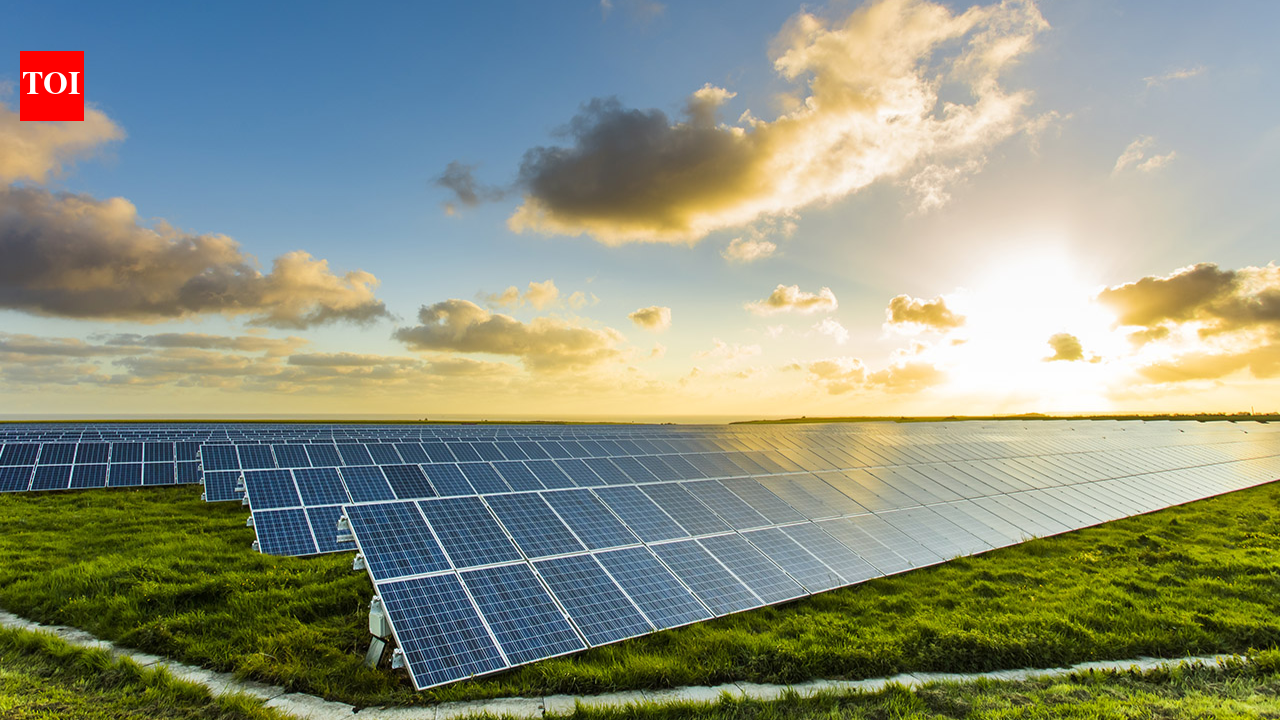
Residents of Goulburn embarked on an inspiring decade-long endeavor to establish a community-driven solar farm alongside a battery system. With the backing of about 300 local investors, they overcame significant obstacles such as regulatory hurdles and supply chain challenges. Ultimately, the solar farm commenced operations, contributing clean energy to the local grid, and stands as an exemplary model for community-led renewable energy initiatives throughout regional Australia. View More
Residents of Goulburn embarked on an inspiring decade-long endeavor to establish a community-driven solar farm alongside a battery system. With the backing of about 300 local investors, they overcame significant obstacles such as regulatory hurdles and supply chain challenges. Ultimately, the solar farm commenced operations, contributing clean energy to the local grid, and stands as an exemplary model for community-led renewable energy initiatives throughout regional Australia. View More
Residents of Goulburn embarked on an inspiring decade-long endeavor to establish a community-driven solar farm alongside a battery system. With the backing of about 300 local investors, they overcame significant obstacles such as regulatory hurdles and supply chain challenges. Ultimately, the solar farm commenced operations, contributing clean energy to the local grid, and stands as an exemplary model for community-led renewable energy initiatives throughout regional Australia. View More

Three of the IPOs — Shree TNB Polymers, Dudani Retail and Sai Urja Indo Ventures — will list on the BSE SME platform, while Himalayan Solar and Bench Mark Infotech Services will list on the NSE SME platform. Among the five, Himalayan Solar has the largest issue size at Rs 68.03 crore, followed by Bench Mark Infotech Services at Rs 42.44 crore. View More
Five SME initial public offerings (IPOs) are set to open for subscription today, September 25, 2026, giving investors a five-day bidding window until September 29. The five issues — Shree TNB Polymers, Dudani Retail, Sai Urja Indo Ventures, Himalayan Solar and Bench Mark Infotech Services — will collectively raise around Rs 177.16 crore. Three of the IPOs — Shree TNB Polymers, Dudani Retail and Sai Urja Indo Ventures — will list on the BSE SME platform, while Himalayan Solar and Bench Mark Infotech Services will list on the NSE SME platform. Among the five, Himalayan Solar has the largest issue size at Rs 68.03 crore, followed by Bench Mark Infotech Services at Rs 42.44 crore. All five IPOs are scheduled to close on September 29, with the basis of allotment expected to be finalised on September 30. The shares are tentatively scheduled to list on October 5, 2026. Read more: NSE IPO Tracker: Catch all the highlights here Shree TNB Polymers IPO The Shree TNB Polymers IPO is a book-built issue worth Rs 31.20 crore. The issue comprises an entirely fresh issue of 60 lakh shares. Live Events The IPO will remain open from September 25 to September 29, with allotment expected on September 30. The shares are proposed to be listed on the BSE SME platform on October 5. The price band has been fixed at Rs 47 to Rs 52 per share, with a lot size of 2,000 shares. Retail investors need to bid for a minimum of 4,000 shares, requiring an investment of Rs 2.08 lakh at the upper price band. The minimum HNI application is for three lots, or 6,000 shares, amounting to Rs 3.12 lakh. Corporate Makers Capital Ltd. is the book-running lead manager, while MUFG Intime India Pvt. Ltd. is the registrar to the issue. Read more: Runwal Enterprises IPO opens today: Check GMP and key details. Should you subscribe? Dudani Retail IPO The Dudani Retail IPO is a fixed-price issue worth Rs 10.54 crore. The issue is entirely a fresh issue of 36.36 lakh shares. Subscription will open on September 25 and close on September 29. The basis of allotment is expected on September 30, while the company is scheduled to list on the BSE SME platform on October 5. The IPO has a fixed issue price of Rs 29 per share and a lot size of 4,000 shares. Retail investors are required to apply for at least two lots, or 8,000 shares, translating into a minimum investment of Rs 2.32 lakh. HNI investors need to apply for a minimum of three lots, or 12,000 shares, involving Rs 3.48 lakh. Finshore Management Services Ltd. is the book-running lead manager and Maashitla Securities Pvt. Ltd. is the registrar. Read more:Orient Cables IPO opens today: GMP signals 19% listing gain; check key details Sai Urja Indo Ventures IPO The Sai Urja Indo Ventures IPO is a book-built issue of Rs 24.95 crore. It comprises a fresh issue of 18.29 lakh shares worth Rs 20.67 crore and an offer for sale (OFS) of 3.79 lakh shares worth Rs 4.28 crore. The IPO will open on September 25 and close on September 29. Allotment is expected to be finalised on September 30, followed by a tentative BSE SME listing on October 5. The price band has been set at Rs 107 to Rs 113 per share, with a lot size of 1,200 shares. Retail investors need to bid for a minimum of 2,400 shares, requiring Rs 2.71 lakh at the upper price band. The minimum HNI application is for three lots, or 3,600 shares, amounting to Rs 4.07 lakh. Shannon Advisors Pvt. Ltd. is the book-running lead manager, while Maashitla Securities Pvt. Ltd. is the registrar. Himalayan Solar IPO The Himalayan Solar IPO is the largest among the five SME issues opening today, with a total issue size of Rs 68.03 crore. The book-built issue comprises a fresh issue of 58.91 lakh shares aggregating to Rs 60.68 crore and an OFS of 7.14 lakh shares worth Rs 7.35 crore. The IPO will be open from September 25 to September 29 and is scheduled to list on the NSE SME platform on October 5, subject to the tentative IPO timeline. The price band has been fixed at Rs 98 to Rs 103 per share, while the lot size is 1,200 shares. Retail investors need to apply for a minimum of 2,400 shares, requiring an investment of Rs 2.47 lakh at the upper price band. The minimum HNI application is for three lots, or 3,600 shares, amounting to Rs 3.71 lakh. Finshore Management Services Ltd. is the book-running lead manager and Maashitla Securities Pvt. Ltd. is the registrar to the issue. Bench Mark Infotech Services IPO The Bench Mark Infotech Services IPO is a book-built issue of Rs 42.44 crore, making it the second-largest among the five SME IPOs opening today. The issue comprises a fresh issue of 34 lakh shares aggregating to Rs 37.40 crore and an OFS of 4.58 lakh shares worth Rs 5.04 crore. The IPO will open on September 25 and close on September 29, with allotment expected on September 30. The shares are scheduled to list on the NSE SME platform on October 5. The price band has been fixed at Rs 104 to Rs 110 per share, with a lot size of 1,200 shares. Retail investors need to bid for at least 2,400 shares, translating into a minimum investment of Rs 2.64 lakh at the upper price band. The minimum HNI application is for three lots, or 3,600 shares, requiring Rs 3.96 lakh. GYR Capital Advisors Pvt. Ltd. is the book-running lead manager, while Kfin Technologies Ltd. is the registrar to the issue. Disclaimer: The views/recommendations mentioned in this article, wherever applicable, are those of the respective SEBI-registered Research Analyst/brokerage and have been reproduced/reported with due attribution. They should not be construed as the views or recommendations of The Economic Times Digital or the journalist. Readers are advised to consider the original research report and make their investment decisions based on their own assessment. Brokerage disclaimers here .Pbanner{display:flex;justify-content:space-between;align-items:center;background-color:#ec1c40;margin-top:20px;padding:5px 10px;border-radius:4px;color:#fff;line-height:10px;width: 100%;box-sizing: border-box} .Pbannertext{display:flex;align-items:center;font-size:16px;font-weight:600;font-family:'Montserrat';} .Pbannertext img{height:20px;margin:0 6px} .Pbannerbutton a{display:flex;align-items:center;background-color:#fff;color:#ec1c40;text-decoration:none;font-weight:600;padding:4px 8px;border-radius:6px;font-size:15px;font-family:'Montserrat';} .Pbannerbutton img{height:20px;margin-right:6px} .Pbannerbutton a:hover{background-color:#f7f7f7} Add as a Reliable and Trusted News Source Add Now! (You can now subscribe to our ETMarkets WhatsApp channel) (You can now subscribe to our ETMarkets WhatsApp channel)
Inox Clean Energy is set to launch a ?10,000 crore IPO by filing a draft red herring prospectus, potentially marking the largest IPO in the Indian private renewable energy sector to date. This deal will consist of new shares issued as well as a sale of existing shares. The company had earlier withdrawn a DRHP but has since seen significant growth in its renewable energy and solar manufacturing operations. View More
New Delhi: Inox Clean Energy is likely to file a draft red herring prospectus for a ₹10,000 crore initial public offering of shares with the market regulator before the weekend, in what could be the largest IPO from a private Indian renewable energy company to date, people familiar with the matter said. The planned offering will comprise an issue of fresh shares by the INOXGFL Group company and an offer for sale from some of its existing shareholders, the people said. The INOXGFL Group did not respond to ET's queries. Government-backed NTPC Green Energy made a similar-sized IPO in November 2024. Read more: Sebi clears PRIM route for PMS players to invest in mutual funds, SIFs; Rs 25 lakh minimum ticket Inox Clean Energy in last December made a confidential DRHP filing with the Securities and Exchange Board of India, but withdrew it later. The latest plan comes after it raised funds privately from a diverse group of investors that included prominent global and local institutions, and expanded capacity through acquisitions in India and overseas. The company operates two related businesses: renewable energy generation and manufacturing of solar photovoltaic modules and cells. Read more: Snapdeal parent AceVector raises Rs 189 crore from anchors; Negen, Singularity among top investors Live Events It expanded its power generation and manufacturing businesses rapidly over the past year and a half, both organically and through an aggressive M&A strategy. Inox Neo Energies, the company's independent power generation vertical, operates renewable power plants with a total capacity of 5 gigawatts. An additional 11 gigawatts of projects are under development. .Pbanner{display:flex;justify-content:space-between;align-items:center;background-color:#ec1c40;margin-top:20px;padding:5px 10px;border-radius:4px;color:#fff;line-height:10px;width: 100%;box-sizing: border-box} .Pbannertext{display:flex;align-items:center;font-size:16px;font-weight:600;font-family:'Montserrat';} .Pbannertext img{height:20px;margin:0 6px} .Pbannerbutton a{display:flex;align-items:center;background-color:#fff;color:#ec1c40;text-decoration:none;font-weight:600;padding:4px 8px;border-radius:6px;font-size:15px;font-family:'Montserrat';} .Pbannerbutton img{height:20px;margin-right:6px} .Pbannerbutton a:hover{background-color:#f7f7f7} Add as a Reliable and Trusted News Source Add Now! (You can now subscribe to our ETMarkets WhatsApp channel) (You can now subscribe to our ETMarkets WhatsApp channel)

Tier II cities such as Coimbatore, Sri Potti Sriramulu Nellore (Nellore), Visakhapatnam, Kolhapur and Nashik are also catching up View More

?The investment will fund ?expansion into solar ingots, wafers, cells and modules, as well as ?battery energy ?storage systems and renewable power generation. View More

The company said it has started commercial production at the greenfield manufacturing facility and dispatched the first batch of bare copper wire on September 20 View More

Varmora Granito's IPO entered its third day of bidding on September 24, facing limited investor response. The public offer was subscribed 1.58 times, with bids for 5.34 million shares against 3.39 million on offer. Qualified Institutional Buyers led the interest, while retail participation showed nearly complete subscription. The issue price ranges from Rs 140 to Rs 148 per share, with allotment expected on September 25. View More
Varmora Granito’s IPO entered its third and final day of bidding on Thursday, September 24, with investor response remaining subdued. The public offer of Varmora Granito was subscribed 1.58 times, with investors placing bids for 5,34,85,762 shares against 3,39,02,899 shares on offer, according to NSE data. In the grey market, the IPO is currently commanding zero GMP, down sharply from the earlier premium of around 6%, indicating expectations of a flat listing. On Day 2, the issue was subscribed 27% overall, against the 3.39 crore shares on offer. The retail portion was subscribed 40%, with investors bidding for shares against the 1.71 crore shares reserved for the category. The Rs 708-crore IPO is a book-built issue comprising a fresh issue of 2.16 crore shares worth Rs 320 crore and an offer for sale (OFS) of 2.62 crore shares worth Rs 388.02 crore. Read more: NSE IPO Tracker: Catch all the highlights here Live Events The issue will remain open for subscription until September 24, with the allotment expected to be finalised on September 25. The company’s shares are proposed to be listed on both the NSE and BSE on September 29. The IPO has a price band of Rs 140-148 per share, with a lot size of 101 shares. At the upper end of the price band, retail investors will need to invest a minimum of Rs 14,948 for one lot. JM Financial Ltd, Goldman Sachs (India) Securities Pvt. Ltd and SBI Capital Markets Ltd are the book-running lead managers for the issue, while KFin Technologies Ltd is the registrar. Varmora Granito IPO Subscription Status Qualified Institutional Buyers (QIBs) led the demand, with the category subscribed 3.16 times. The institutional portion had 93.65 lakh shares on offer. The Retail Individual Investors (RIIs) category was nearly fully subscribed, receiving bids for 1,70,92,634 shares against 1,71,76,172 shares reserved for the segment. Meanwhile, the Non-Institutional Investors (NIIs) category was subscribed 92%, with 73.61 lakh shares available for subscription. Read more: Adroit Industries IPO Day 2: GMP at 25%, subscription reaches 5.18 times. Should you subscribe? IPO Objects of the Issue Varmora Granito Ltd plans to use the net proceeds from the IPO primarily towards the repayment or pre-payment, either fully or partly, of outstanding borrowings and accrued interest. The funds will be used to repay debt availed by the company and its wholly owned subsidiaries, Covertek Ceramica Pvt. Ltd and Varmora Sanitarywares Pvt. Ltd, as well as borrowings of subsidiary Simola Tiles LLP through investments in the subsidiary. The company has allocated Rs 245 crore towards debt repayment and general corporate purposes out of the fresh issue proceeds. Should you subscribe? According to Sushil Financial Services’ research report, Varmora Granito has demonstrated improving financial performance, with Total Income growing 1.4% in FY25 and 4.7% in FY26. PAT declined 31.5% in FY25 before rebounding 79.0% in FY26, driving diluted EPS from Rs 1.74 to Rs 3.05 and improving RoNW to 7.79%. EBITDA margin also expanded to 14.18% in FY26 from 13.28% in FY25, supported by a shift toward premium GVT and technical tiles. However, at the upper price band, the issue is valued at around 48.5x FY26 diluted earnings, broadly in line with the disclosed listed-peer average of 47.1x (range: 28.6x-72.0x), leaving limited valuation cushion. Given the broadly fair valuation relative to peers, the competitive and cyclical nature of the tile industry, and the company’s 23-year track record, premiumisation strategy and deleveraging balance sheet, the report recommends subscribing to the issue. Financial Performance Varmora Granito Ltd’s total income increased 5% to Rs 1,563 crore in FY26 from Rs 1,493 crore in FY25. Over the same period, profit after tax (PAT) rose 79% to Rs 55 crore from Rs 31 crore. Read more: Moneyview IPO opens today: GMP signals 32% listing gains — Should you subscribe? About Varmora Granito Ltd Varmora Granito Limited, incorporated in 2003, manufactures and markets ceramic and vitrified tiles, including Glazed Vitrified Tiles (GVT), Polished Vitrified Tiles (PVT) and ceramic tiles. The company focuses on premium, technology-driven products, with GVT and technical tiles contributing around 84% of its tile revenue in Fiscal 2026. It operates eight manufacturing facilities in Gujarat’s Morbi cluster, with 81.72% of its Fiscal 2026 revenue coming from in-house manufactured products. The company has also adopted Integrated Stone Technology (IST) through a technology partnership with Italy-based SACMI. Varmora has a distribution network of 305 exclusive brand outlets and 2,758 multi-brand outlets across India and overseas, along with B2B sales to builders, contractors, developers and government entities. The company also has a focus on renewable energy, with 16.22 MW of wind and solar capacity. As of March 2026, Varmora had 1,153 permanent employees. Disclaimer: The views/recommendations mentioned in this article, wherever applicable, are those of the respective SEBI-registered Research Analyst/brokerage and have been reproduced/reported with due attribution. They should not be construed as the views or recommendations of The Economic Times Digital or the journalist. Readers are advised to consider the original research report and make their investment decisions based on their own assessment. Brokerage disclaimers here .Pbanner{display:flex;justify-content:space-between;align-items:center;background-color:#ec1c40;margin-top:20px;padding:5px 10px;border-radius:4px;color:#fff;line-height:10px;width: 100%;box-sizing: border-box} .Pbannertext{display:flex;align-items:center;font-size:16px;font-weight:600;font-family:'Montserrat';} .Pbannertext img{height:20px;margin:0 6px} .Pbannerbutton a{display:flex;align-items:center;background-color:#fff;color:#ec1c40;text-decoration:none;font-weight:600;padding:4px 8px;border-radius:6px;font-size:15px;font-family:'Montserrat';} .Pbannerbutton img{height:20px;margin-right:6px} .Pbannerbutton a:hover{background-color:#f7f7f7} Add as a Reliable and Trusted News Source Add Now! (You can now subscribe to our ETMarkets WhatsApp channel) (You can now subscribe to our ETMarkets WhatsApp channel)