
Latest Sectors News
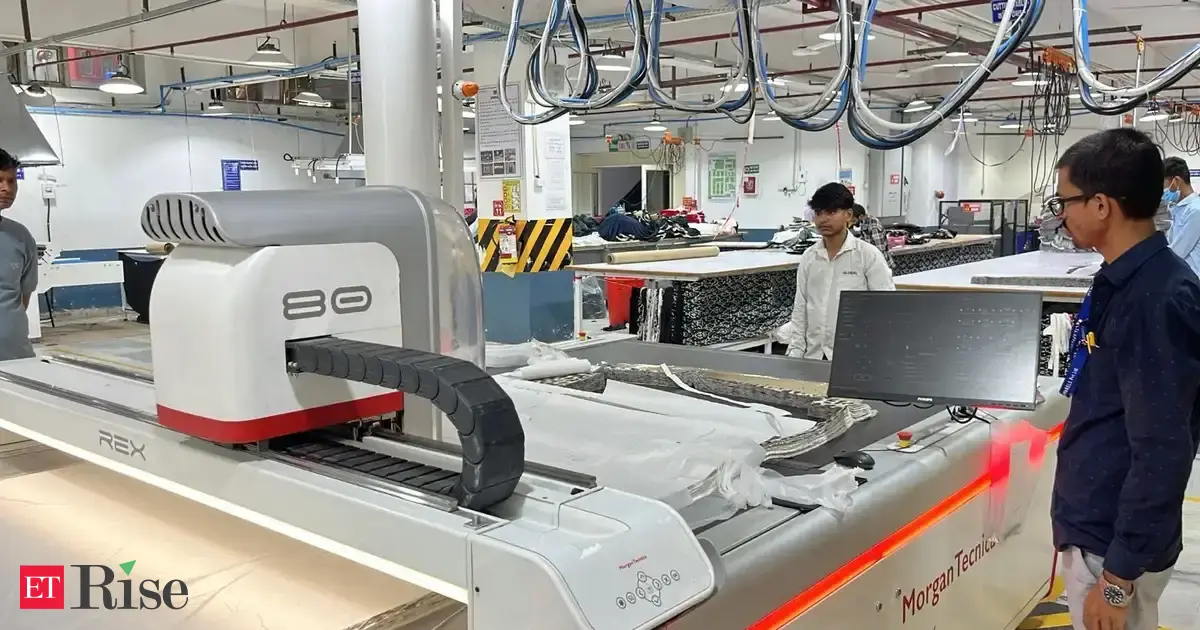
CTA Apparels is embracing automation and vertical integration to enhance speed, transparency, and traceability. This shift positions them as systems-driven partners for global fashion brands. Investments in technology and sustainability are key to their future growth and competitiveness in the global market. View More
Inside CTA Apparels ’ manufacturing unit in Sector 63, Noida, the factory floor goes beyond scale; it reflects a shift in how India’s garment exporters are rethinking production. On a recent visit, what stood was not just the movement of fabric and finished garments but the way the entire operation is managed through automated systems, rather than manual supervision. Rolls of fabric are moved seamlessly from inspection to cutting, ensuring minimal handling. Large sections of the floor are organised around centralised processes instead of fragmented lines. Operators work alongside screens tracking performance in real time, while supervisors monitor output through digital dashboards. There is a visible attempt to reduce friction at every stage, whether in material routing, early defect detection, or workflow design aimed at minimising idle time. The facility does not resemble a traditional labour-intensive export unit; instead, it operates as a controlled production environment built for predictability. “The idea is to move from being a manufacturing vendor to becoming a systems-driven partner for global brands,” says Shivansh Kansal, Vice President (Strategy) at CTA Apparels. “Today, speed, transparency, and traceability matter as much as cost.” That shift is not limited to this unit alone. It reflects a broader transformation underway at CTA Apparels, as the Noida-based exporter builds a vertically integrated, technology-enabled manufacturing ecosystem aligned with evolving global fashion supply chains. Live Events A business built on control and precision Mukesh Kansal, Shivansh’s father, started CTA Apparel in 1993, when India’s garment exports were largely driven by small, disconnected manufacturing units. Over the years, the company has steadily expanded its capabilities, moving beyond basic garment production to build a fully integrated textile and apparel ecosystem. For the younger Kansal, whose education in Switzerland exposed him to global business practices, the objective now is not merely to grow the company but to build an Indian apparel manufacturer that can match the operational excellence and scale of the world's leading suppliers. CTA Apparels operates in India’s highly competitive apparel export sector, where it competes with a mix of large integrated exporters and regional garment manufacturing clusters supplying global fashion brands. The company says its key competitors in the broader export-oriented apparel segment include companies such as Gokaldas Exports , Pearl Global Industries, KPR Mill and several Noida- and Tiruppur-based export houses. What distinguishes CTA from others is the extent of that integration, says Shivansh. Instead of relying on external vendors for fabric, processing, and finishing, the company has brought nearly every stage of the value chain in-house. Fabric is sourced and processed internally; it undergoes pre-treatment processes, such as singeing and mercerising, moves through dyeing and printing units, and is then converted into finished garments within the same controlled ecosystem. This approach has allowed CTA to scale without losing operational control, he explains. The company now employs more than 5,000 professionals and operates over 2,000 machines, reflecting both its manufacturing depth and its evolution into a large, structured exporter. This scale-up is mirrored in its financial trajectory, with CTA’s revenue from operations rising from Rs 335 crore in FY24 to Rs 374 crore in FY25, and Rs 447 crore in FY26, indicating a steady acceleration in growth. “My father built the business on strong fundamentals: quality, discipline, and financial prudence. What we are adding now is technology and global alignment,” emphasises Shivansh. The textile backbone that powers it all Much of CTA’s operational strength is derived not just from its garment units but also from its textile processing plant in Pilkhuwa, Uttar Pradesh . Located near its Noida facilities, the plant ensures that smooth flows of fabric into garment production, minimising logistical delays, facilitating quicker turnaround times and more precise scheduling. Inside the facility, scale and sophistication go hand in hand. The plant processes up to 100,000 meters of woven fabric daily and around 7,500 kg of knitted fabric, moving them through advanced pre-processing, dyeing, printing, and finishing systems that meet global quality standards. With a 125,000 sq. ft expansion recently, introducing RFID-enabled inventory tracking and advanced surface treatment technologies, CTA has further enhanced its automation. “When you control fabric, you control timelines, quality, and ultimately your credibility with buyers,” Shivansh points out. The company has a production capacity of around 1.5 million garments per month. A new automated facility in Noida is expected to augment capacity by an additional 150,000 garments. It also boasts an on-time delivery rate of over 98%, which highlights its focus on reliability, an essential factor in global retail supply chains. “In exports, consistency is everything. Buyers don’t just look at capacity; they also look at predictability. “If you can deliver the same quality, on time, every time, you stay in the game,” says Shivansh. CTA exports 95-97% of its products to the European market. Shivansh says the company expects export turnover to reach about Rs 550 crore next year. CTA exports 95-97% of its products to the European market, with the largest shipments each year heading to Germany, France, Italy, Spain, the Netherlands, Poland, Sweden, Belgium, Austria, and Denmark. Shivansh says the company expects export turnover to reach about Rs 550 crore next year. CTA’s integration into global supply chains is reflected in its client base, which includes major global brands, such as Zara, H&M, American Eagle, Marks & Spencer, and Primark. Its product portfolio spans multiple categories, enabling it to serve diverse global markets. The plant processes up to 100,000 meters of woven fabric daily and around 7,500 kg of knitted fabric, moving them through advanced pre-processing, dyeing, printing, and finishing systems that meet global quality standards. Sustainability as strategy CTA is embedding sustainability into its operating model, with measurable investments across energy, water, and waste management, says Shivansh. The company has installed 1 MW solar capacity across its manufacturing units and an additional 1.5 MW at its fabric processing facility as part of its target to transition to 100% renewable energy by 2027. On the water side, its Zero Liquid Discharge (ZLD) system enables up to 90% reuse of treated wastewater, supported by a 65 KLD treatment plant and multi-stage filtration processes. It is also pushing circularity through zero-landfill practices, post-production recycling protocols and partnerships with certified recyclers, alongside efforts such as planting over 50,000 trees. “If you are not building sustainability into your operations today, you risk being excluded from global supply chains tomorrow. For us, it is directly linked to long-term competitiveness,” says Shivansh. Moving beyond manufacturing to design CTA’s transformation is most evident in its push toward digital manufacturing. Its new Noida facility is designed as a data-driven production environment where fabric inspection is automated, cutting is centralised, sewing lines are digitally monitored, and embroidery is executed through IoT-enabled systems. “We are not reducing the role of people; rather, we are enhancing productivity per person,” Shivansh says, emphasising that technology helps the firm reduce errors, improve speed, and make better decisions on the floor. This shift aligns with global trends, where brands increasingly demand traceable and transparent production processes. CTA is also investing in design capabilities, supported by Computer-Aided Design (CAD) systems and AI tools that enable rapid sampling and trend forecasting. “Earlier, exporters were reactive, wherein you waited for buyer briefs. Now, you must be proactive. If you can show design direction, you move up the value chain,” Shivansh explains. Despite increasing automation, CTA continues to invest in workforce development, having trained over 6,500 individuals and employed more than 4,700 of them. “Technology and people are not substitutes; rather, they complement each other,” Shivansh adds. CTA’s transformation has also been reflected in its recent industry recognition. The company won first prize in the Cotton and Ready-Made Garments category at the Uttar Pradesh Export Promotion Awards for 2024–25. It also received the Silver Award from the Apparel Export Promotion Council (AEPC) for achieving the highest exports to the European Union in both 2023–24 and 2024–25. "If you are not building sustainability into your operations today, you risk being excluded from global supply chains tomorrow,” says Shivansh Kansal,Vice President (strategy), CTA Apparels. Challenges Textile exporters in the country are increasingly facing pressure due to rising labour and logistics costs and stiff competition from Bangladesh and Vietnam, says Kanishk Maheshwari, Co-Founder & Managing Director, Primus Partners. At the same time, global buyers are demanding faster turnaround times, traceability, sustainability compliance and consistent quality standards, he says. For context, India’s textile and apparel exports showed modest growth in FY26 amid geopolitical disruptions and uneven global demand. According to the Ministry of Textiles data, India’s textile exports rose 2.1% year-on-year to Rs 3.16 lakh crore in FY26 from Rs 3.09 lakh crore in FY25. Within this, ready-made garment (RMG) exports, the country’s largest textile export segment, increased 2.9% to Rs 1.39 lakh crore during the year. “For textile exporters based out of regional export clusters, the challenge today extends just beyond labour costs. Global buyers are increasingly demanding faster turnaround times, traceability, and sustainability compliance with consistent quality. Exporters today also face rising wages, logistics costs and stiff competition from Bangladesh and Vietnam, which continue to enjoy structural cost advantages,” says Maheshwari. The challenge currently is to scale without losing efficiency and to invest without compromising margins, says Shivansh. “This is precisely why automation is becoming central to the future of garment exports. The sector’s next phase of growth will depend less on low-cost labour and more on productivity-led manufacturing through automated cutting, digitally monitored production systems and integrated supply chains. India’s long-term garment export outlook remains strong, but sustaining competitiveness will require a decisive shift towards technology-enabled, value-added manufacturing,” Maheshwari adds. Road ahead CTA aims to further penetrate the UK market and strengthen its presence in the EU, extending its reach into the countryside. However, it has no plans to enter the US market, as it’s currently complex due to US President Donald Trump’s uncertain and arbitrary tariff regime, Shivansh says. The company is currently investing in automation, digitally monitored production systems, renewable energy adoption, and advanced textile processing capabilities to improve productivity, turnaround times, and supply-chain reliability. Even as India’s textile exports moderated in the recent months due to geopolitical tensions and supply chain disruption, industry observers believe export-focused apparel manufacturers with integrated textile capabilities, stronger compliance standards, and faster turnaround times could continue to see double-digit growth over the medium term, subject to global demand conditions and geopolitical developments. Founder Mukesh Kansal expects CTA to remain on a positive growth trajectory, driven by capacity expansion, automation-led productivity gains, and deeper integration with global supply chains. .Pbanner{display:flex;justify-content:space-between;align-items:center;background-color:#ec1c40;margin-top:20px;padding:5px 10px;border-radius:4px;color:#fff;line-height:10px;} .Pbannertext{display:flex;align-items:center;font-size:16px;font-weight:600;font-family:'Montserrat';} .Pbannertext img{height:20px;margin:0 6px} .Pbannerbutton a{display:flex;align-items:center;background-color:#fff;color:#ec1c40;text-decoration:none;font-weight:600;padding:4px 8px;border-radius:6px;font-size:15px;font-family:'Montserrat';} .Pbannerbutton img{height:20px;margin-right:6px} .Pbannerbutton a:hover{background-color:#f7f7f7} Add as a Reliable and Trusted News Source Add Now!

Liotech Industries has fixed the issue price at Rs 321 per share. The IPO is a combination of a fresh issue of 9 lakh shares aggregating Rs 28.89 crore and an offer for sale (OFS) of 2.22 lakh shares worth about Rs 7.13 crore. The total issue size stands at Rs 36.02 crore. View More
The Rs 36 crore IPO of Liotech Industries will open for subscription on Wednesday and will remain available for bidding until June 19. The SME issue is scheduled to list on the BSE SME platform on June 24. Ahead of the opening, the company's shares were commanding no grey market premium (GMP), indicating a flat listing expectation based on unofficial market activity. Liotech Industries has fixed the issue price at Rs 321 per share. The IPO is a combination of a fresh issue of 9 lakh shares aggregating Rs 28.89 crore and an offer for sale (OFS) of 2.22 lakh shares worth about Rs 7.13 crore. The total issue size stands at Rs 36.02 crore. The company plans to utilise the proceeds from the fresh issue for capital expenditure towards machinery acquisition, loan repayment, working capital requirements and general corporate purposes. Of the estimated Rs 24.28 crore net proceeds, around Rs 8 crore will be used for machinery purchases, Rs 4.95 crore for debt repayment and Rs 7 crore for working capital needs. Investors can bid for a minimum of 800 shares, requiring an investment of Rs 2.57 lakh. High-net-worth investors need to apply for at least 1,200 shares, translating into an investment of Rs 3.85 lakh. The issue has reserved 50% of the net offer for retail investors and the remaining 50% for non-institutional investors. Incorporated in 2020, Rajkot-based Liotech Industries manufactures hardware structures and accessories used across housing, infrastructure, agriculture, automotive, electricity, cement, mining and solar sectors. Its product portfolio includes door kits, hinges, gate hooks, aldrop locks, handles, tower bolts and shelf supports. Live Events The company operates a manufacturing facility spread across 12,632 square feet in Rajkot, Gujarat, and also trades supplementary hardware products such as door stoppers, magnets, table brackets and bed lifters. It follows a business-to-business model and offers more than 150 product specifications catering to different industrial applications. On the financial front, Liotech has reported steady growth in recent years. For the nine months ended December 2025, the company posted revenue of Rs 51.79 crore and a profit after tax of Rs 5.49 crore. In FY25, revenue stood at Rs 40.69 crore with net profit of Rs 4.16 crore, compared with Rs 27.87 crore and Rs 2.93 crore, respectively, in FY24. Wealth Mine Networks is the book-running lead manager to the issue, while Kfin Technologies is the registrar. Aikyam Capital will act as the market maker. The allotment is expected to be finalised on June 22, with shares likely to be credited to demat accounts on June 23 ahead of the tentative listing on June 24. (Disclaimer: Recommendations, suggestions, views and opinions given by the experts are their own. These do not represent the views of Economic Times) .Pbanner{display:flex;justify-content:space-between;align-items:center;background-color:#ec1c40;margin-top:20px;padding:5px 10px;border-radius:4px;color:#fff;line-height:10px;} .Pbannertext{display:flex;align-items:center;font-size:16px;font-weight:600;font-family:'Montserrat';} .Pbannertext img{height:20px;margin:0 6px} .Pbannerbutton a{display:flex;align-items:center;background-color:#fff;color:#ec1c40;text-decoration:none;font-weight:600;padding:4px 8px;border-radius:6px;font-size:15px;font-family:'Montserrat';} .Pbannerbutton img{height:20px;margin-right:6px} .Pbannerbutton a:hover{background-color:#f7f7f7} Add as a Reliable and Trusted News Source Add Now! (You can now subscribe to our ETMarkets WhatsApp channel) (You can now subscribe to our ETMarkets WhatsApp channel)

The company intends to deploy this fresh injection of capital to aggressively accelerate its geographic expansion into new cities across the country View More

Steps need to taken in advance for increasing the demand for electricity particularly in solar hours View More

A Nuvama report estimates India’s power demand will grow at a sustained 6% CAGR over the next decade, fueled by economic growth, urbaniSation, manufacturing expansion, and increased electrification View More
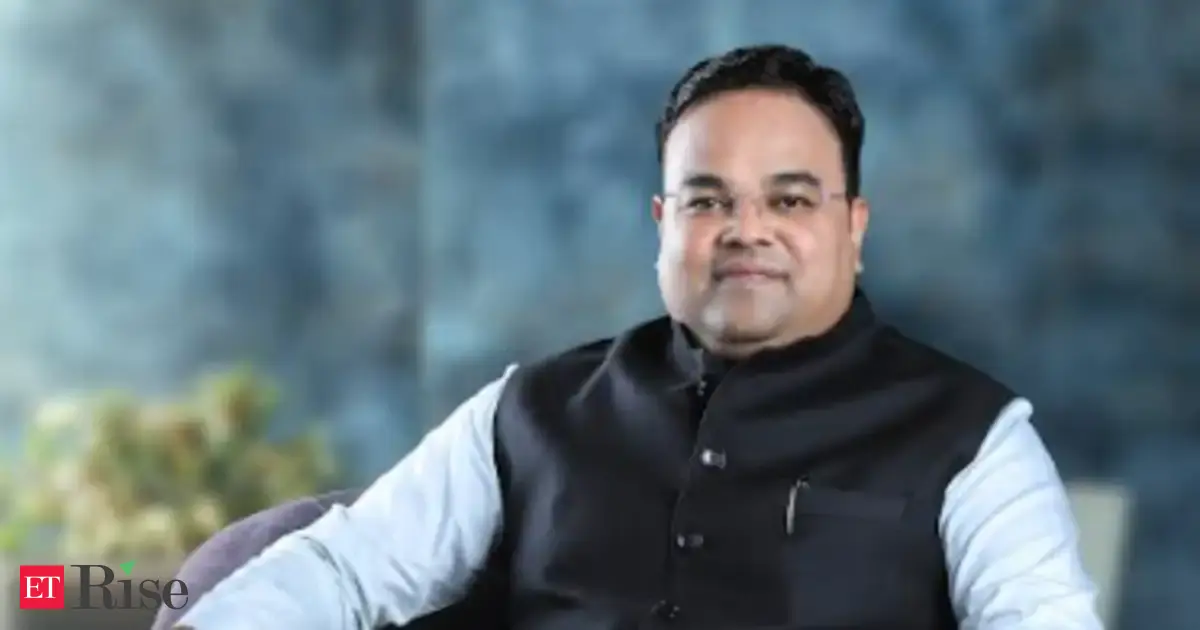
As India pursues ambitious climate and renewable energy goals, decentralised clean energy solutions are emerging as a critical driver of rural transformation. View More
India's renewable energy journey over many years has been assessed using metrics such as installed capacity, solar parks, grid development, national targets, and policy commitments. While these markers are still significant, they don't entirely encompass the upcoming challenges in the nation's clean energy transition. With India's expanding economy and pressing climate goals, the focus shifts beyond just renewable energy generation capacity. The effectiveness of energy distribution to the most deserving populations, industries, and areas is also a key aspect. This is especially crucial for rural and agricultural regions of India, as energy access significantly impacts productivity, income stability, and resilience. While vast renewable energy initiatives will bolster India's national capabilities, achieving the nation's sustainability targets will also hinge on localized solutions deployed at the farm, village, household, and community levels. In a conversation with ET Digital on the role of decentralised renewable energy systems in India’s climate journey, Gopal Kabra, Founder and CMD of GK Energy Limited , says the shift is both practical and necessary. Kabra here explains that decentralised renewable energy serves as a rural development necessity, particularly for farmers and remote communities, beyond merely being an energy transition strategy. The Economic Times (ET): What role do you see decentralised renewable energy systems playing in helping the country achieve its climate and sustainability goals? Gopal Kabra (GK): Decentralised renewable energy systems play a crucial role in India’s climate journey because they bring clean energy directly to the point of consumption. For a country as vast and diverse as India, sustainability cannot be achieved solely through large power plants and transmission networks. Alongside this, we need solutions that can be deployed faster, more economically, and closer to communities at the village, farm and household level. Live Events This is where decentralised renewable energy systems, particularly solar-powered agricultural infrastructure, become highly effective. Decentralised renewable energy enables affordable, rapid electrification of remote locations without costly transmission infrastructure. Decentralised solar pumping systems have demonstrated how clean energy can reach rural India quickly while creating environmental and economic value. In agriculture, decentralised solar infrastructure reduces dependence on diesel and conventional grid power, lowers emissions, and improves energy access for farmers. It also supports inclusive development because the benefits of clean energy reach the last mile. In my view, decentralised renewable energy is not just an environmental solution; it is one of the most practical and economically sustainable development models for rural India. ET: India has set ambitious renewable energy targets for 2030. What are the key enablers required to accelerate adoption at the grassroots level, particularly in rural and agricultural communities?GK: The key enablers are policy continuity, affordable pricing, strong implementation capacity, quality equipment, after-sales service and end-user awareness. At the grassroots level, adoption depends not only on technology but also on trust. End-users need to see that the system is reliable, easy to maintain and economically beneficial. Schemes such as PM-KUSUM, Magel Tyala Saur Krushi Pump Yojana and PM-SURYAGHAR have created a strong framework for solar adoption in agriculture and households. The next step is to strengthen execution at scale through timely subsidies, efficient approvals, skilled local technicians and better awareness campaigns. When policy support, financing and on-ground execution come together, adoption accelerates significantly. ET: Agriculture remains one of the largest consumers of energy and groundwater in India. How can solar-powered infrastructure contribute to building a more sustainable agricultural ecosystem?GK: To do this, we will need a combination of solar pumps and effective water management. Of India’s over 11 crore farmers, only 2.2 crore have farm-level electricity access, and nearly 80 lakh depend on costly diesel pumps. Even connected farms face erratic power supply, often available only at night, making irrigation difficult and inefficient. Solar pumps provide farmers with clean and reliable daytime energy, helping them plan irrigation more effectively while reducing operating costs. At the same time, solarization, once combined with responsible water management, can do wonders. Technologies such as efficient pumps, smart controllers, remote monitoring through mobile app, micro-irrigation systems and groundwater monitoring can help ensure that clean energy does not lead to excessive water extraction. The future of sustainable agriculture will require both energy efficiency and water discipline working together. ET: Beyond reducing carbon emissions, what broader socio-economic impact can renewable energy solutions create for rural India?GK: Renewable energy can create a profound socio-economic impact across rural India. For farmers, reliable solar energy reduces recurring input costs, improves irrigation reliability and supports higher agricultural productivity thereby increasing income. It also reduces dependence on diesel, protecting farmers from fuel price volatility and improving profitability. One important aspect often overlooked is the multiplier effect of farmer prosperity. Most farmers without pump irrigation, depend on a single rain-fed crop earning around ₹50,000 per year. By providing reliable access to groundwater, a solar pump can enable multiple cropping cycles annually, often doubling or even tripling farm income. Here, A farmer may be looked at as a single beneficiary of a renewable energy intervention, but when that farmer’s income improves, the benefits extend to the entire family, the local community and in turn the overall economy. Better earnings lead to, higher household consumption, improved education, healthcare, livelihoods and economic activity, positively impacting many more lives beyond the individual farmer. Beyond the farm, decentralised renewable energy creates local jobs in installation, maintenance, servicing, logistics and technical support. It improves energy security, strengthens rural livelihoods and gives communities greater control over their development. It also strengthens national food security by increasing agricultural productivity and enhancing resilience during periods of disruption, including conflicts, natural disasters, and other crises. When deployed effectively, clean energy becomes a powerful tool for income enhancement, rural empowerment and long-term economic resilience. ET: What lessons has the renewable energy sector learned over the past decade, and what should be the industry’s focus areas for the next phase of growth?GK: One major lesson is that scale must be supported by quality. India has made remarkable progress in renewable energy deployment, but the next phase must focus on long-term performance, reliability and service delivery. In sectors such as agriculture, where customers are often located in remote areas, after-sales support is just as important as installation. The industry should now focus on quality manufacturing, skilled manpower, digital monitoring, faster execution, financing innovation and lifecycle service. Developing affordable solar-powered technologies that can be easily deployed in remote locations, while continuously improving existing infrastructure, is crucial to expanding energy access and driving sustainable growth. Renewable energy is no longer only about adding capacity; it is about creating dependable assets that deliver value for the next 20 to 25 years. ET: How important is energy independence at the farm level, and what impact can it have on both farmer resilience and environmental sustainability?GK: Energy independence at the farm level is extremely important. When a farmer has reliable access to power, irrigation becomes more predictable and farming decisions become more stable. This directly improves resilience, particularly in regions where grid supply is uncertain or diesel costs are high and increases individual income and improve lifestyle. From an environmental perspective, farm-level energy independence reduces carbon emissions and supports the transition away from fossil fuels. It also helps create a decentralised energy ecosystem where farmers are not just consumers of energy but active participants in India’s clean energy transition. ET: How have initiatives such as PM-KUSUM and PM Surya Ghar influenced the pace of renewable energy adoption in India?GK: Initiatives such as PM-KUSUM and PM Surya Ghar have played a transformative role in making adoption of renewable energy more accessible and aspirational. PM-KUSUM has brought solar energy into the agricultural mainstream through solar pumps, feeder level solarisation and decentralised solar generation. PM Surya Ghar has significantly increased awareness around rooftop solar and household-level energy savings. The most important contribution of these schemes is that they have transformed solar energy from being viewed as a large-project concept into a people-centric solution. They have enhanced awareness, affordability and confidence among users. Continued simplification of processes, timely subsidy disbursement and quality implementation will further accelerate adoption. ET: How can India balance the need for rapid economic growth with its environmental commitments, and what role will renewable energy companies play in enabling that transition?GK: India does not have to choose between growth and sustainability. The real opportunity lies in making clean energy a foundation for economic growth. Renewable energy can power industries, agriculture, homes and mobility while significantly reducing the environmental cost of development. Renewable energy companies have a critical role to play by building reliable infrastructure, investing in technology, creating local employment and ensuring that clean energy reaches both urban and rural communities. Sustainable growth will require close collaboration between government, industry, financial institutions and local communities. ET: How do you see India’s renewable energy landscape evolving over the next decade, and where do you think the biggest opportunities lie?GK : Over the next decade, India’s renewable energy landscape will become increasingly decentralised, digital and integrated. While large solar parks and wind projects will continue to grow, we will also see strong momentum in rooftop solar, agricultural solarisation, energy storage, green hydrogen, rural energy access and distributed energy systems. The biggest opportunities lie in sectors where clean energy can directly improve livelihoods. Agriculture is one such sector. Solar pumps, feeder solarisation and decentralised renewable energy can transform rural energy access while supporting sustainability. India’s clean energy transition will be most successful when it creates tangible benefits for both the economy and the common citizen. ET: As India advances towards its net-zero ambitions, do you believe the next wave of climate action will be driven more by large-scale renewable projects or decentralised community-led energy solutions? Why?GK: Both will be essential, but I believe the next wave of climate action will increasingly be driven by decentralised and community-led energy solutions. Large-scale renewable projects are critical for national capacity building, but decentralised systems create direct impact at the user level. When a farmer adopts a solar pump or a household installs rooftop solar, climate action becomes personal, practical and measurable. It reduces emissions, lowers costs and improves energy security simultaneously. For India, the most effective path forward will be a combination of large-scale renewable infrastructure and decentralised clean energy solutions that empower communities and drive sustainable development from the ground up. .Pbanner{display:flex;justify-content:space-between;align-items:center;background-color:#ec1c40;margin-top:20px;padding:5px 10px;border-radius:4px;color:#fff;line-height:10px;} .Pbannertext{display:flex;align-items:center;font-size:16px;font-weight:600;font-family:'Montserrat';} .Pbannertext img{height:20px;margin:0 6px} .Pbannerbutton a{display:flex;align-items:center;background-color:#fff;color:#ec1c40;text-decoration:none;font-weight:600;padding:4px 8px;border-radius:6px;font-size:15px;font-family:'Montserrat';} .Pbannerbutton img{height:20px;margin-right:6px} .Pbannerbutton a:hover{background-color:#f7f7f7} Add as a Reliable and Trusted News Source Add Now!

The IPO market will see limited activity next week, with only two SME issues, Liotech Industries and Leapfrog Engineering, opening on June 17. Together aiming to raise around Rs 125 crore, the offerings reflect continued investor interest in SME listings despite muted activity in the mainboard segment. View More
The IPO market will remain relatively quiet next week, with just two SME public issues, Liotech Industries and Leapfrog Engineering, scheduled to open for subscription on June 17. Together, the companies are looking to raise about Rs 125 crore through a mix of fresh issues and offer-for-sale components. While the mainboard IPO market is still muted, SME offerings continue to attract investor interest. The two upcoming issues represent businesses from distinct sectors, engineering services and industrial hardware manufacturing, and will test investor appetite in the SME segment amid a selective primary market environment. Both IPOs will close on June 19 and are slated to list on the BSE SME platform on June 24. Leapfrog Engineering Services IPO Leapfrog Engineering Services is the larger of the two offerings, aiming to raise Rs 88.5 crore through a book-built issue. The IPO comprises a fresh issue of Rs 79.6 crore and an offer for sale worth Rs 8.9 crore. Live Events The company has fixed a price band of Rs 21-23 per share. Investors can bid for a minimum of 12,000 shares, requiring an investment of Rs 2.76 lakh at the upper end of the price band. Incorporated in 2005, Leapfrog Engineering provides integrated engineering and EPC solutions across sectors such as oil and gas, pharmaceuticals, food processing and metals. Its services span electrical systems, industrial automation, fire protection systems and building automation solutions. The company plans to use the fresh issue proceeds primarily for setting up an assembling unit and meeting working capital requirements. For the nine months ended December 2025, Leapfrog reported revenue of Rs 105 crore and profit after tax of Rs 14.2 crore. For FY25, it posted revenue of Rs 137.4 crore and net profit of Rs 16.2 crore. The company said it has built a diversified project portfolio, a strong order book and a presence across multiple geographies, supported by an experienced management team. Liotech Industries IPO Liotech Industries will raise Rs 36 crore through a fixed-price issue at Rs 321 per share. The offering comprises a fresh issue of Rs 28.9 crore and an offer for sale of Rs 7.1 crore. Retail investors will need to invest at least Rs 2.57 lakh for one lot of 800 shares. The Rajkot-based company manufactures hardware structures and accessories, including door kits, hinges, locks, handles, tower bolts and other architectural hardware products. It caters to sectors such as housing, infrastructure, agriculture, automotive, electricity, mining and solar energy. Liotech operates a manufacturing facility in Gujarat and offers more than 150 product specifications. It also trades complementary products such as door stoppers, magnets and bed lifters. The company intends to utilise the IPO proceeds for machinery purchases, loan repayment and working capital requirements. Financially, Liotech reported revenue of Rs 51.8 crore and net profit of Rs 5.5 crore for the nine months ended December 2025. In FY25, it recorded revenue of Rs 40.7 crore and profit after tax of Rs 4.2 crore. The allotment for both IPOs is expected to be finalised on June 22, with listing scheduled for June 24 on the BSE SME platform. (Disclaimer: Recommendations, suggestions, views and opinions given by the experts are their own. These do not represent the views of The Economic Times) .Pbanner{display:flex;justify-content:space-between;align-items:center;background-color:#ec1c40;margin-top:20px;padding:5px 10px;border-radius:4px;color:#fff;line-height:10px;} .Pbannertext{display:flex;align-items:center;font-size:16px;font-weight:600;font-family:'Montserrat';} .Pbannertext img{height:20px;margin:0 6px} .Pbannerbutton a{display:flex;align-items:center;background-color:#fff;color:#ec1c40;text-decoration:none;font-weight:600;padding:4px 8px;border-radius:6px;font-size:15px;font-family:'Montserrat';} .Pbannerbutton img{height:20px;margin-right:6px} .Pbannerbutton a:hover{background-color:#f7f7f7} Add as a Reliable and Trusted News Source Add Now! (You can now subscribe to our ETMarkets WhatsApp channel) (You can now subscribe to our ETMarkets WhatsApp channel)

Gwynne Shotwell, long Elon Musk's second-in-command at SpaceX, spoke exclusively with CNBC ahead of her company's highly anticipated IPO. View More
In this articleSPCXFollow your favorite stocksCREATE FREE ACCOUNT watch nowVIDEO21:2821:28Watch CNBCâs exclusive interview with SpaceX President and COO Gwynne ShotwellDigital Original SpaceX didn't just rewrite the playbook for aerospace and defense, it helped birth a new space economy.Now Elon Musk's company is tackling a different type of moonshot: going public. "I wasn't sure we would go public," SpaceX Chief Operating Officer Gwynne Shotwell told CNBC in an exclusive interview, just before the company started its investor roadshow. "It actually feels like the right time now."Follow CNBC's live updates on the SpaceX (SPCX) IPOSpeaking from a walkway overlooking the Starship factory at SpaceX's rapidly expanding headquarters in the company town of Starbase, Texas, Shotwell said the rocket maker needed to be private in order to focus on long-term goals rather than quarterly financials. "Today, across SpaceX's various businesses, the building blocks of a publicly traded company are now in place," she said. Eight years ago, Shotwell said an initial public offering probably wouldn't happen until SpaceX was doing regular missions to Mars.Shotwell is SpaceX's top executive underneath Musk, the founder, CEO, technology chief and board chair, and the person whose stated goal is to make life multiplanetary. Musk focuses on high-level strategy and deep dives into the technical development of the future.Making the business work on Earth is the job of those around him, namely Shotwell. An early employee recruited in 2002, SpaceX's first year, Shotwell oversees the day-to-day operations of a 22,000-person full-time workforce. She's managed everything from rocket development to the creation of Starlink and, more recently, the integration of xAI. She also talks to customers, regulators and, starting now, public investors.  "Elon jokes that we make the impossible, we just make it late," said Shotwell, who is also one of the company's eight board members. "Look at our track record, look at our history. We do really difficult things. We do bring them to product level. In fact, xAI is definitely starting to be product-focused." watch nowVIDEO0:4800:48SpaceX President Gwynne Shotwell on Starship orbital flights: 'It largely depends on the FAA'News Videos Engineering advanced technology to tackle tough business cases others have deemed unviable, and then commercializing them, is the SpaceX playbook. With rocketry, the company underbid competitors for launch contracts, implemented reusable boosters and drastically drove down the cost to fly to space. Making Starlink work involved sending satellites to low Earth orbit and doing so economically. Now, with artificial intelligence infrastructure, SpaceX has its sights set on building a vertically integrated tech stack stretching into space and encompassing everything from chips to AI applications. With a record $75 billion IPO, SpaceX carries a stratospheric valuation of nearly $1.77 trillion. At that market cap, SpaceX would debut as the seventh-most valuable company in the U.S., surpassing Meta and Musk's other public company, Tesla. It would also be worth more than the entire S&P 500 aerospace and defense group.Skeptics on Wall Street are questioning the math. The valuation suggests an estimated 2026 revenue multiple of 40 and an adjusted earnings multiple of 175. SpaceX wants to become the ultimate product-driven infrastructure company, a modern-day railroad for the new industrial revolution. But unlike Union Pacific in the 19th century, SpaceX is also looking to own the supply chain and at least some of the factories along the route.Musk has sold investors on hard things in the past. In Tesla's 16 years as a public company, he's driven the market cap up on a promise of humanoid robots and self-driving cars. "We've been feeling over the last few years a lot of pressure from everyday Americans and our friends that wanted to buy stock, and there was just no way for these folks to get in," said Shotwell. Convergence of space and AI  Shotwell stressed that SpaceX's horizons are very long term. "I do not want to focus on quarterly earnings," she said. "I'm not saying we're not going to do right by our investors, but what folks who invest in SpaceX need to know is that what we're doing is very futuristic."SpaceX's clearest moat is in rocket launching. Its Falcon fleet currently dominates that market, accounting for roughly 80% of global mass launched to orbit since 2023. Last year SpaceX launched 165 orbital missions, with 157 of those utilizing reused rocket boosters. The cost to send cargo to low Earth orbit has fallen by more than 90% from the Space Shuttle to the Falcon 9.Most of those launches, have been by SpaceX for SpaceX, as the company rapidly deploys its Starlink broadband constellation. With more than 10 million subscribers accessing the internet via a constellation of roughly 9,600 satellites and growing, Starlink is the company's profit engine. The connectivity segment also includes the nascent Starlink Mobile direct-to-cell business and Starshield, which military experts say is reshaping warfighting.Connectivity touts high margins and generates cash for heavy investments in other parts of the company. That's especially important for the AI segment, which is primarily xAI after SpaceX acquired that part of Musk's empire earlier this year. SpaceX said capital expenditures for AI totaled $12.7 billion in 2025 and $7.7 billion in the first quarter of 2026. With xAI comes the Grok large language model and X, formerly known as Twitter. And to entice developers, the company struck a deal with AI coding upstart Cursor, with an option to buy the business for $60 billion in stock.Then there's the Terafab semiconductor fab and computing mega project that it's jointly developing with Tesla. Intel recently signed on as a partner and supplier. The cost of Terafab is expected to ultimately run into the hundreds of billions of dollars.And in and around Memphis, Tennessee, SpaceX has the Colossus data centers. SpaceX has recently been striking multibillion-dollar deals, first with Anthropic and then with Google, to provide them with spare compute capacity. The monthly payments, as long as they exist, will help SpaceX offset its hefty capital spending."I see us not only building the tech stack required for AI and operating the X platform, but we are builders of data centers, both here on Earth and in space," said Shotwell. "I believe we will continue to provide that capability to others actually. We will never sell compute capacity that we actually need, which is why we wanted the ability to have these contracts be short term if necessary." Cloud infrastructure is a highly competitive business. SpaceX is betting it moves into orbit, solving for a number of big earthy issues like scarcity of power, land and water preservation, and community pushback. watch nowVIDEO0:4600:46SpaceX President Gwynne Shotwell details Starbase's growth: 'It's expanding'News Videos Musk has said it will happen in the next two to three years. Other space entrepreneurs like Jeff Bezos, Planet Labs' Will Marshall and Voyager Technologies' Dylan Taylor, have recently argued it will take longer. There are technological challenges and manufacturing hurdles, and launch prices still need to fall dramatically.Yet, SpaceX's prospectus says that as soon as 2028, it will begin deploying AI compute satellites. Reports surfaced this week that the first demonstrations could head to orbit before the end of 2027. "The AI satellites are, to some extent, simpler than the next-gen V3 Starlink satellites," said Shotwell. "I'm not saying it's a slam dunk by any stretch but I'm not worried about the development of the AI satellites."The supply chain, she acknowledges, is a challenge, whether it's investing in solar arrays or in building enough chips. "I don't think the chip manufacturers are thinking about scaling in the same ways that we're thinking about scaling," Shotwell said. "Or they don't believe us." Starship is the launchpad for growth Much of SpaceX's future hinges on Starship. It's one of the two vehicles contracted by NASA to provide the Artemis program's human lunar landing systems. It's also the system that could one day carry cargo and people to Mars.Starship is SpaceX's next-generation spaceship, taller then the Statue of Liberty and more powerful than any other rocket built. Unlike the workhorse Falcon 9, Starship is being designed to be fully reusable, the holy grail of space launch. SpaceX recently completed its 12th test flight, debuting its newest version of Starship, known as V3, in what was a largely successful mission. SpaceX carries out each test aggressively, pushing its vehicles to the limits since leadership believes much more data can be gleaned from failures than success, a strategy sometimes referred to as "productive failure."When Starship comes online, it will exponentially increase mass to orbit while slashing launch costs, a necessary equation to make possible data centers in space. The expectation is Starship will enable a 95% drop in launch costs compared with Falcon 9. Walking through the factory, Shotwell pointed out Starships and Super Heavy boosters in various stages of production. Currently SpaceX is turning out one fully assembled Starship per month. Shotwell wants to get to two ships produced per week.She expects Flight 13 to happen in about a month, with regular flights monthly to follow. A lot needs to go right, though, and much of that timeline depends on the regulatory blessing of the Federal Aviation Administration. Orbital flights are expected by the end of this year."We have done an in-space Raptor lighting, so we feel pretty comfortable," Shotwell said. "But we want another sub-orbital shot on the next flight, and then I hope we at least attempt an orbital injection on Flight 14." watch nowVIDEO0:5500:55SpaceX President Gwynne Shotwell on the company's speed of innovationNews Videos Starship has cost $15 billion so far, money spent on technical development, ramping up the production line, construction costs at Starbase and the launch pad as well as natural gas pipelines and wells. SpaceX develops propellant in-house. Shotwell said SpaceX's history of heavy investment in new technology enables it to undergo this "next-level" cycle with confidence. "If I were to go back to the penurious days of Falcon 9 and Dragon, and we were to talk about the capital investments for that program compared to what we're doing in AI, it would be a total mind blow situation," she said. The expanding Musk universe In its first 23 years, SpaceX did very little deal-making. That began to change last year when SpaceX agreed to acquire Echostar's 65 megahertz of spectrum for $17 billion to help propel Starlink Mobile. Then came the deal for xAI at a $250 billion valuation and the Cursor agreement, which carries a potential price tag of $60 billion."It's a new exciting world for us," said Shotwell. "I do think M&A is in the future, especially when you look at the AI world."In an amended IPO filing SpaceX said it may issue "significant equity" to fund future transactions. That sparked more speculation that a merger between SpaceX and Tesla might ultimately be in the cards. Shotwell quipped that such a deal "might make Elon's life a little easier.""There's no question that there are synergies between Tesla and SpaceX in our futures," she said. "There's a convergence of what we're all trying to accomplish in the future, but right now I'm focused on keeping the lights on here, keeping rockets in production, flying rockets, flying people, getting to the International Space Station, and critically providing broadband to folks that don't have access."Tesla holds an ownership stake in SpaceX. Starlink mini is a critical component for Tesla's emerging Cybercab fleet. Tesla over the years has shared manufacturing innovations with SpaceX. And now the two are collaborating on Terafab. SpaceX even spent $131 million on Cybertrucks in 2025.The merger chatter has been fueled in part by SpaceX's unconventional, and some experts say, unprecedented, governance structure. Musk has supermajority voting rights, with more than 80% control. And with power over the board, he even has final approval regarding his own removal. Shotwell argued it's the best way to govern because nobody else can run the company."The company would not collapse, obviously, without Elon, but it would by no means be the same," she said. "It's incredibly important that he is the CEO, and that we have the governance structure that we've set forth." The ultimate goal, for Musk, remains Mars. Musk's compensation package involves 1 billion performance-based shares when certain milestones are met, including the establishment of a permanent human colony of at least 1 million humans on Mars. "I'm sure there's at least that many folks that want to go there," said Shotwell. In the meantime, SpaceX and its new public investors will focus on the IPO moonshot that will make its own kind of human history.WATCH: SpaceX IPO is emblematic of space economy watch nowVIDEO4:2104:21SpaceX IPO is emblematic of space economy future: Alumni Ventures' RippyFast Money Correction: This article has been updated to reflect that SpaceX is reportedly looking to launch demonstrations of AI compute satellites by the end of 2027. An earlier version of this story misstated the year. Choose CNBC as your preferred source on Google and never miss a moment from the most trusted name in business news.


Defence Ministry has identified over 45,900 acres that can be utilised for setting up renewable energy projects View More