
Latest Sectors News

The decline came a day after the company filed its Q1 FY27 investor presentation with exchanges View More

The electricity generated through the green power project will be procured by Gujarat Urja Vikas Nigam Ltd View More

The IPO is a fresh issue of 8 crore equity shares, with no offer-for-sale component. The company has fixed the price band at Rs 214 to Rs 225 per share, while investors can bid in lots of 66 shares. At the upper end of the price band, the minimum investment required for retail investors is Rs 14,850. View More
The Rs 1,800 crore Juniper Green Energy IPO will open for subscription today and will remain open until August 3, 2026. The public issue has generated healthy investor interest even before opening, with the grey market premium (GMP) hovering around Rs 17 per share, indicating a potential listing gain of nearly 8% over the upper price band. The IPO is a fresh issue of 8 crore equity shares, with no offer-for-sale component. The company has fixed the price band at Rs 214 to Rs 225 per share, while investors can bid in lots of 66 shares. At the upper end of the price band, the minimum investment required for retail investors is Rs 14,850. The IPO will open for subscription on July 30, 2026, and will remain open until August 3, 2026. The share allotment is expected to be finalized on August 4, 2026, while the company's shares are likely to make their stock market debut on the NSE and BSE on August 6, 2026, subject to the completion of post-issue formalities. ICICI Securities Ltd. is the book-running lead manager, while Kfin Technologies Ltd. is the registrar to the issue. Juniper Green Energy IPO GMP Today The latest Juniper Green Energy IPO GMP stands at Rs 17 per share, translating into a premium of around 7.56% over the upper price band of Rs 225. Based on the current grey market trend, the estimated listing price is around Rs 242 per share. Live Events Grey market premiums are unofficial indicators and should not be considered a guarantee of listing performance. How Will the IPO Proceeds Be Used? Juniper Green Energy intends to utilize a significant portion of the IPO proceeds to strengthen its balance sheet by reducing its debt burden. Out of the total funds raised, Rs 683.24 crore will be used for the repayment or prepayment of certain borrowings availed by the company. Additionally, Rs 728.69 crore will be invested in its material subsidiaries to help them repay or prepay a portion of their outstanding loans. The remaining proceeds will be allocated towards general corporate purposes. Overall, the company plans to deploy approximately Rs 1,411.92 crore towards debt reduction, a move that is expected to lower finance costs and improve its overall financial health. About Juniper Green Energy Founded in 2011, Juniper Green Energy Limited is among India's leading renewable energy independent power producers (IPPs). The company develops, builds, operates, and maintains large-scale renewable energy projects across solar, wind, hybrid, and firm & dispatchable renewable energy (FDRE) segments, supported by Battery Energy Storage Systems (BESS). The company earns revenue through long-term power purchase agreements (PPAs) signed with central and state government-backed entities, providing stable cash flows. As of June 30, 2026, Juniper Green Energy had a diversified renewable energy portfolio of 7,910.20 MW (10,247.06 MWp) across operational, under-construction, contracted, and awarded projects, making it one of the top 10 renewable IPPs in India by installed and pipeline capacity. One of the company's key strengths is its integrated business model, with in-house Engineering, Procurement & Construction (EPC) and Operations & Maintenance (O&M) capabilities. This enables efficient project execution, faster commissioning, strong land acquisition, reliable grid connectivity, and improved operational efficiency. Backed by an experienced management team, the company continues to expand its renewable energy footprint while focusing on sustainable growth, operational excellence, and technology-driven execution. As of June 30, 2026, Juniper Green Energy employed 733 permanent professionals across engineering, project development, operations, finance, procurement, legal, technology, quality, and corporate functions. Should You Subscribe? Brokerage Swastika Research has assigned a "Neutral" rating to the Juniper Green Energy IPO. According to the brokerage, the company offers strong long-term growth potential, supported by a robust 7.9 GW renewable energy project pipeline and long-term 25-year power purchase agreements (PPAs) with government-backed counterparties, ensuring stable revenue visibility. The planned deployment of nearly Rs 1,412 crore from the IPO proceeds towards debt repayment is also expected to reduce finance costs and improve profitability over the coming years. Additionally, the company has demonstrated healthy operating performance, with EBITDA margins of around 86%. However, Swastika Research highlighted that the IPO is priced at a steep valuation of more than 270 times its FY26 trailing earnings, despite the company's relatively modest profitability. The brokerage believes these rich valuations could cap listing gains in the near term. Investors should also factor in execution challenges, regulatory uncertainties, and leverage-related risks associated with the renewable energy sector before making an investment decision. Overall, the brokerage believes the issue is better suited for long-term investors looking to benefit from India's renewable energy growth story rather than those seeking short-term listing gains." Juniper Green Energy enters the market with a sizeable Rs 1,800 crore IPO, backed by a strong renewable energy portfolio and a clear strategy to reduce debt. While the current GMP points to a modest listing premium, the steep valuation remains a concern. For investors seeking quick listing gains, the risk-reward appears balanced. However, those with a long-term investment horizon and a positive view on India's rapidly expanding renewable energy sector may find the company an attractive play on the country's clean energy transition. (Disclaimer: Recommendations, suggestions, views and opinions given by the experts are their own. These do not represent the views of Economic Times) .Pbanner{display:flex;justify-content:space-between;align-items:center;background-color:#ec1c40;margin-top:20px;padding:5px 10px;border-radius:4px;color:#fff;line-height:10px;width: 100%;box-sizing: border-box} .Pbannertext{display:flex;align-items:center;font-size:16px;font-weight:600;font-family:'Montserrat';} .Pbannertext img{height:20px;margin:0 6px} .Pbannerbutton a{display:flex;align-items:center;background-color:#fff;color:#ec1c40;text-decoration:none;font-weight:600;padding:4px 8px;border-radius:6px;font-size:15px;font-family:'Montserrat';} .Pbannerbutton img{height:20px;margin-right:6px} .Pbannerbutton a:hover{background-color:#f7f7f7} Add as a Reliable and Trusted News Source Add Now! (You can now subscribe to our ETMarkets WhatsApp channel) (You can now subscribe to our ETMarkets WhatsApp channel)
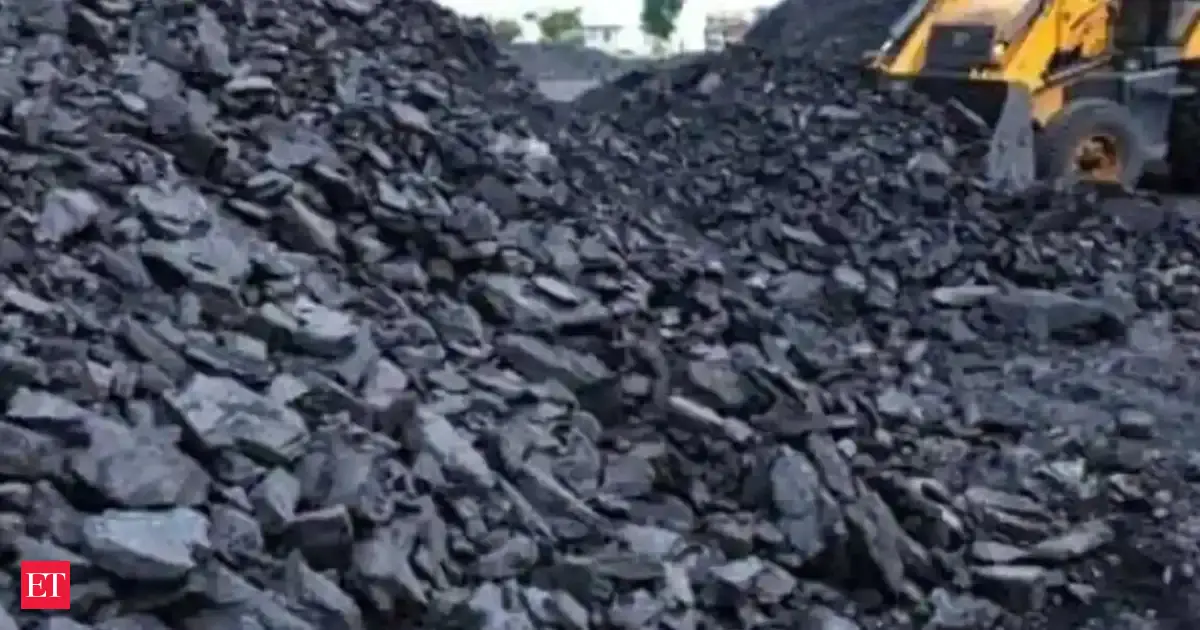
Coal India plans a significant capital expenditure of ?68,000 crore over four fiscal years. These investments will focus on capacity expansion and strengthening mining infrastructure. A substantial portion is allocated for land acquisition and resettlement activities. The company will also invest heavily in coal evacuation systems and solar projects. This strategic outlay aims to enhance operational efficiency and diversification. View More
New Delhi: Coal India Ltd has drawn up a capital expenditure plan of around ₹68,000 crore over four fiscal years from FY27 to FY30 to drive capacity expansion, strengthen mining infrastructure , and increase diversification. The planned investments will largely go towards land acquisition and related rehabilitation and resettlement, mining infrastructure, coal evacuation systems , and solar projects , a senior company official told ET. The four broad segments will account for over 80% of the proposed capital outlay during the period. More than a third of the total planned expenditure has been earmarked for land acquisition and related rehabilitation and resettlement activities. Also Read: Coal India's Q1 capex rises by 16.64% to Rs 3,399 crore Timely land acquisition remains key for coal mining operations as new projects and mine expansions cannot proceed without securing land, irrespective of the availability of coal reserves, the official said. Live Events Coal India had made a capital expenditure of ₹19,607 crore in FY26, surpassing its annual target of ₹16,000 crore. "Expenditures on land acquisition, development of coal evacuation infrastructure, and plant and machinery constitute the major components of our capital expenditure," B Sairam, chairman, Coal India, had earlier this week said in a statement. Going forward, to strengthen logistics and improve coal transportation efficiency, the miner plans to invest over ₹17,000 crore to support coal evacuation infrastructure, the company official quoted above told ET on Wednesday. This expense will support the development of railway sidings and rail corridors along with the construction of coal handling plants, silos, weighbridges, and roads. The plant and machinery segment has been allocated over ₹9,000 crore for the procurement of heavy earth moving machinery, construction and expansion of washeries, and other plant and equipment related needs, the official said. .Pbanner{display:flex;justify-content:space-between;align-items:center;background-color:#ec1c40;margin-top:20px;padding:5px 10px;border-radius:4px;color:#fff;line-height:10px;width: 100%;box-sizing: border-box} .Pbannertext{display:flex;align-items:center;font-size:16px;font-weight:600;font-family:'Montserrat';} .Pbannertext img{height:20px;margin:0 6px} .Pbannerbutton a{display:flex;align-items:center;background-color:#fff;color:#ec1c40;text-decoration:none;font-weight:600;padding:4px 8px;border-radius:6px;font-size:15px;font-family:'Montserrat';} .Pbannerbutton img{height:20px;margin-right:6px} .Pbannerbutton a:hover{background-color:#f7f7f7} Add as a Reliable and Trusted News Source Add Now! (You can now subscribe to our Economic Times WhatsApp channel) (You can now subscribe to our Economic Times WhatsApp channel)



In quick succession, China has thrown a powerful 1-2-3 punch at the global AI trade. On July 16, Beijing-based startup Moonshot AI released the Kimi K3 model with performance that rivals top-tier offerings from OpenAI and Anthropic. View More
China is a latecomer, but it has conquered the global car industry with electric vehicles and green tech with solar panels and energy-storage batteries. Why should the outcome be any different with the AI supply chain? This is the question global investors must ask themselves. In quick succession, China has thrown a powerful 1-2-3 punch at the global AI trade. On July 16, Beijing-based startup Moonshot AI released the Kimi K3 model with performance that rivals top-tier offerings from OpenAI and Anthropic. Then memory chip giant CXMT Corp. was listed in Shanghai on Monday, gaining 466% on the first day after raising $9.8 billion. Last and perhaps most striking, China has reportedly begun mass production of immersion deep ultraviolet, or DUV, lithography tools, the biggest stranglehold that the West has over the country’s AI ambition. The global chip selloff has been brutal. The Philadelphia Semiconductor Index is in bear territory, while South Korea’s chip-heavy Kospi Index has lost a third of value from late June. Credit markets are also feeling skittish, questioning the soundness of trillion-dollar AI investments and circular financing led by Nvidia Corp. Bloomberg Investors are right to be nervous. In just two weeks, China has broken through the three strongest fortresses the US has built around AI. It has proven competitive with frontier models, shown that its stock market is deep enough to meet financing demands from the capital-intensive chipmaking industry, and that export controls don’t work. Since 2019, the US has barred Dutch toolmaker ASML Holding NV from selling extreme-ultraviolet, or EUV, lithography machines to China. In the foreseeable future, China Inc. might just make their own tools instead. Both EUV and DUV machines are essential for printing circuit patterns onto silicon wafers, with the former used primarily to produce the most cutting-edge chips. These developments puncture the belief that the semiconductor supply chain has plenty of economic moats. As an example, it’s not hard to see how China directly impacts Samsung Electronics Co., SK Hynix Inc. and Micron Technology Inc. Already, the number of players in the global dynamic random-access memory, or DRAM, market, has risen from three to four, with CXMT doubling its market share to 8% over the last year. Now, CXMT not only has $10 billion cash to expand capacity, but may get to migrate to next-generation processes faster. Lack of access to lithography tools has been a key constraint. Bloomberg The speed of China’s breakthrough is also raising concerns that Western suppliers have been too complacent. A Shanghai-based toolmaker, which hasn’t been identified, plans to make about five DUV machines this year, followed by roughly 20 in 2027, according to The Information, which broke the news on China’s secretive lithography program. Live Events By comparison, ASML’s delivery schedule feels painfully slow, making it the primary bottleneck preventing rapid AI-infrastructure development. It takes more than a year to deliver EUV machines, and the period between the company starting production in its own clean rooms and shipping — known as cycle time — was about 22 weeks a few quarters ago. ASML said that it was looking to bring that down to 15 to 16 weeks. And how about financing channels? The US IPO market may be cooling as investors ask how much global AI demand there really is, especially with the arrival of low-cost, open-source Chinese models. By comparison, China’s stock market is still open for new listings. Granted, Chinese models and chips are not at par with those in the West, and their suppliers aren’t as profitable. But does that even matter? Even if China isn’t winning the AI race, it’s disruptive enough to deal a fatal blow to the global AI stock rally. Investors can still try to pick up oversold companies, but they should always bear in mind that one day, China can just spring out of nowhere again with the next big tech development. .Pbanner{display:flex;justify-content:space-between;align-items:center;background-color:#ec1c40;margin-top:20px;padding:5px 10px;border-radius:4px;color:#fff;line-height:10px;width: 100%;box-sizing: border-box} .Pbannertext{display:flex;align-items:center;font-size:16px;font-weight:600;font-family:'Montserrat';} .Pbannertext img{height:20px;margin:0 6px} .Pbannerbutton a{display:flex;align-items:center;background-color:#fff;color:#ec1c40;text-decoration:none;font-weight:600;padding:4px 8px;border-radius:6px;font-size:15px;font-family:'Montserrat';} .Pbannerbutton img{height:20px;margin-right:6px} .Pbannerbutton a:hover{background-color:#f7f7f7} Add as a Reliable and Trusted News Source Add Now!

Long-term funding supports construction of integrated solar, wind and battery storage assets, strengthening clean energy capacity across two western states. View More
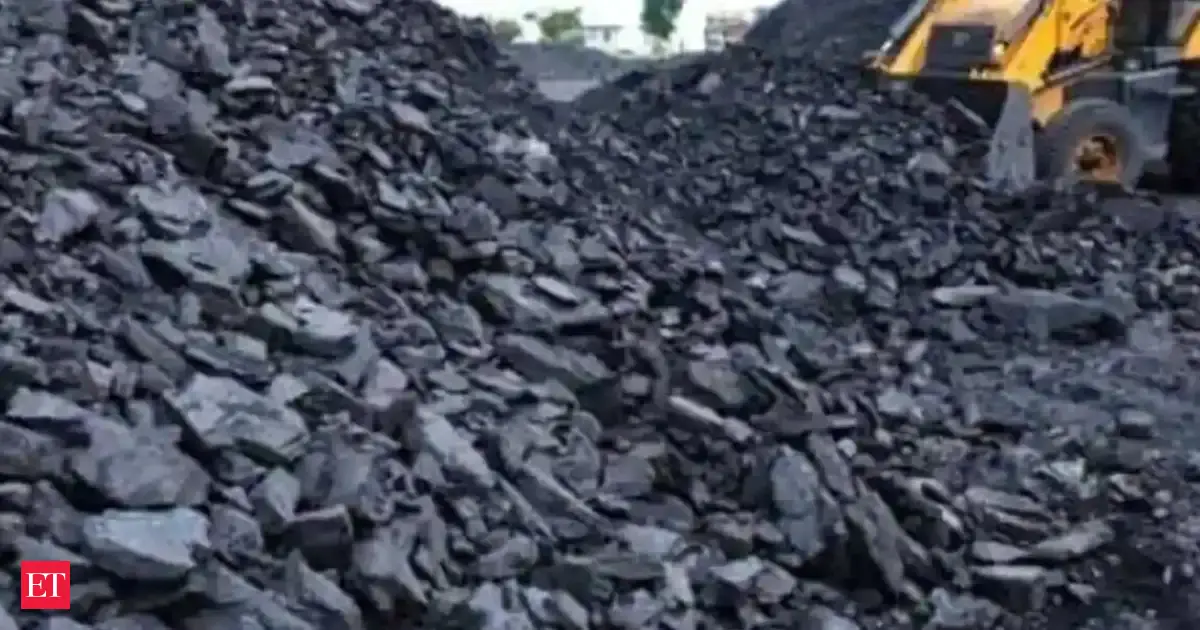
Coal India's capital expenditure rose sixteen point six four percent to three thousand three hundred ninety-nine crore rupees. Land acquisition and resettlement activities accounted for nearly one-fourth of the total expenditure during the quarter. The company also invested significantly in strengthening its coal evacuation infrastructure and plant machinery. Diversification into clean energy saw investments in solar projects and joint ventures. View More
New Delhi: State-owned CIL on Tuesday said its capital expenditure rose by 16.64 per cent to Rs 3,399 crore in the first quarter of the ongoing financial year, with land acquisition and related rehabilitation & resettlement expenses accounting for nearly one-fourth of the total capex. The capital expenditure by Coal India Ltd (CIL) was Rs 2,914 crore during the corresponding period of the previous financial year. "Land acquisition and related rehabilitation & resettlement (R&R) activities accounted for the highest expenditure during the quarter at Rs 804 crore, constituting nearly one-fourth of the total capex," Coal India said in a statement. Also Read: Asia's thermal coal imports continue to rebound, except for India Timely land acquisition is a critical prerequisite for coal mining, as mining projects cannot commence or expand without it, regardless of the availability of coal reserves. Live Events Reflecting on its strategic importance, land acquisition and related activities have been allocated the highest capex target of Rs 4,173 crore out of the company's total annual capex target for 2026-27. Coal India also continued to strengthen its coal evacuation infrastructure by investing Rs 754 crore in developing railway sidings and rail corridors. In addition, Rs 195 crore was spent on the construction of coal handling plants, silos, weighbridges and roads, taking the cumulative expenditure on coal evacuation infrastructure to Rs 949 crore during the first quarter. Capital expenditure under the plant and machinery segment stood at Rs 819 crore, covering procurement of heavy earth moving machinery, construction and expansion of washeries, and other plant and equipment-related activities. This category also accounted for nearly one-fourth of the company's total capex during the quarter. "Expenditures on land acquisition, development of coal evacuation infrastructure, and plant & machinery constitute the major components of our capital expenditure. Also Read: Coal Ministry notifies SECL's CSR initiative for NEET aspirants "Together, these three broad heads accounted for over 75 per cent of the total capex incurred during the first quarter. These strategic investments have laid a strong foundation for the company to achieve its production and supply targets for the ongoing fiscal," Coal India Chairman B Sairam said. As part of its ongoing diversification into clean energy, Coal India incurred a capital expenditure of Rs 278 crore on its solar projects during the quarter, while investments in the company's joint ventures amounted to Rs 207 crore, reinforcing its commitment to expanding its presence in renewable energy and allied businesses. Coal India had achieved a capital expenditure of Rs 19,607 crore during 2025-26, surpassing its annual target of Rs 16,000 crore. .Pbanner{display:flex;justify-content:space-between;align-items:center;background-color:#ec1c40;margin-top:20px;padding:5px 10px;border-radius:4px;color:#fff;line-height:10px;width: 100%;box-sizing: border-box} .Pbannertext{display:flex;align-items:center;font-size:16px;font-weight:600;font-family:'Montserrat';} .Pbannertext img{height:20px;margin:0 6px} .Pbannerbutton a{display:flex;align-items:center;background-color:#fff;color:#ec1c40;text-decoration:none;font-weight:600;padding:4px 8px;border-radius:6px;font-size:15px;font-family:'Montserrat';} .Pbannerbutton img{height:20px;margin-right:6px} .Pbannerbutton a:hover{background-color:#f7f7f7} Add as a Reliable and Trusted News Source Add Now! (You can now subscribe to our Economic Times WhatsApp channel) (You can now subscribe to our Economic Times WhatsApp channel)

Rapid rooftop solar adoption, expanding battery storage and capacity additions are accelerating Tata Power’s renewable energy ambitions while strengthening its leadership in India’s distributed solar market View More