
Latest Sectors News

Tom Green, an Iowa farmer, backs the Folsom Lake Solar Project after it secured the green light from the Mills County Zoning Board. This initiative is set to ensure reliable income through long-term land leases amid tough farming conditions. It promises to produce a substantial amount of electricity, enough to power many local homes, while also creating jobs and boosting tax revenues. View More

The facility, spread across approximately 1.65 lakh sqft, is designed to scale up to 15 GWh in later phases View More
India and Chile are progressing with negotiations for a Comprehensive Economic Partnership Agreement to enhance trade relations. The agreement will focus on sectors such as digital services, critical minerals, and investment. Both nations seek to diversify their trade partnerships and reduce reliance on single markets, particularly in mineral exports. View More
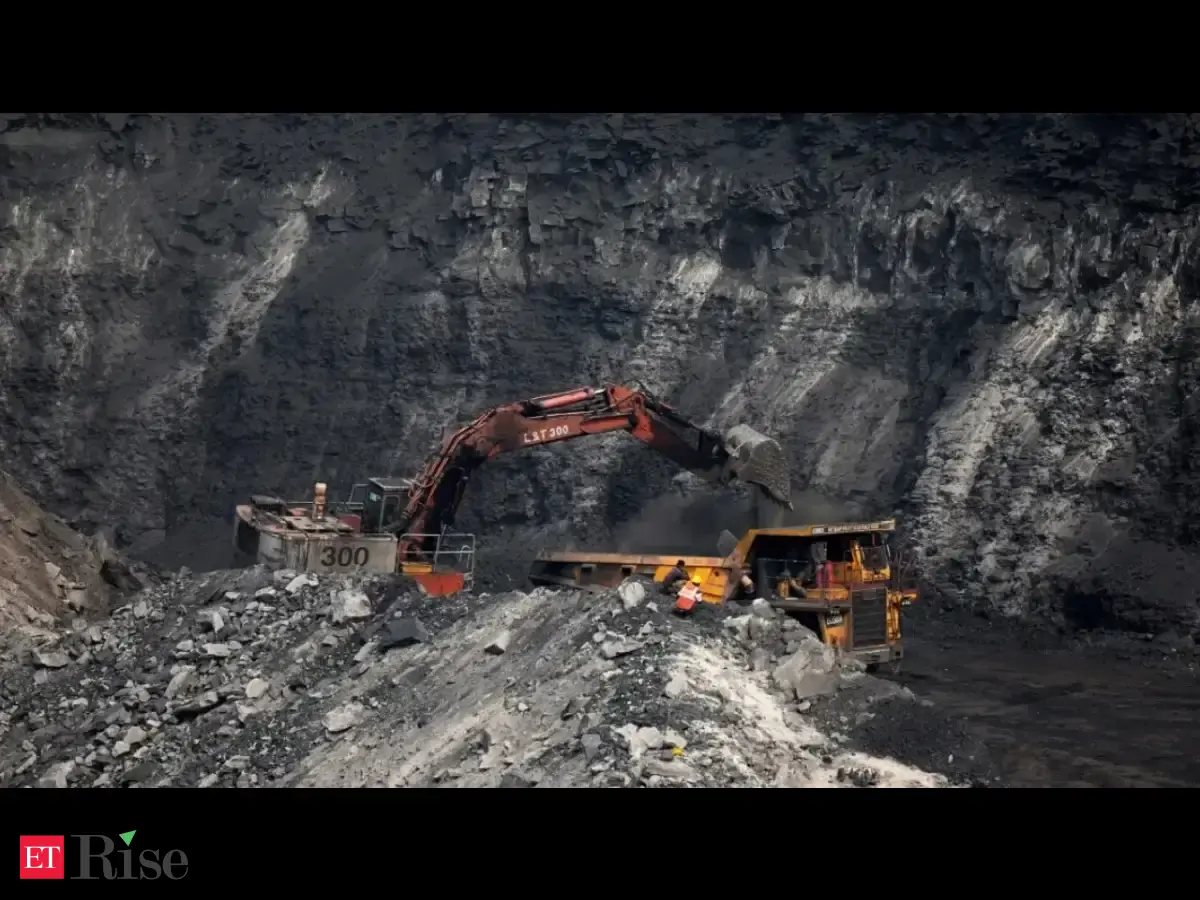
As India and Chile inch toward upgrading their existing Preferential Trade Agreement (PTA) into a more comprehensive trade pact, the negotiations have unfolded quietly, far from the buzz that accompanies India’s deal with the European Union (EU) or the US. The trade negotiations for the Comprehensive Economic Partnership Agreement (CEPA) with Chile should not be viewed as a routine upgrade to a trade deal; this may be one of the most strategic trade negotiations underway. The India-Chile trade relationship is not a new one. The two countries signed a PTA in 2006, which was expanded in 2016 to cover nearly 1,800 tariff lines. That arrangement reduced tariffs on select goods and widened market access but remained limited in scope. Further, to enhance economic integration and cooperation, in May 2025, both countries signed a framework agreement for CEPA, which would include several sectors, including digital services, investment promotion and cooperation, MSMEs, critical minerals , etc. Though trade between the two nations has grown steadily, it has remained relatively small compared to other trading partners. Exports to Chile account for just 0.2-0.3% of India’s export basket, while Chile exports around 2-3% of its total exports to India by value. Chile’s exports are very concentrated, with China occupying around 40% of its exports. Chile’s export basket to India is dominated by copper and related minerals, alongside chemicals and some agricultural products. India, in turn, exports pharmaceuticals, automobiles, particularly two- and three-wheelers, textiles, and engineering goods. Though this relationship may not be trade-heavy, it is trade-compatible. And in the era of energy transition, that compatibility requires a dimension: improved market access with supply-chain resilience. Chile holds some of the world’s largest lithium reserves and is a major global producer of copper. These are not ordinary commodities; they are critical inputs for industry and the global net-carbon neutrality goals. Lithium is central to electric vehicle (EV) batteries, grid storage systems, and renewable energy apparatus. Copper is also indispensable for power transmission, EV charging infrastructure, and the expansion of electricity grids. In a rapidly changing world, metal and mineral security has become synonymous with industrial security. In this respect, India’s ambitions are clear. It aims to scale up EV adoption, expand solar and wind capacity, build domestic battery manufacturing under production-linked incentive (PLI) schemes, and reduce import dependence in critical sectors. However, secure, sustainable, and diversified access to critical minerals and metals, such as lithium and copper, is essential for realising these ambitions. At present, global mining, processing, and refining capacities for many critical minerals are highly concentrated, creating vulnerabilities in supply chains. For India, expanding partnerships with resource-rich countries like Chile is not only about lowering tariffs; it is also about building long-term supply chain resilience amid a fragmenting world order. Live Events The India-Chile negotiations, therefore, should not be approached as a routine expansion of tariff concessions. They represent an opportunity to embed critical mineral cooperation within a broader trade and investment architecture. For Chile, too, trade diversification matters. While China remains a dominant destination for Chilean mineral exports, overdependence on a single market carries its own risks. India offers an expanding industrial base, growing domestic demand for energy transition technologies, and a large consumer market for goods. Beyond raw material trade, there is scope for collaboration in value addition, such as refining, battery assembly, and technology partnerships. In terms of Digital products and services, Chile may learn from India’s experience of creating and operationalizing the digital public infrastructure. Unified Payment Interface has been a success in India for cashless transactions, while the use of Digilocker for paperless authentication has been growing. Further cooperation between the two may be explored in the Digital Currencies, as in India, the RBI has piloted the use of e-currency in both the retail and wholesale segments. The future of such a partnership should move beyond a simple buyer-seller model. Instead of limiting engagement to mineral exports, India and Chile could explore joint ventures in mineral processing, long-term offtake agreements that ensure supply stability, and mechanisms for technology sharing in manufacturing. Investment protection provisions and facilitation of capital flows would also be vital to encourage Indian firms to participate directly in Chile’s mining and processing sectors. Additionally, there is a larger geopolitical context. Much of the recent global discourse on critical minerals has been framed through strategic competition among major powers, like China and the US. India-Chile cooperation offers a different model, which is rooted in Global South collaboration rather than bloc politics. It demonstrates that strategic supply chains can be diversified through pragmatic economic partnerships, without being a part of geopolitical blocs. Ultimately, the success of the India-Chile agreement will depend on how negotiators treat it. Though lowering or eliminating the tariff and non-tariff barriers for the merchandise trade may bring welfare effects for both countries, a strategic expansion rather than a conventional one would anchor a long-term industrial partnership. If designed with foresight, integrating trade, minerals, investment, technology, and sustainability, it could present a model for sustainable economic partnership for the Global South also. The scope of the agreement, therefore, should not remain partial. It should become strategic. Dr. Badri Narayanan Gopalakrishnan, PhD is the Founder of Infinite Sum Modelling. Himanshu Jaiswal is Research Fellow, Infisum Modeling. .Pbanner{display:flex;justify-content:space-between;align-items:center;background-color:#ec1c40;margin-top:20px;padding:5px 10px;border-radius:4px;color:#fff;line-height:10px;width: 100%;box-sizing: border-box} .Pbannertext{display:flex;align-items:center;font-size:16px;font-weight:600;font-family:'Montserrat';} .Pbannertext img{height:20px;margin:0 6px} .Pbannerbutton a{display:flex;align-items:center;background-color:#fff;color:#ec1c40;text-decoration:none;font-weight:600;padding:4px 8px;border-radius:6px;font-size:15px;font-family:'Montserrat';} .Pbannerbutton img{height:20px;margin-right:6px} .Pbannerbutton a:hover{background-color:#f7f7f7} Add as a Reliable and Trusted News Source Add Now!

About 4.2% of total solar generation could not be absorbed by the grid in July and August, highlighting inadequate transmission ?infrastructure, data from the Centre for Research on Energy and Clean Air (CREA) show View More

The scheme currently provides subsidies of up to 40% to households installing rooftop solar panels and aims to provide up to 300 units of free electricity a month to 10 million households. View More

Bear Grylls and his family spend part of the year on a 20-acre Welsh island without mains electricity or water. Their remote home relies on wind power, solar panels and harvested rainwater, offering privacy alongside the challenges of off-grid living View More


A powerful solar eruption recorded on 8 October could trigger a moderate geomagnetic storm on 11 October, NOAA has warned. The event may brighten auroras but could also affect satellite signals, radio communications, navigation systems and power networks. View More

Gujarat State Fertilizers and Chemicals is embarking on an ambitious project to establish a green ammonia plant capable of producing 500,000 tonnes annually. With a target commissioning date set for December 2030, the company actively seeks partnerships both domestically and internationally, emphasizing a focus on renewable energy technologies. Additionally, GSFC aims to penetrate export markets in Europe, Japan, and South Korea, securing up to 51% equity in this joint venture. View More
New Delhi: Gujarat State Fertilizers and Chemicals ( GSFC ) is looking for a joint venture partner to set up a green ammonia plant with an annual capacity of at least 500,000 tonnes at its Sikka facility in Jamnagar , Gujarat, as India steps up efforts to replace fossil fuel-based ammonia used in fertiliser manufacturing. The Gujarat government-promoted company is looking at joining hands with Indian and overseas companies, investors and consortiums to develop the project, which it aims to commission before December 2030. GSFC is seeking partners who can bring investment, technology and renewable energy expertise , along with long-term purchase commitments from potential customers. The company is particularly targeting export markets in Europe, Japan and South Korea. According to the company's proposal, the project would require about 2-3 gigawatts of solar and wind power capacity to produce an estimated 90,000-100,000 tonnes of green hydrogen annually, which would then be used to manufacture ammonia. GSFC plans to sell about 90% of the proposed output to overseas and domestic customers, while using the remaining 10% in its own fertiliser operations. The proposed joint venture structure allows GSFC to hold up to 51% equity, although the final terms will depend on discussions with prospective partners. .Pbanner{display:flex;justify-content:space-between;align-items:center;background-color:#ec1c40;margin-top:20px;padding:5px 10px;border-radius:4px;color:#fff;line-height:10px;width: 100%;box-sizing: border-box} .Pbannertext{display:flex;align-items:center;font-size:16px;font-weight:600;font-family:'Montserrat';} .Pbannertext img{height:20px;margin:0 6px} .Pbannerbutton a{display:flex;align-items:center;background-color:#fff;color:#ec1c40;text-decoration:none;font-weight:600;padding:4px 8px;border-radius:6px;font-size:15px;font-family:'Montserrat';} .Pbannerbutton img{height:20px;margin-right:6px} .Pbannerbutton a:hover{background-color:#f7f7f7} Add as a Reliable and Trusted News Source Add Now! (You can now subscribe to our Economic Times WhatsApp channel) (You can now subscribe to our Economic Times WhatsApp channel)