
Latest Sectors News

Blue Origin CEO Dave Limp said the space company still aims to return New Glenn to flight before the end of this year after the Cape Canaveral explosion in May. View More
Dave Limp, chief executive officer of Blue Origin LLC, left, and Jared Isaacman, administrator of the National Aeronautics and Space Administration (NASA), during the launch of America.gov in Washington, DC, US, on Tuesday, Sept. 29, 2026. Daniel Heuer | Bloomberg | Getty ImagesBlue Origin CEO Dave Limp said the company's first-ever outside capital raise is not closed yet and is drawing heavy investor interest, describing the funding round as "oversubscribed.""I'm so amazed the investor community embraces space this much. ⦠They know that space is kind of infinite and the possibilities of putting commercial things in space, and it is a testament to the tailwind of raising this round," Limp said at the Trump administration's "Hello, America" tech summit in Washington, D.C., on Tuesday.Last week, the Wall Street Journal reported that the company had already raised $10 billion at a valuation of $140 billion. Jeff Bezos chipped in $2 billion in the current raise, according to the WSJ, and has invested $30 billion since the company's founding in 2000.Limp did not confirm the final numbers or how much Bezos has invested.The 26-year-old space company, which was started by Bezos, has been fully funded by the Amazon founder up until now. Limp said the move to engage the investor community marks a significant shift for Blue Origin as it looks to ramp its operations and bring ambitious new technologies online."I'm of the firm belief this will be the best investment Jeff has ever made, and by the way, he has some good ones on his track record," he said.Why nowInvestors have flocked to space companies this year, both in private and public markets.SpaceX's historic IPO in June further established the sector and brought attention to a commercial space economy poised to grow dramatically in the coming years.Limp said a "combination of things" led to the decision to engage with the investor community now. Those factors include Blue Origin's New Glenn rocket that has already flown multiple times, the unveiling of two ambitious satellite constellations and the need to attract and retain talent."Attracting great talent ⦠is difficult in a competitive world, and obviously having an external valuation on the company that shows employees what the value is is very helpful," he said.watch nowVIDEO10:5110:51Blue Origin CEO talks to CNBC's Morgan Brennan on the eve of the company's New Glenn rocket launchNews VideosReturn to FlightEarly last year, Blue Origin's powerful New Glenn reached orbit on its first flight, and last fall, landed its booster on the second mission. In April, a third mission saw mixed success as the booster landed, but the payload â a satellite for AST SpaceMobile â was deployed in the wrong orbit and ultimately lost.In late May, New Glenn suffered a catastrophic explosion on Blue Origin's Cape Canaveral launch pad, causing extensive damage that the company has been working around the clock to repair.Limp confirmed on Tuesday that the plan is still for New Glenn to return to flight before the end of this year. He also said 1,000 people are working on the pad â 500 on the day shift, 500 on the night shift â as the company works around the clock to stick to that schedule.The satellite constellation plans also give investors a clearer view of where the company is headed.TeraWave, unveiled in January, is a planned communications satellite service that would cater specifically to enterprise, data center, and government operations, rather than supply broadband to consumers. It would entail a constellation of more than 5,400 satellites in low Earth orbit. Project Sunrise, disclosed in March, would deploy a staggering sum of about 56,000 satellites capable of handling artificial intelligence computing from space.In some of his most detailed comments outlining Blue Origin's orbital data center strategy, Limp said the idea is to deploy many of the heavy data centers into sun-synchronous orbit, where solar is a constant source of power, using New Glenn rockets.Limp said the orbital data centers won't have much communications capability, but will instead connect into TeraWave to deliver results back down to Earth, enabling access to "effectively infinite compute." The company, he said, is looking to drive a rocket launch cadence that ramps from hundreds to thousands of missions per year. "Our mission at the company is to make an economy in space, get millions of people working and living in space," added Limp. "That's the 100-year vision, but it allows us to move heavy industry off the planet, turn this planet into a park."For the first time, investors will help bankroll that mission.watch nowVIDEO6:4606:46NASA Administrator Jared Isaacman talks newly announced Boeing Starliner dealClosing Bell: Overtime Choose CNBC as your preferred source on Google and never miss a moment from the most trusted name in business news.
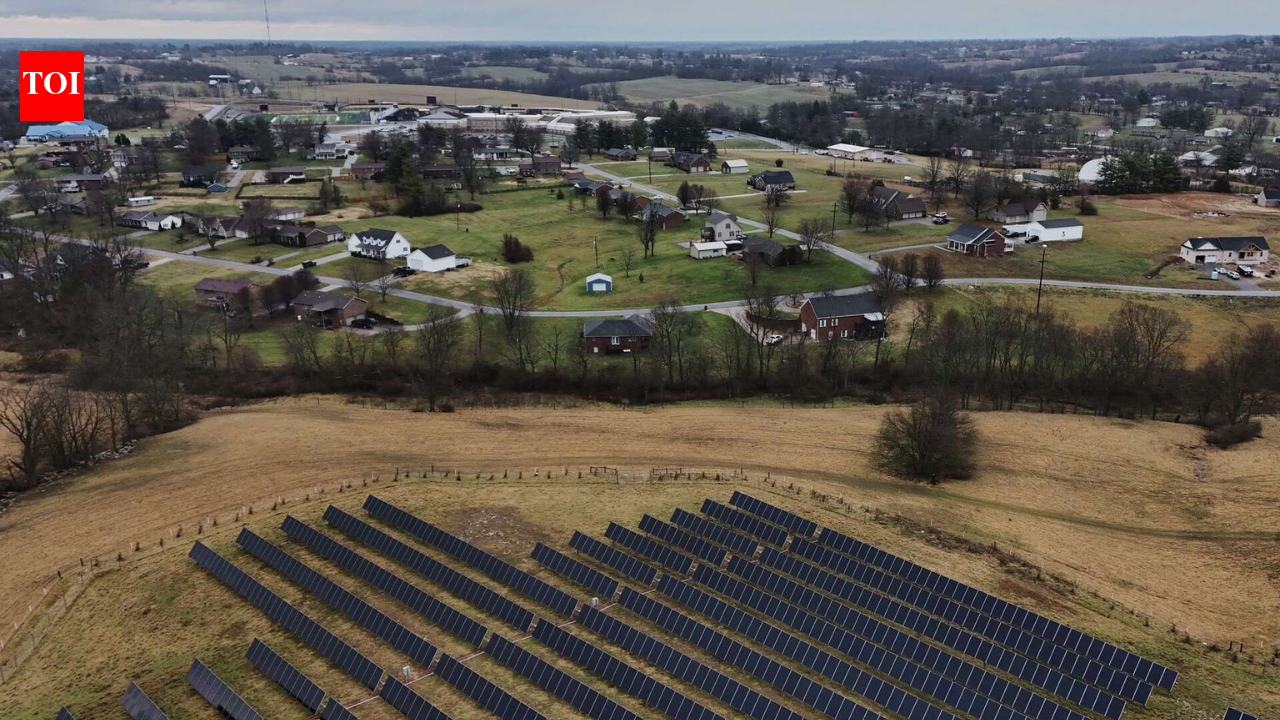
In Ohio, farmer Wayne Greier's financial struggles intensified when a planned solar project fell through due to local resistance and new rules, leaving his family's renewable energy plans in jeopardy. Compounded by $1 million in medical debt from recent health issues, Greier was forced to offload land and equipment, jeopardizing his farming business. He has emerged as an advocate for farmers' property rights to help protect others from similar hardships. View More

The additional renewable capacity is expected to reduce the company’s dependence on conventional power and help avoid approximately 16,000 tonnes of carbon emissions annually View More
Inox Clean Energy has filed for a Rs 10,000-crore IPO, comprising a fresh issue of up to Rs 8,000 crore and an OFS of up to Rs 2,000 crore, as it expands its renewable power and solar manufacturing business. View More
Inox Clean Energy, part of the INOXGFL Group, has filed its Draft Red Herring Prospectus (DRHP) with SEBI for a Rs 10,000 crore IPO, which the company said would be the largest public issue in India's private sector renewable energy space. The company's business model combines renewable power generation with solar manufacturing, giving it exposure to both long-term power generation revenues and manufacturing revenues. According to the CRISIL Report cited by the company, Inox Clean Energy is among India's top 10 renewable IPP platforms and, on a fully commissioned basis, among the top 10 integrated solar PV module and cell manufacturing players. Also Read: Nomura initiates coverage on Allied Blenders with Buy rating, sees up to 20% upside Inox Clean Energy IPO details The IPO will comprise a fresh issue of up to Rs 8,000 crore and an offer for sale (OFS) of up to Rs 2,000 crore by the selling shareholders, including promoters Devansh Jain and Avarna Jain. Live Events The company plans to use the proceeds from the fresh issue to repay or prepay, fully or partly, certain outstanding borrowings of the company and its subsidiaries. The remaining funds will be used for general corporate purposes. Nuvama Wealth Management , CLSA India, Emirates NBD Capital India, HSBC Securities and Capital Markets India, ICICI Securities, IIFL Capital Services , JM Financial , Motilal Oswal Investment Advisors and UBS Securities India are the book running lead managers to the issue. Also Read | India can add over 100 million long-term investors by 2035: Report Inox Clean Energy's renewable energy business Inox Clean Energy operates an integrated renewable energy platform spanning power generation and solar manufacturing. Its renewable independent power producer (IPP) portfolio stood at 9.29 GW across India and Africa as of August 31, 2026. Of this, 2.37 GW was operational, around 0.80 GW was under construction, 2.99 GW was pipeline capacity, and 3.13 GW was future capacity. Its solar manufacturing business had an operational module manufacturing capacity of 6 GW across India and the US. Solar cell manufacturing capacity is currently under construction in both countries. In its IPP business, Inox Clean Energy has scaled to 2.37 GW of operational capacity in just 1.5 years since April 2025, largely through an acquisition-led strategy, according to the CRISIL Report. The company operates its IPP business in India through Inox Neo Energies and in Africa through SkyPower Services MENA, its venture with strategic partner Arctic International. Its solar manufacturing operations in India are conducted through Inox Solar, while its US operations are housed under Inox Solar Americas. As of August 31, 2026, Inox Green Energy Solutions serviced 0.53 GW of the group's operational IPP capacity of around 2.37 GW. Disclaimer: This article has been written by Sakshi Kumari, who is not a SEBI-registered Research Analyst or an Investment Adviser. Sakshi Kumari and her ‘relative(s)’ (as defined under Section 2(77) of the Companies Act, 2013) do not hold any financial interest in the companies mentioned in this article as of the date of publication. The views/recommendations mentioned in this article, wherever applicable, are those of the respective SEBI-registered Research Analyst/brokerage and have been reproduced/reported with due attribution. They should not be construed as the views or recommendations of The Economic Times Digital or the journalist. Readers are advised to consider the original research report and make their investment decisions based on their own assessment. Brokerage disclaimers here .Pbanner{display:flex;justify-content:space-between;align-items:center;background-color:#ec1c40;margin-top:20px;padding:5px 10px;border-radius:4px;color:#fff;line-height:10px;width: 100%;box-sizing: border-box} .Pbannertext{display:flex;align-items:center;font-size:16px;font-weight:600;font-family:'Montserrat';} .Pbannertext img{height:20px;margin:0 6px} .Pbannerbutton a{display:flex;align-items:center;background-color:#fff;color:#ec1c40;text-decoration:none;font-weight:600;padding:4px 8px;border-radius:6px;font-size:15px;font-family:'Montserrat';} .Pbannerbutton img{height:20px;margin-right:6px} .Pbannerbutton a:hover{background-color:#f7f7f7} Add as a Reliable and Trusted News Source Add Now! (You can now subscribe to our ETMarkets WhatsApp channel) (You can now subscribe to our ETMarkets WhatsApp channel)

The project combines 20 MW of wind and 26.4 MWp of solar capacity, supported by a 2 MWh Battery Energy Storage System View More

The Bhikamkhore project is expected to generate 100 million units of renewable electricity annually and significantly reduce Scope 1 and Scope 2 emissions View More

Clean Max Enviro Energy Solutions and Nuvoco Vistas Corporation have partnered to advance renewable energy adoption in Rajasthan through a 46.4 MW wind-solar hybrid project. View More

Anupam Rasayan India Limited has finalised its acquisition of a controlling interest in Bliss GVS Pharma, marking a strategic expansion into finished dosage formulations. This acquisition strengthens Anupam Rasayan's pharmaceutical portfolio, bolstered by Bliss GVS Pharma's extensive array of over 150 brands across several therapeutic segments, while also offering valuable growth avenues through their current manufacturing infrastructure. View More
Surat: Anupam Rasayan India Limited (BSE: 543275, NSE: ANURAS), one of India’s leading custom synthesis and specialty chemical companies, has paid the consideration towards the transaction of a 48.2% controlling stake in Bliss GVS Pharma Limited at Rs 299 per share, marking its third strategic inorganic transaction and expanding its presence into finished dosage formulations. The acquisition, undertaken through Mates Visa Consultancy, a wholly owned subsidiary of Anupam Rasayan, follows the definitive agreement signed on May 23, 2026, and the subsequent completion of the mandatory open offer process. With the acquisition now completed, Bliss GVS Pharma becomes an integral part of Anupam Rasayan’s expanding portfolio of businesses across specialty chemicals and pharmaceuticals. The transaction has been funded through a combination of a Rs 300 crore term loan and approximately Rs 1,450 crore raised through non-controlling, non-voting instruments from a group of financial investors led by Bain Capital and including Trust Group and Investec. The financing structure enables Anupam Rasayan to fund the acquisition while preserving balance-sheet capacity for future growth and expansion. Founded in 1984, Bliss GVS Pharma is a branded formulations company with more than 150 brands across therapeutic segments, including anti-malarial, anti-fungal, anti-bacterial, anti-inflammatory, anti-diabetic and cardiovascular therapies. The company operates six manufacturing facilities across Maharashtra, with its manufacturing facilities certified to international quality and regulatory standards including US FDA, EU-GMP and WHO-GMP. Bliss GVS is also recognised as India’s first EU-GMP certified suppositories manufacturer, reinforcing its strong manufacturing and quality credentials. With its manufacturing infrastructure currently operating at approximately 30% capacity utilisation, the business provides significant headroom for future growth. Live Events On the acquisition, Anand Desai, Managing Director of Anupam Rasayan India Ltd., said, in a statement, “We are pleased to announce the successful completion of the acquisition of Bliss GVS Pharma. This transaction marks an important milestone in our long-term strategy to build a diversified, integrated and innovation-led global pharmaceutical platform .The acquisition strengthens our presence in finished pharmaceutical formulations and complements Anupam Rasayan’s expertise in key starting materials, intermediates and specialty chemicals. Combining our manufacturing and process chemistry capabilities with Bliss GVS Pharma’s formulation expertise, customer relationships, and market presence, we are well positioned to pursue forward integration, new product development, and geographic expansion.” Building a Rs 4,000+ crore integrated platform The acquisition of Bliss GVS Pharma marks the latest step in Anupam Rasayan’s broader inorganic growth strategy, with each transaction adding a distinct capability to the group’s evolving business platform. Following the consolidation of Anupam Rasayan, Tanfac Industries , Jayhawk Fine Chemicals and Bliss GVS Pharma, the combined platform is expected to have pro-forma revenue of more than Rs 4,000 crore and EBITDA of approximately Rs 834 crore. The pro-forma revenue comprises approximately Rs 1,676 crore from Anupam Rasayan standalone, Rs 711 crore from Tanfac Industries, Rs 722 crore from Jayhawk Fine Chemicals and Rs 927 crore from Bliss GVS Pharma. The three strategic acquisitions have each been undertaken with a distinct objective: strengthening access to critical raw materials, establishing a global manufacturing footprint and, now, extending the value chain into finished dosage formulations. From raw materials to finished formulations Tanfac Industries – Backward Integration: Anupam Rasayan’s first major strategic acquisition was its investment in Tanfac Industries in 2022. The company acquired a 24.96% stake and management control in Tanfac, a leading manufacturer of specialty fluorides, and subsequently participated in an open offer for an additional stake. Tanfac provides critical fluorine-based raw materials, including hydrofluoric acid and potassium fluoride, strengthening Anupam Rasayan’s access to key inputs and reducing dependence on imports. The acquisition also created opportunities to develop additional fluorine derivatives for applications across crop protection, pharmaceuticals, solar cells, polymers and semiconductors. Jayhawk Fine Chemicals – Global Manufacturing & Nearshoring: In February 2026, Anupam Rasayan completed the acquisition of 100% of Jayhawk Fine Chemicals Corporation, a specialty chemicals manufacturer based in Galena, Kansas, for an enterprise value of approximately US$134 million. The acquisition established Anupam Rasayan’s manufacturing presence in the US and brought the company closer to customers in developed markets. Jayhawk also expands Anupam Rasayan’s exposure to performance materials used in electronics, energy, aerospace and polymers, with approximately 65% of its revenue coming from these applications. In Q1 FY27, Jayhawk contributed approximately 20–22% of Anupam Rasayan’s consolidated revenue, with EBITDA margins of around 19–20%. Bliss GVS Pharma – Forward Integration: With Bliss GVS Pharma, Anupam Rasayan is extending its value chain into finished dosage formulations, moving beyond its established capabilities in custom synthesis, specialty chemicals and pharmaceutical intermediates. The acquisition provides access to Bliss GVS Pharma’s established portfolio of branded formulations, manufacturing infrastructure and presence across multiple therapeutic segments. It also creates opportunities for greater integration across Anupam Rasayan’s pharmaceutical value chain and strengthens its ability to participate across the journey from key starting materials and intermediates to finished formulations. Together, the three transactions represent a progression in Anupam Rasayan’s inorganic growth strategy backward integration through Tanfac, global manufacturing and nearshoring through Jayhawk, and forward integration into finished dosages through Bliss GVS Pharma. The acquisition of Bliss GVS Pharma has been made at approximately 24x LTM earnings, providing Anupam Rasayan with an earnings-accretive opportunity at a valuation lower than the multiple at which the parent company trades. With Bliss GVS Pharma’s existing manufacturing footprint, established product portfolio and available capacity, the transaction provides Anupam Rasayan with an additional platform for growth in the pharmaceutical formulations segment. The transaction therefore brings together four complementary businesses across geographies and stages of the value chain, creating a larger integrated platform spanning specialty chemicals, pharmaceutical intermediates, advanced materials and finished dosage formulations. .Pbanner{display:flex;justify-content:space-between;align-items:center;background-color:#ec1c40;margin-top:20px;padding:5px 10px;border-radius:4px;color:#fff;line-height:10px;width: 100%;box-sizing: border-box} .Pbannertext{display:flex;align-items:center;font-size:16px;font-weight:600;font-family:'Montserrat';} .Pbannertext img{height:20px;margin:0 6px} .Pbannerbutton a{display:flex;align-items:center;background-color:#fff;color:#ec1c40;text-decoration:none;font-weight:600;padding:4px 8px;border-radius:6px;font-size:15px;font-family:'Montserrat';} .Pbannerbutton img{height:20px;margin-right:6px} .Pbannerbutton a:hover{background-color:#f7f7f7} Add as a Reliable and Trusted News Source Add Now!
India cannot risk its industrial ambitions and environmental commitments by having a static framework, particularly when the global order is fragmenting and protectionism is rising. View More
Critical minerals have quietly become the raw material of India’s economic ambitions. From the solar mission to the electric vehicle (EV) and battery ecosystem to shipbuilding and defence, every flagship programme of India now runs, directly or indirectly, on a short list of minerals, including silicon, tellurium, indium, lithium, cobalt, and others. These minerals are central to the country’s energy transition, industrialisation, technological innovation, strategic autonomy, and national security. However, their asymmetric geographic distribution and associated export restrictions add to the urgency of securing supply chains. India, though a latecomer, has stopped being a passive observer of this race. In 2025, it launched the National Critical Minerals Mission , an umbrella framework with a total outlay of Rs 34,300 crore over seven years, including Rs 7,000 crore for 1,200 anticipated domestic exploration projects. Yet, India’s critical minerals policy still rests on one institutional instrument—a list of 30 critical minerals released by the Ministry of Mines in 2023. This list of critical minerals (LCM) mentions scarce elements that are essential to domestic manufacturing. Designing and pursuing the LCM is a well-thought-out step; however, certain gaps in this list require attention. The first and foremost is the determination of an appropriate, robust methodology for identifying the critical minerals. For LCM 2023 identification, India followed a three-stage process. The first step was a comparative study of the criticality assessments of different countries, followed by inter-ministerial consultation in the second stage, and finally, an empirical evaluation of criticality using two main criteria: economic importance and supply risk, replicating the EU methodology. In this way, the first selected set of 69 elements was reduced to a final set of 30. Though India’s current framework of benchmarking and consultation seems, prima facie, appropriate, it must be broadened further to bring resilience. The other major countries have adopted transparent, data-driven, and periodically revised frameworks. The US has progressively refined its methodology for critical mineral identification. The 2018 quantitative framework of the US, with two indicators—the concentration of global mineral production and net import reliance—culminated in a risk modeling framework in 2022, which was further improved in 2025 by quantifying the probability-weighted GDP (gross domestic product) loss from mineral supply disruption simulated through 1,200 scenarios. The EU’s approach, running since 2011 and refreshed every three years, scores each material on two published axes—economic importance and supply risk—built on import concentration, producer-country governance quality, and others. What distinguishes these frameworks is not only the comprehensive methodology but also the discipline behind it: methodologies that are public, reproducible, and revised on a fixed schedule. On the other hand, India’s current methodology, borrowed from the EU, might have been more suited to the EU’s needs than India’s. Also, the current framework, reducing the final set of minerals to 30, leaves a space for opaqueness and non-producibility. Live Events Another issue is that India has not updated its LCM list, even with the existing methodology. Also, India lacks a legal mandate for revisiting the list. The US is legally required to review its methodology and list at least every three years under the Energy Act of 2020. The EU’s Critical Raw Materials Act imposes the same three-year statutory review cycle. India’s own 2023 committee recommended updating the list, preferably “every three years.” However, it is just a recommendation, not a legal mandate. The LCM items have grown from 35 to 60 in the US, while the EU has updated its LCM from 14 minerals to 34, but India has kept the same list of 30 minerals. The global trade order is changing very rapidly. The scenario that existed three years ago may no longer be valid today. A static LCM framework may weaken industrial policy due to market and policy misalignment, lessen manufacturing competitiveness because of input procurement uncertainty and increased production costs, enlarge supply-chain vulnerabilities, and demoralise investments in the sector. It may also increase exposure to export restrictions on critical raw materials, which have increased multifold in recent years. According to the Organisation for Economic Co-operation and Development (OECD), such restrictions have gone up fivefold since 2009, with approximately 16% of global trade for critical minerals facing at least one restriction in the period from 2022 to 2024, in contrast to roughly 12% in 2009-2011. Therefore, going forward, India must adopt a proactive approach. First is the revision of the LCM methodology. India may continue with the sandwich approach, combining India-customised robust quantification with transparent and publicly available consultation. Second is regular updating and publication of the list, preferably at intervals of less than three years, backed by legal architecture to make India more economically resilient. Third, given the geoeconomic stakes, India should think futuristically and may adopt a two-tier approach. Tier I will have the LCM, while Tier II may be a “Critical Minerals Watchlist” comprising minerals that are not currently critical but have the potential to become so. These minerals may be included either based on their application to new technologies or increasing concentration of production or export restrictions. E.g., manganese was excluded from the 2023 list due to adequate domestic availability, yet India still imports about 50% of its needs, while roughly 70% of global manganese exports face at least one restriction. Magnesium and boron warrant similar monitoring, given their concentrated production. These minerals may not meet the current LCM criteria, but a watchlist would allow India to track supply risks before they materialise. Finally, as a major agriculture-producing country, India has rightly added potash and phosphorus to its list, but food-security minerals remain a small share of it. Therefore, agri-related minerals should be given more weight in LCM design. India cannot risk its industrial ambitions and environmental commitments by having a static framework, particularly when the global order is fragmenting and protectionism is rising. A comprehensive and dynamic LCM framework will act as an enabler for securing strategic supply chains. India has entered the third year since the launch of the first LCM, making it high time to design a criticality framework better suited to its needs. Himanshu Jaiswal is a Consultant at the Center for Social and Economic Progress (CSEP), New Delhi; Namita and Deeksha are Research Assistants at the Research and Information systems (RIS), New Delhi. .Pbanner{display:flex;justify-content:space-between;align-items:center;background-color:#ec1c40;margin-top:20px;padding:5px 10px;border-radius:4px;color:#fff;line-height:10px;width: 100%;box-sizing: border-box} .Pbannertext{display:flex;align-items:center;font-size:16px;font-weight:600;font-family:'Montserrat';} .Pbannertext img{height:20px;margin:0 6px} .Pbannerbutton a{display:flex;align-items:center;background-color:#fff;color:#ec1c40;text-decoration:none;font-weight:600;padding:4px 8px;border-radius:6px;font-size:15px;font-family:'Montserrat';} .Pbannerbutton img{height:20px;margin-right:6px} .Pbannerbutton a:hover{background-color:#f7f7f7} Add as a Reliable and Trusted News Source Add Now!