
Latest Sectors News

The conservative war on renewable energy suffered a big loss in the rout of President Trump and the GOP in midterm elections. Investors should pay attention. View More
Daniel Bosma | Moment | Getty ImagesAs recently as 2022, many leaders in corporate America and the investment community were singing the praises of ESG â environmental, social, governance â as the foundation of stakeholder capitalism. It didn't take long for that tune to change, for understandable reasons. President Trump didn't just make "ESG", "sustainability" and "climate change" dirty words in his "green new scam" rhetoric. The Trump administration's rollback of environmental regulations, elimination of clean energy subsidies and tax credits, defunding and halting of wind and solar projects, and embrace of the fossil fuels industry accelerated the backlash.  But renewable energy investing remains alive and well, notably among public and private funders of infrastructure projects and clean technology innovation. And following the midterm elections that gave climate-friendly Democrats control of the House and Senate, the prospects of reviving the clean energy agenda suddenly brightened.  Clean energy and solar stocks rallied the day after the election results, which "potentially reduces the risk of further political interference with renewable energy incentives and provides greater protection for the long-term economics of U.S. wind, solar and battery storage investments," Barclays analysts led by Peter Crampton wrote in a note. While Trump can veto legislation to restore subsidies and credits and revive projects, and continue to issue executive orders on energy policy, some Republicans may be more inclined to help Democrats override the president in order to appeal to voters outraged over high energy prices â a sentiment expressed in the passage of multiple state initiatives to impede the build-out of electricity-hungry data centers.  The blue wave also shines a spotlight on a bipartisan permitting-reform bill awaiting Senate approval. Several progressive Democrats want to put off the vote until the new Congress convenes in January, giving them time to rewrite provisions favoring renewables projects over fossil fuel ventures.  Ultimately, the midterms could improve the outlook for investors focused on clean energy. That is likely to start with impact investors who specifically seek to generate a competitive financial rate of return alongside positive, proactive social and environmental impact. Opportunities can be found through public equity investments like mutual funds and ETFs that are constructed to invest in clean energy companies. But many investors also seek out pure-play clean energy positions offered through fixed income, private equity, private credit, venture capital, real assets and community-focused investments. Stock Chart IconStock chart iconPerformance of the iShares Global Clean Energy ETF and Invesco Solar ETF over the past week."There are many different approaches that could lead impact investors to be thinking about clean energy investments," said Amit Bouri, who's retiring as CEO of the Global Impact Investing Network at year's end. GIIN's 2026 survey of impact investors found that 56% have funds invested in clean energy and 25% plan to increase those investments over the next five years. The survey was conducted prior to the midterms."Clean energy infrastructure can be really compelling from an investment standpoint, because the financial thesis and impact thesis are mutually reinforcing," said Justina Lai, chief impact officer at LNW, a wealth management advisory firm. LNW has about $3.5 billion of its total $12.1 billion assets under management invested in impact strategies. She added that it's challenging to break down the number of clients who are specifically focused on clean energy and clean tech. "Climate change or climate action writ large is likely the most common impact priority that we encounter with our clients," she said. While it might be hard to focus on the potential in the renewable energy sector in 2026 with energy commodities leading all sectors of the market as crude oil prices surged, some of the factors Lai cites should be on the radar of investors beyond the impact investing space.She pointed to the nation's growing electricity demand â partly tied to data centers â its aging and constrained grid infrastructure, the increasing need for energy storage, the effects of geopolitics on energy security and rising energy costs as major factors driving clean energy investing. Simultaneously, though, because of declining costs and continuing maturity of many clean technologies, "we know that renewables are the lowest cost form of new-build generation, even on a fully unsubsidized basis," she said. The proof is in the gigawatts. The U.S. is on pace to add a record 89 GW of clean energy capacity by the end of 2026, with installations projected to exceed that level in 2027, according to BloombergNEF's latest US Clean Energy Market Outlook. In just the first half of this year, the Environmental Defense Fund and Atlas Public Policy recently reported, 11.5 GW of solar, 8.3 GW of battery storage and 6.3 GW of wind power were installed.  U.S. investment in clean energy and transportation alone totaled $75 billion in the second quarter of 2026, the second-highest quarterly figure on record and up 22% from the previous quarter, according to the Clean Investment Monitor, a joint project of Rhodium Group and MIT's Center for Energy and Environmental Policy Research. watch nowVIDEO3:4903:49Solus' Dan Greenhaus: Already permitted data centers almost surely will go on without a hitchClosing BellThe supply chain has amped up, too. By the third quarter of this year, manufacturing capacity for solar modules, wind blades and nacelles had expanded by roughly 50% from the first quarter of 2025, reflecting new facilities that have come online, the CIM reported in October. And over the past four quarters, $277 billion was invested across the country in the manufacture and deployment of renewable energy, non-fossil fuel vehicles, building electrification and carbon-management technology. "Investment has consistently been very strong in solar and storage at the utility scale," said Hannah Hess, director, energy and climate at Rhodium. That makes sense from a bottom-line perspective, she said, "particularly when some of the deadlines for these projects have changed for them to be eligible for tax credits." Hess is referring to provisions in the One Big Beautiful Bill Act, which significantly hastened the sunsets and deadlines for federal clean energy tax credits compared to the original timeline set by the Biden administration's Inflation Reduction Act. Solar and wind projects had to begin construction by July 4 of this year or be placed into service by December 31, 2027, to claim standard investment or production tax credits. 'A rich time to be looking at this space'Meanwhile, even with the Trump administration's concerted efforts to rescind much of the $1.6 trillion set aside for clean energy under Biden's Bipartisan Infrastructure Law and the IRA, nearly $600 billion remains available, according to a Politico analysis. Keeping that third of the funding pipeline open bodes well for clean energy developers and investors, especially considering the midterm results. "Despite the gutting of the IRA, our long-term thesis and our clients' long-term views on clean energy remain the same," said Roraj Pradhananga, chief investment officer at Veris Wealth Partners, an advisory firm that specializes in impact investing. "If we look at the volatility and risk-adjusted returns of the traditional energy sector, in the long run, shifting to renewable energy makes the most [economic] sense," even when taking the tax credits out of the equation, he said. Veris manages $3 billion across asset classes, Pradhananga said, using various vehicles, including public markets, private debt and infrastructure funds. "Climate solutions tend to be the largest allocation for our clients. We recently allocated to strategies from GPs like Closed Loop Partners, Streetlife Ventures, SJF Ventures, New Energy Capital and Sunwealth." The proliferation of AI data centers was a hot-button issue in the midterms. Voters in 10 states weighed in on 41 local initiatives, which included complete bans on new construction, pausing ongoing and planned facilities and restrictions on energy consumption. All but one passed. And although newly elected governors in three states â Ohio, Texas and Georgia â ran on platforms critical of data centers, they're not calling for permanent bans. For instance, Gina Hinojosa, governor-elect of Texas, said during a CNN interview on November 5, "We will have laws to protect Texans, and we need to stop what we are doing with data centers until we have those protections." She also emphasized giving local communities a meaningful say in whether and how facilities operate. That echoes Pennsylvania Governor Josh Shapiro's cautious approach to data center development in that state. In August, he issued an executive order that places a host of restrictions on developers.The upshot for AI companies may be a slowdown in new data center construction, increased input from local residents and officials, and self-financing for electricity and water usage. Yet they are not expected to change their long-term expansion plans. A few days before the election, Goldman Sachs said, "While U.S. data center development faces increasing political and community opposition, project data and our updated capacity estimates suggest that the...growth outlook through 2027 remains largely unchanged." The Wall Street firm forecast data center power demand to grow 38% or 12 GW in 2026 and 38% or 17 GW in 2027.On Friday, OpenAI's CFO told CNBC the company will not be changing its investment plans despite the election results. White House economic advisor Kevin Hassett expressed a similarly optimistic view of continued investing on CNBC on Friday. "We respect the localities that decide that's what they want to do," Hassett said. "But America is a big place, and right now, the data centers scheduled over the next couple of years aren't affected by these ballot initiatives."From another perspective, the risks associated with AI and data centers could be beneficial to renewable energy investments. "If anything, sustainability concerns around AI actually reinforce their interest in climate action," Lai said. "The growth in AI and data centers could drive significant new fossil fuel generation, so our clients are motivated to ensure that more of that [electricity] demand is met by renewables." That's true for many of Veris' clients, too, Pradhananga said. But he also acknowledged that because natural gas is a prominent fuel source for large-scale utilities, as well as behind-the-meter LNG turbines that power many data centers, "there are some [of our] clients who view this as part of the transition" from fossil fuels to renewables, espousing the often-mentioned "all of the above" approach to the changeover. "This is where we do have exposure to utilities in [our] public markets portfolio."Public consternation over data centers, a Democratic-controlled Congress come January and, at least for now, a voting map across the country that has swung significantly towards the Democratic Party ahead of the 2028 presidential election, could create a trifecta of tailwinds for investors in renewable energy and clean-tech. And while any moratorium on data centers could impact renewable project development on a case-by-case basis, it might also promote investments in transmission grid upgrades that allow utility-scale solar and wind installations to tie into existing and proposed data centers. It could also speed up research and development of emissions-free power generation, energy-efficiency and other technologies that climate-tech VCs are funding. Due to the AI boom, renewable energy companies have faced stiffer competition in recent years for venture capital dollars previously targeting climate change and decarbonization. But climate-tech VC hit $26 billion in the first half of 2026, a 55% increase year over year, according to market-intelligence firm Currence. "There are very interesting infrastructure opportunities in [climate investing], including advanced fusion ventures, floating offshore wind turbines and solar plus storage operations," said Adam Wolfensohn, a clean-energy investment advocate and advisor. "All of these technologies keep getting better and cheaper, unlocking so much more potential for renewables and new financial structures. It's a rich time to be looking at this space." Among the guiding resources the GIIN offers to its 350 member organizations in 40-plus countries, including 126 in the U.S., is a recently launched climate solutions investing framework. "It's designed to help investors make sense of the landscape of climate solutions and to ensure they have rigor around the actual climate impacts underpinning an investment strategy," Bouri said. "A lot of things have green labels on them, but what we are really focused on is what drives real results for people and the planet." watch nowVIDEO4:5204:52Nextpower CEO on record revenue: We're in the middle of an energy super cycleThe Exchange Choose CNBC as your preferred source on Google and never miss a moment from the most trusted name in business news.
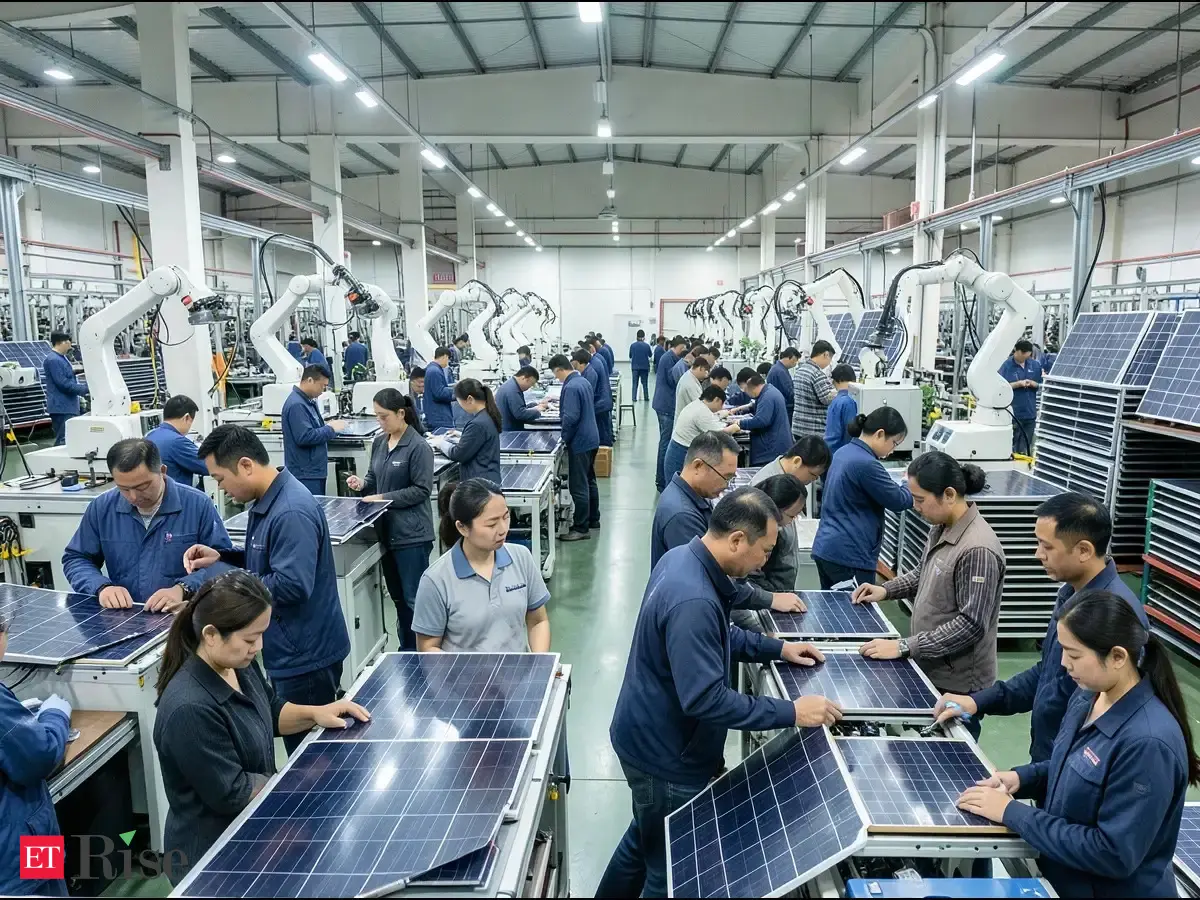
In 2024, China took the lead as the top investor in global clean technology, directing $132 billion to developing nations to aid carbon reduction efforts. This unprecedented infusion of resources could potentially reshape the landscape of international climate finance. View More
SINGAPORE: China sent $132 billion in clean technology and investment to the developing world last year, by far the largest contribution to carbon-dioxide reduction of any country. In fact, the nation's green-manufacturing juggernaut, built in part through heavy subsidies from Beijing, nearly matches the current total of grants, loans and private finance that all wealthy countries sent to poorer ones in 2024 to help fight climate change , according to a Reuters analysis. Those loans and grants stemmed from a climate-finance program the world's wealthiest nations agreed to at a 2009 United Nations climate conference on the premise that industrialized nations made outsized contributions to the climate crisis - and had outsized means to help poorer countries pay to clean it up. A Reuters investigation in 2024 found that most global climate finance comes in the form of loans - and sometimes at market interest rates that funnel billions of dollars back to rich countries. China took a different approach, funneling billions in subsidies into its own green-energy industries, serving its own national interest to dominate next-generation manufacturing domestically and globally. Live Events The result: massive and rapid market-share gains in solar panels, batteries and battery minerals, electric vehicles, wind turbines and other green products. China remains by far the world's biggest greenhouse-gas emitter because of its large population, concentration of heavy industry and reliance on coal power. But its huge clean tech exports mean it has also become among the biggest global forces in reducing climate-damaging emissions. The Reuters analysis used customs data to calculate the value of Chinese exports of clean technologies to countries classified by the Organisation for Economic Cooperation and Development as developing nations. Those exports alone will help the Global South avoid 257 million metric tons of carbon dioxide emissions (MtCO2) per year once deployed - an amount equal to the annual carbon dioxide emissions of France, according to analysis by Lauri Myllyvirta, co-founder of the Helsinki-based Centre for Research on Energy and Clean Air. This year's exports from China, meanwhile, are on track to avoid 337 MtCO2 in the Global South, the analysis shows. Reuters was unable to find a reliable single estimate of how much greenhouse gas emissions are avoided as a result of global climate finance from rich to poor countries. The OECD estimates a fifth of all rich world climate giving in 2024 came from the private sector. The United Nations Framework Convention on Climate Change and the High Ambition Coalition - an informal coalition of nations that has advocated for substantial climate finance - did not immediately comment for this story. The $132 billion figure derived by Reuters for China's global climate contribution also includes an estimated $40 billion of Chinese foreign direct investment into clean-technology projects in developing countries. The investment data was compiled by Mathias Larsen and Xiaokang Xue at the London School of Economics. That brings China's contribution to nearly equal to the $137 billion in climate finance that wealthy nations provided to poorer ones in 2024 under their UN climate pledges, according to the most recent figures provided by the OECD. The figures are not directly comparable. China's total largely reflects commercial transactions focused on clean energy development, while climate finance can also support other types of programs like developing climate-resilient agricultural techniques or cleaning up damage from major storms or floods. But the comparison illustrates the extraordinary scale at which China's manufacturing economy is now shaping the energy transition in poorer countries. The findings point to a potential shift in the mechanics of the global energy transition, according to Li Shuo, a veteran observer of China at UN climate talks who heads the China Climate Hub at the Asia Society Policy Institute. For years, climate talks focused on how much money and technology wealthy countries would provide to poorer ones to help them decarbonize. China's manufacturing boom is creating another pathway: Driving down the price of clean technology through self-interested innovation and scale - until developing countries adopt it for economic reasons. "You can align it to your economic agenda," he said. EXPORT GIANT, DIPLOMATIC MOUSE Beijing has so far shown little interest in translating its commercial might into diplomatic leadership at global climate talks since President Donald Trump withdrew the United States from international climate cooperation in 2025. China's diplomatic role likely will take center stage as nations gather this month for the UN's COP31 climate conference in Antalya, Turkey. Bilateral agreements between heavyweights Washington and Beijing have traditionally paved the way for international climate agreements, including the landmark 2015 Paris deal to limit global warming. But Beijing may be unwilling to go on alone without its geopolitical counterweight at the table, according to former climate negotiators. Beijing may also be worried that taking a bold stance on global carbon reduction would bring unwanted pressure for China to give more climate aid or cut its own fossil-fuel emissions, observers say. China emits about a third of all carbon dioxide emissions and still burns coal for more than half its power. "How China engages on different levels in the coming years is the most fundamental thing that is going to happen on climate because of both their role in clean-tech deployment... but also because of their emissions profile," said Jennifer Morgan, Germany's former climate minister. China's Ministry of Commerce said the country is an important contributor to the global green transformation, and that its wind and solar exports have cumulatively reduced global emissions by roughly 4.1 billion tons of CO2 over the past five years - the equivalent of around 80% of the total emissions of the United States in one year. "Against the backdrop of a global climate governance 'action deficit,' China will continue to uphold a responsible attitude, working with other countries to address challenges, overcome difficulties, and jointly promote global green and low-carbon transformation and sustainable development," it said. FORCING OUT FOSSIL FUELS Meanwhile, China's manufacturing boom has made renewable energy more affordable in the developing world. When Ethiopia banned combustion engine car imports in 2024, for example, it was the first country to take such a dramatic step toward electric vehicles. The decision was less about emissions and more about cutting its fuel import bill, its deputy minister of transport at the time told Reuters. "No one in Ethiopia is asking COP to pay for any of this; the economics have just switched. It is just the cheapest and best solution," said Larsen, a senior policy fellow at the London School of Economics, who built the database of Chinese green investment used by Reuters in this story. China has been by far the world's biggest supplier of electric vehicles over the past few years, as dozens of subsidized automakers have waged a fierce price war in China and dramatically increased exports. The green transition has been similarly pragmatic in Pakistan, which imported 17GW worth of solar from China last year, according to data from Ember, roughly on par with Germany's installations that year. Those panels will cut emissions and, more importantly, provide cheap, reliable power in a country that often has neither. Nearly two thirds of China's exports of solar panels, and the cells needed to make them, went to the developing world last year, according to Reuters analysis of customs data. The picture is different in wealthy countries like the United States and parts of Europe, which in recent years have imposed tariffs and other restrictions on Chinese clean technology to protect their domestic manufacturers from the surge in shipments. The United States, for example, imposes tariffs exceeding 100% on Chinese electric vehicles and has taken other measures to effectively block them from the market. "What is striking is that policies originally designed to address climate change are now facing opposition not because of their climate impacts, but because of concerns about trade and competitiveness," said Andre Correa do Lago, a veteran climate negotiator for Brazil, which hosted last year's climate summit. (Additional reporting by Valerie Volcovici and Simon Jessop; Editing by Richard Valdmanis) .Pbanner{display:flex;justify-content:space-between;align-items:center;background-color:#ec1c40;margin-top:20px;padding:5px 10px;border-radius:4px;color:#fff;line-height:10px;width: 100%;box-sizing: border-box} .Pbannertext{display:flex;align-items:center;font-size:16px;font-weight:600;font-family:'Montserrat';} .Pbannertext img{height:20px;margin:0 6px} .Pbannerbutton a{display:flex;align-items:center;background-color:#fff;color:#ec1c40;text-decoration:none;font-weight:600;padding:4px 8px;border-radius:6px;font-size:15px;font-family:'Montserrat';} .Pbannerbutton img{height:20px;margin-right:6px} .Pbannerbutton a:hover{background-color:#f7f7f7} Add as a Reliable and Trusted News Source Add Now!

Competitive auctions, supportive policies, falling technology costs and rising industrial demand are expected to underpin India’s renewable energy expansion over the next five years View More

Despite sky-high valuations, Mike Khouw argues Costco shares could present a compelling buy. View More
In this articleCOSTFollow your favorite stocksCREATE FREE ACCOUNT watch nowVIDEO3:4003:40This wholesale retailer looks attractive for options tradersOptions ActionThe 2026 midterm elections have profoundly altered the national regulatory environment, most notably with Democrats securing control of both chambers of the U.S. Congress and notching big victories in traditionally business-friendly states like Texas and South Carolina.Over the past two decades, Southern states like Florida and Texas have attracted massive corporate migration from blue states. With less regulation and lower taxes. Those same benefits also attracted many people seeking lower taxes, lower housing costs, and better economic opportunities. With this political shift, relocated companies may now face a landscape increasingly focused on energy and building constraints, and tighter legislative oversight.   Information technology, semiconductors, and traditional energy sectors experienced immediate headwinds following the election. Companies at the forefront of the AI boom, such as CoreWeave, Tesla, and SpaceX, saw share prices slide as markets priced in tighter Democratic regulatory oversight and potential restrictions on AI deployment. Senator Bernie Sanders, for example, reposted his efforts to advance a data center moratorium proposal he co-authored with New York Congresswoman and socialist Alexandria Ocasio-Cortez.The market is suddenly realizing that, between shifts in Washington and in states like Texas, the fastest-growing area of the U.S. economy might grind to a halt. Over half of the U.S. hyperscale data center pipeline could now face heightened regulatory friction. To build new facilities, even assuming they get permitted at all, developers may face tax increases, strict "bring your own power" mandates, or new air-permit delays for on-site gas plants. As all-in construction costs rise and timelines extend, immediate demand for advanced chips snowballs down the hardware supply chain.Traditional oil and gas majors sank, while solar and green energy stocks surged, driven by expectations that a Democratic Congress will resume pushing subsidies for them. Also, the ongoing U.S.-Israel war with Iran has driven crude prices sharply higher throughout the year. With Democrats taking control of Congress, President Trump faces a legislative body that can severely constrain his military options and push back on defense budgets. Tehran almost certainly recognized that a politically weakened Trump administration would have a greater incentive to seek a negotiated deal, something Secretary of State Marco Rubio has now indicated is preferable to any escalating kinetic options. Consequently, crude prices plunged, with Brent dropping below $95 per barrel. For similar reasons, defense contractors took market hits due to anticipated congressional resistance to the $1.5 trillion Pentagon budget. Although healthcare - as measured by XLV at least came in today, it remains above pre-election levels, along with grocery stocks such as Walmart, Costco, Kroger, and Dollar General, on expectations that a Democratic Congress might boost federal spending in those areas. This may help explain why Costco was one of the relatively few stocks to close higher on Thursday, and why it also ranked as the 15th most active single-stock option (in notional terms), ahead of names like JP Morgan, Marvell, Oracle, Eli Lilly, and Dell.At roughly 46x forward earnings, Costco (a perennial on the "Holly Index (MELLOY, CAN WE LINK TO THIS") isn't cheap, but then it is never cheap. The average forward multiple is actually a few turns higher at over 49x. So what were folks trading? Mostly short-dated call options. One possible reason? Costco isn't just trading at a relatively high multiple; as usual, it is also simply a high-priced stock in dollar terms, at over $1,065 as of Thursday's close. A "round lot" (100 shares) would therefore cost over $100,000 to initiate. Like many things packaged at Costco, that might be a little more than some buyers need (or want) to spend.Stock Chart IconStock chart iconCostco, YTDAlternatively, call options let investors gain exposure to 100 shares for far less than buying the shares. Buying the January 1060 calls, for example, would cost about $53.45, or $5,345 for upside participation on 100 shares of stock above the $1,060 strike price. That may seem more palatable, but a keen observer might notice that prior highs occasionally present some technical resistance, and Costco topped out at about $1,090 back in mid-May. By selling a call at or near that level, such as the January 1090s at 39.65, one could reduce the cost of the trade even further, expecting a pause before new highs. This would reduce the cost of the trade to $13.80, or just under 1.3% of the current stock price.I won't pretend $1,380 is a small outlay for a one-lot call spread on a much-loved stock trading at 46x forward earnings. Nor is $520 for 8 6-ounce A5 Wagyu filet mignons (a Costco online only deal available now). But relatively, both the steaks at Costco and the options on Costco are very fairly priced. But it does provide participation in 100 shares of Costco between the strikes, for only 30% more than the cost of a single share of the underlying stock.Disclosures: Tidal owns/holds all the securities mentioned in the article.All opinions expressed by CNBC Pro contributors are solely their opinions and do not reflect the opinions of CNBC, or its parent company or affiliates, and may have been previously disseminated by them on television, radio, internet or another medium. This content is provided as part of our editorial output for informational purposes only and does not constitute financial, investment, tax or legal advice or a recommendation to buy any security or other financial asset. The content is general in nature and does not reflect any individual's unique personal circumstances. The above content might not be suitable for your particular circumstances. Before making any financial decisions, you should strongly consider seeking advice from your own financial or investment advisor.THIS CONTENT IS PROVIDED FOR INFORMATIONAL PURPOSES ONLY AND DOES NOT CONSTITUTE FINANCIAL, INVESTMENT, TAX OR LEGAL ADVICE OR A RECOMMENDATION TO BUY ANY SECURITY OR OTHER FINANCIAL ASSET. THE CONTENT IS GENERAL IN NATURE AND DOES NOT REFLECT ANY INDIVIDUAL'S UNIQUE PERSONAL CIRCUMSTANCES. THE ABOVE CONTENT MIGHT NOT BE SUITABLE FOR YOUR PARTICULAR CIRCUMSTANCES. BEFORE MAKING ANY FINANCIAL DECISIONS, YOU SHOULD STRONGLY CONSIDER SEEKING ADVICE FROM YOUR OWN FINANCIAL OR INVESTMENT ADVISOR.Click here for the full disclaimer. Choose CNBC as your preferred source on Google and never miss a moment from the most trusted name in business news.

Once operational, the solar project is expected to produce 810 million units (MUs) of renewable electricity annually. It is also estimated to prevent around 103,820 tonnes of carbon emissions every year. View More

KPI Green Energy has energised an extra 49.7 MWp of its 250/350 MWp solar project and 121.8 MWp of its 370/677 MWp hybrid project at Bharuch View More

Investment in technology upgrade underway; company expects cumulative investments to approach $1 billion in the next few years View More

COP31, kicking off November 9 in Antalya, Turkey, is all set to spotlight the global push for electrification. With a target to raise electricity's contribution to final energy demand to 35% by 2035, nations are keenly examining how electrification can effectively curb fossil fuel use. View More
The COP31 climate summit might count as a success if there is a commitment from all countries attending to significantly boost the electrification of their economies, according to the event’s head of negotiations. One of the main goals of the organizers of the United Nations climate conference starting next week in Antalya, Turkey, is to have countries party to the Paris Agreement to sign up to a goal to increase the global share of final energy demand coming from electricity to 35% by 2035, from about 20% today. So far, however, the ambition remains only a voluntary one for countries to commit to. “I would like to see a strong outcome on electrification in our presidency-led decision,” said Chris Bowen, Australia’s climate change and energy minister and COP31’s president of negotiations, on the Zero podcast. That decision would have to be signed off by all countries attending the summit, which starts on Nov. 9. The rise in oil and gas prices linked to ongoing wars in Europe and the Middle East has forced fossil-fuel importing countries — which make up three-fourths of the world’s population — to find ways to reduce consumption and find alternatives. Electrification is part of the solution. With costs falling for solar panels and batteries, many countries have opted to speed up the transition to electric cars and heat pumps. “Electrification is an unquestionably good thing,” Bowen said. “Even if your grid is powered by coal and you don’t have solar panels at home, if you’re just charging [an electric car] off a coal-fired grid, you are reducing emissions by something like 60%.” Live Events Primary energy is how fuel is found in nature, like crude oil; final energy is how fuel is consumed, for example as gasoline or electricity; and useful energy is the fraction of final energy that is converted into work, such as motion or cooling. While it’s true that about 80% of the world’s primary energy comes from fossil fuels, only about 65% of its final energy is derived from coal, oil or gas. Thus electrification is foremost an energy efficiency solution, because it reduces primary energy demand without cutting the useful outcomes that citizens want. The electrification goal for COP31 got a boost when China, the world’s largest emitter of greenhouse gases and the biggest manufacturer of electricity technologies, indicated in October that it supports the target. Bowen is hoping it can be pushed further. COP summits often feature voluntary goals from countries willing to act faster on tackling climate change. At COP28 in Dubai in 2023, for example, countries signed off on a goal to triple nuclear power by 2050. As of March, some 38 countries endorsed the goal, but the amount of nuclear power in the world has not increased substantially so far. Also at COP28, the presidency-led decision included a goal to double energy efficiency and triple renewable energy by 2030. While progress on energy efficiency has been limited, there are strong indications that the world will get close to the renewable energy target. But this push for more ambition to electrify and cut emissions is coming at a difficult time for most citizens who are grappling with affordability issues. While electrification can offer lower cost energy in the long term, it needs large upfront investments in infrastructure. However, Bowen tamped down expectations that rich countries will provide any additional finance at COP31. “This is not a finance COP” to set new targets, he said. “It’s about how we’re going on meeting those targets, and what do we need to do to get the finance that is already there.” .Pbanner{display:flex;justify-content:space-between;align-items:center;background-color:#ec1c40;margin-top:20px;padding:5px 10px;border-radius:4px;color:#fff;line-height:10px;width: 100%;box-sizing: border-box} .Pbannertext{display:flex;align-items:center;font-size:16px;font-weight:600;font-family:'Montserrat';} .Pbannertext img{height:20px;margin:0 6px} .Pbannerbutton a{display:flex;align-items:center;background-color:#fff;color:#ec1c40;text-decoration:none;font-weight:600;padding:4px 8px;border-radius:6px;font-size:15px;font-family:'Montserrat';} .Pbannerbutton img{height:20px;margin-right:6px} .Pbannerbutton a:hover{background-color:#f7f7f7} Add as a Reliable and Trusted News Source Add Now!

Scientists have found that explosive magnetic energy releases in Earth’s magnetotail can trigger rapid disturbances in ground-level magnetic fields View More

Zimbabwe targets 49% non-fossil fuel share by 2030; Liberia invites Indian firms for IPP solar projects View More