
Latest Sectors News

The patented microgrid combines solar power, batteries and supercapacitors to manage electricity demand, reduce stress on conventional grids and support two-way EV charging View More

Uttar Pradesh secured the top position with 75,031 installations in October 2026, surpassing Gujarat and Maharashtra in cumulative rooftop solar installations View More

Shares of Vikram Solar, Premier Energies, Waaree Energies and Suzlon Energy fell on Monday amid volatile markets and bearish technical signals. View More

The expansion reflects rising domestic manufacturing investment, declining imports and stronger exports, although global competition and supply constraints remain concerns. View More

European Solar Manufacturing Council seeks to rebuild the region’s solar manufacturing capacity View More

Fujiyama Power Systems shares fell 2.05% on Friday, extending recent losses, though they remain up 33% over six months. Motilal Oswal expects earnings growth in the second half of FY27, citing expanding distribution, new facilities and strong rooftop solar demand. View More

Not one utility CEO we spoke with at the EEI conference is anticipating a slowdown in electricity growth expectations. View More
In this articleFSLRCQPFollow your favorite stocksCREATE FREE ACCOUNT GET THIS IN YOUR INBOX FIRST: Subscribe to CNBC's "Power Insider" newsletter. POWER POINTThe demise of data centers has been greatly exaggerated. So says every utility CEO and energy-focused investor we spoke with at the Edison Electric Institute's annual conference in Arizona. Here's why...There is a lot of misleading, misdirected, or straight-up incorrect information floating around about data centers and the AI buildout. I'm not going to dive into the old water-use story â you can do your own research on that â but rather focus this week on what the insiders know: Some newly elected politicians either don't have the power to stop the buildouts or, if they do, the buildout will likely just continue somewhere else.Ohio and Georgia are important states to watch with their new incoming political class, but for the sheer importance in size and scope, I'll focus on the energy and data center capital: Texas.Incoming Governor Gina Hinojosa and incoming Senator James Talarico both campaigned on promises to go after what they believe to be affordability issues around data centers. I say "what they believe to be" because it's unclear how much data centers may raise your electricity bill, if at all. First and foremost, data centers are largely a state issue, meaning officials elected to federal office have little control over outcomes, at least for now. In Texas, any cancellations or moratoriums on new builds will come from the statehouse in Austin. That's where current Governor Greg Abbott has already, and rather quietly, put his own "pause" on data center permitting. That delay has been underway for a few weeks. Also, in Texas, the Governor has less direct power than in some other states. The power the governor does have largely derives from the authority to appoint those in charge of the all-important permitting process.In the Lone Star State, that power lies with two agencies: the Public Utility Commission of Texas (PUCT) and the even lesser-known Texas Commission on Environmental Quality (TCEQ). The PUCT regulates Texas' electricity, telecom, and water industries. It helps oversee growth of anything electricity-grid-related. So if a data center wants to connect to the public utility grid, it needs the commission's approval. Its chair â a pro-growth chap named Thomas Gleeson âis also on the board of Texas' electric grid powerhouse ERCOT and will serve his term with the utility commission through September 2029. Yes, three years from now.That agency gets involved when a data center or power provider wants to connect to the electricity grid. But what about facilities that are off the grid and have their own dedicated power sources? Texas has less control over what happens then. That said, it does have to authorize certain environmental permits, and that responsibility largely lies with the TCEQ. The TCEQ was "BBI" (my own little term for "boring, but important") until data centers came along. It's not exactly the Alamo, but this obscure group â run by a regulator named Brooke Paup â is largely the "last stand" for permitting on those new builds. Paup was also appointed by Gov. Abbott and serves through next year. In other words, unless she and Gleeson step down or there is some way to oust them, the regulatory environment in Texas may not change much.The bottom line in this brief foray into the Texas regulatory swamp is to highlight that there are things for investors to consider around the data center/energy world that may not be at the top of the headlines.Important Note â Be mindful that I am an East Coast-based financial broadcaster and journalist, not an expert on Texas regulation or how the state operates. There may very well be things I don't know, things my sources aren't aware of, or other ways in which the new Governor and state House can assert power. For one, she recently said she may try to freeze electricity rates. Hint: that would be a terrible idea unless you want to damage the growth of badly needed new power sources like wind and solar.Disclaimer is done. Let's assume I am wrong on Texas and there is a larger push to slow or stop data center growth in the state. Conversations with some pretty smart people lead me to believe that if those facilities aren't built in that state, they will be built in another: Louisiana, Oklahoma, or another state. Sources tell me that Louisiana Governor Jeff Landry and his team are already working the phones, telling companies that his state would love to welcome new business. Same for Oklahoma. Both are gas-rich, have plenty of power, and are only too happy to grab any data center dollars.Now, a huge caveat.Let's acknowledge that not all data centers are going to be built⦠and never were. There are way too many plans to make them all happen. Some DCs were shelved before the election. Some others may soon be canceled, either for reasons of public pushback or otherwise. It's also not clear if we even need all the planned compute. There will be a time when companies realize they have enough â or at least enough for now â and turn off the spending taps.Goldman Sachs lays it out in a new note late this week:"The midterm election results pose only modest risks to AI investment, for now. We expect newly elected Democratic governors in states that account for over a third of planned US data center capacity to impose moratoria on new data centers. However, these will likely only impact projects not yet permitted, leaving the vast majority of planned 2027 construction unaffected. We therefore expect data center construction spending to remain strong next year, though moratoria that are stricter or longer-lasting than we expect pose downside risks."The firm adds that it still sees spending on AI-related hardware coming in around $1.4 trillion by the end of next year. In other words, the spending boom is going to keep going, at least for now.Another key point for all you energy- or utility-focused investors out there: While data centers are one huge driver of electricity demand, they aren't the only one. Electric cars, reshoring manufacturing, and the "electrification of everything" will also grow the need for more gigawatts. This is why we asked every utility CEO we spoke with at the EEI conference if they saw any slowdown in their internal electricity growth estimates. All gave the same answer: no. Not one hinted at a downturn. Not Exelon's Calvin Butler. Not Entergy's Drew Marsh. And not Drew Maloney, head of EEI. Of course, power demand is about more than just data centers, but it's still important for investors to hear it from the top.Side note: Many of you think I'm wrong about my "hot take" on data centers and the election. If you missed last week's Power Insider, this is how you responded to my X poll on the election and energy.Zoom In IconArrows pointing outwardsSo⦠why am I writing this week about AI and data centers? Because, as I've said before and will keep saying, AI and data centers are just energy stories in disguise. If they grow, energy demand grows. Demand for solar, wind, and natural gas grows. The economy grows. Because, after all, energy is the economy.Oh, and in the past week, I've flown from Newark to Rome to Chicago to Phoenix and back to Newark. My brain may be a little mushy, so bear with me.Grazie mille!BrianZoom In IconArrows pointing outwardsACTIONABLE INSIDERSo now that my big take on data centers and regulation is over, let's get granular. What energy stocks do you buy right now?Let's get the "1-2-3" on six stocks: one in solar, two in power, and three in oil and gas.One: William Blair is upgrading First Solar (FSLR) to Outperform. The election result is part of the story. Analyst Jed Dorsheimer and his team believe the new Congress and certain state governorships will benefit local support for utility-scale solar, and that First Solar is best-positioned, though he does caution investors that it may take "some time to show up in the bookings." He adds that Texas is the largest builder of solar, so the shift in state-level leadership is a big deal. Fair warning, however: upgrades do not mean the stock will go higher. Deutsche Bank upgraded FSLR back in early July â an upgrade I wrote about â and the stock has fallen 22% since.Two: Staying with the macro power theme, Barclays' Nicholas Campanella is particularly optimistic on two utility names. He tells Power Insider that he "really likes NiSource (NI) and Xcel Energy (XEL) right now." It has to do in part with what I just wrote about above. Campanella says the political outcomes in states such as Texas and Georgia may drive investors into utilities in other areas, particularly those with "more stable and established data center policies in place." That would fit with Indiana-based NiSource and Minnesota-based Xcel. While Minnesota may have a Democratic tilt, the company operates in eight different states. It is also working with Alphabet (GOOGL) on a massive new data center, and CEO Bob Frenzel told us that he is confident they can successfully navigate it all.Three: Now to the "3"⦠three picks on what powers some of the power: oil and natural gas.In an interview on CNBC, Bernstein analyst Bob Brackett says he likes ExxonMobil (XOM), calling it a great "barbell" play between natural gas and refined products. Brackett â a former Exxon employee â also believes it's a relatively "safe" stock to own right now in the volatile and headline-driven world of energy. Brackett has an Outperform rating and $186 target on the stock, giving it about another 10% upside from here.Brackett also likes the lesser-known Expand Energy (EXE). If you're not familiar with Expand Energy, don't worry; it's still relatively new. The company is the combination of Chesapeake Energy and Southwestern Energy. It's a natural gas behemoth, and Brackett says the gas story is a "great long-term story" that's trading below a "midcycle price," and Expand fits right into it. Brackett also notes that Expand has a new CEO. He has a $139 target on the stock, making him one of the more bullish analysts on the Street. Expand has a median price target of $123.54.Meanwhile, the chart looks tasty on another energy name: Cheniere Energy (LNG). Piper Sandler technical guru Craig Johnson likes the stock, and while he isn't a fundamental energy analyst, he was one of the few to upgrade the entire sector back in February when the Iran war began. Cheniere â along with Venture Global (VG) â is a pure play on why I was just in Europe: the worsening European energy crisis. Cheniere exports massive quantities of U.S. natural gas to customers in Europe, Asia, and other parts of the world. Johnson likes Cheniere in part because it recently broke out of a "very big base," and he wants to buy stocks that are on the upswing.Cheniere is a well-run, rather quiet company with a fantastic CEO in longtime energy executive Jack Fusco. Jack has forgotten more about running an energy business than most will know, and the company continues to expand production. As I've pointed out for over four years, without American natural gas, Europe would be in dire straits and cutting demand even more than it already is. It's not hyperbole to say that American natural gas is â literally â keeping the lights and the heat on across Germany, Italy, and other countries.Remember this incredible stat: just one tanker of LNG can produce a year's worth of power for over 100,000 average-sized European homes. Next year, Europe is still planning to stop buying LNG from Russia. That means demand for American natural gas is only going one way: up.INSIDE LINEThis week's Inside Line is with Amrita Sen, founder and director of market intelligence at Energy Aspects. Amrita is one of the smartest and most well-connected energy experts in the world, and she took a few minutes from her constant travel to answer a couple of questions.Zoom In IconArrows pointing outwardsZoom In IconArrows pointing outwardsTAKE A LOOKThis week's Take A Look is a little outside the norm, but an important interview nonetheless. It's with the U.S. Ambassador to Italy, business magnate, and former star of CNBC's Billion Dollar Buyer, Tilman Fertitta. In a wide-ranging interview from the ambassador's residence in Rome, we talked about that day's stock market crash, business, the consumer, and, of course, energy. Full disclosure: Tilman and I have been friends for over 15 years.VIDEO11:4811:48Watch CNBC's full interview with U.S. Ambassador to Italy Tilman FertittaRANDOM, BUT INTERESTINGThis Washington Post article was published a few days after the election. The underlying research from Harvard University and the University of Pennsylvania that it was based on is here and is worth a read. The study came out on October 9 (and yes, I missed it as well).Not blaming data centers for higher energy costs is definitely random, but interesting!Catch up with more on energy including interviews and video content from CNBC and Power Insider.   Read the last issue of Power Insider here. Choose CNBC as your preferred source on Google and never miss a moment from the most trusted name in business news.

Strong growth in renewable power generation lifted Tata Power’s Q2 operating profit, but weakness in solar EPC and rising debt remain concerns. Planned capacity expansion could unlock valuation upside, though execution risks persist. View More

India’s experience with PM-KUSUM and PM Surya Ghar offers important lessons for the Global South, Director General of ISA Ashish Khanna says View More
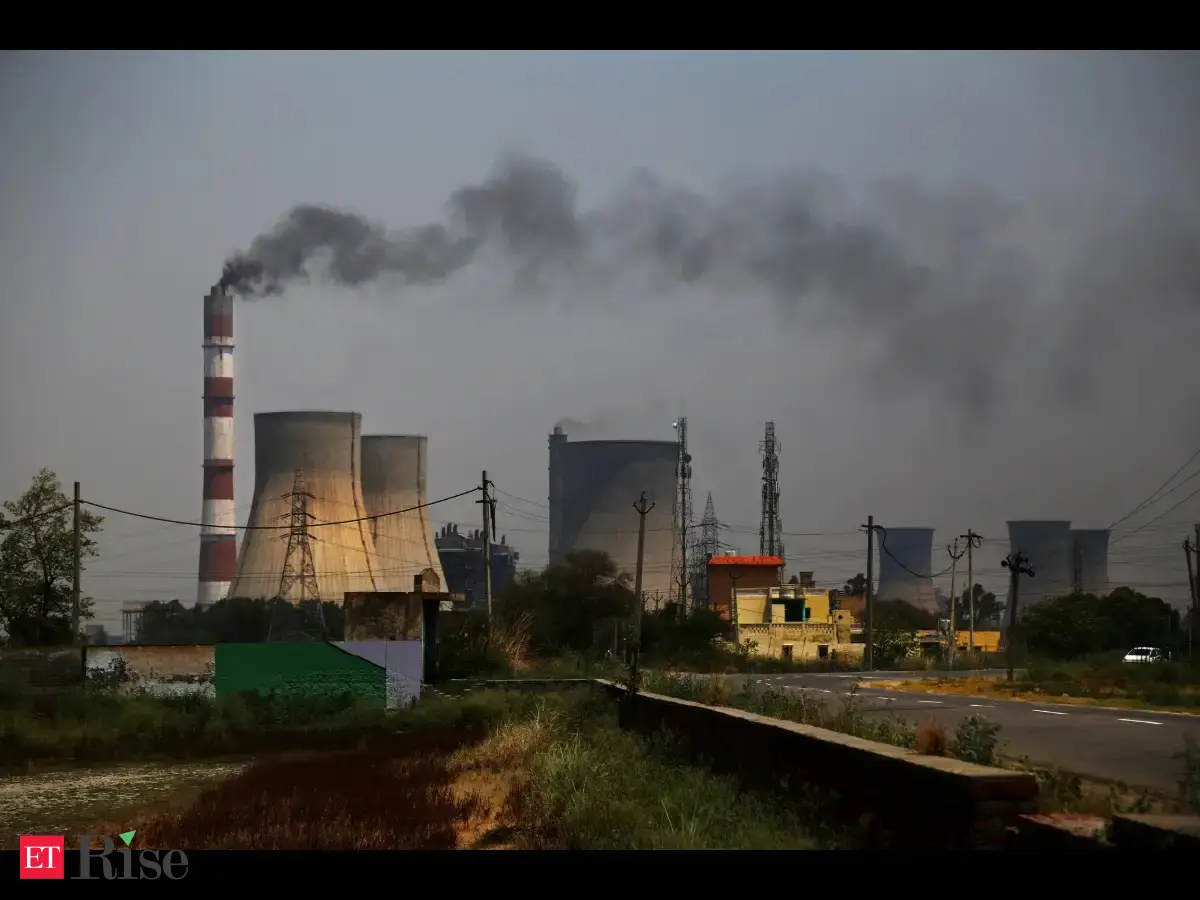
This year, global carbon emissions fell by 0.4%, driven by oil supply disruptions from the conflict in Iran. While oil and natural gas emissions experienced notable declines, there was a small uptick in coal emissions. Experts caution that these improvements may not be guaranteed, attributing them primarily to external influences. View More
Global carbon pollution dropped this year ever so slightly, but it's more because of oil shocks reverberating from the Iran war than anything the world has done to fight climate change, scientists said in a new study. In 2026, the world emitted 42.2 billion tons (38.2 billion metric tons) of heat-trapping carbon dioxide from the burning of fossil fuels such as coal, oil and gas. It’s a 0.4% decrease from last year, according to the scientists of the Global Carbon Project, which publishes its estimates in the journal Earth System Science Data Discussions. “It’s downwards which sounds good, but this is largely driven by the war in Iran, what’s happened in the Strait of Hormuz,” said study co-author Glen Peters, a scientist at the CICERO Center for International Climate Research in Norway. “So in a way, a little bit of good news, but for the wrong reasons.” The war in Iran has effectively closed the Strait of Hormuz, a vital shipping artery for petroleum products, pushing up global prices of gasoline and oil. They found oil emissions dropped nearly 2% and natural gas fell 0.3%, while coal was up 0.6%. Live Events The international team of more than 140 scientists use data from around the world to calculate the yearly emissions figure, with estimates for the last few months of the year, and then present them at the U.N. climate negotiations in Antalya, Turkey. Peters said they are certain that this was related to the war-triggered energy shocks because of both the timing and type of fuel emission drops. If the overall carbon dioxide emission drop were due solely to a rise in renewables and a systemic drop in fossil fuel use, oil emissions “would slowly come up to a peak and then slowly decline afterward, whereas what we see this year is oil emissions are going up and then suddenly BANG, down 2%,” Peters said. Previous carbon pollution drops This is the third time global carbon pollution dropped in the 21st century. The other two times were because of the global recession in 2009 and the COVID-19 pandemic in 2020. In those past two crises, people hoped the recovery from the shocks would emphasize clean energy, Peters said, "but at the end of the day, we seem to go back to where we were before.” Outside experts greeted the figures with a mix of hope and skepticism that it will last. Niklas Höhne, co-founder of Germany’s NewClimate Institute, said “permanent shifts are happening” especially with skyrocketing switches to electric cars and trucks, especially in Asia. So he thinks the global peak of carbon emissions is near or here. But Malte Mienshausen, a climate science and policy expert at the University of Melbourne in Australia, said oil producing nations and companies not affected by the blockage of the Strait of Hormuz reaped “tremendous windfall gains,” and it boosts their efforts to look for oil outside the Middle East. That, he said, will dampen any short-term effects of reduced carbon emissions from the war. More than 1,000 tons per second of pollution The 42 billion tons of carbon dioxide emitted this year comes to about 1,335 tons (1,211 metric tons) of the transparent, heat-trapping gas going into the air every second. “We shouldn’t lose sight of the bigger picture. The world is still pumping more than a thousand (metric tons) of carbon dioxide into the atmosphere every second," Mohamed Adow, director of the environmental group Power Shift Africa, said in an email. “It’s very abstract to think about the magnitude of stuff we throw in the atmosphere every year, but it’s a ginormous number,” Peters said. “If it was black and not transparent, the sky would be dark.” And even though the amount of heat-trapping gases from fossil fuels dropped slightly, overall global carbon dioxide emissions went up 1%. That's because of land use changes, such as deforestation and human-caused peat fires, that increased faster than fossil fuel burning decreased, the study said. China's emissions drop raises eyebrows and hope Most of the world's biggest carbon polluting nations — China, the United States, Europe, Japan — showed about a 1% drop in emissions this year, but Peters attributed it to the oil shock. India's fossil fuel pollution went up 4.4% this year, the study found. China's emission drop raised eyebrows and hope for some experts. Experts have been waiting for China's ever-growing emissions to start dropping. “China is giving us real reasons to be optimistic that its emissions may have peaked," Adow said. “It’s building the world’s first major electrostate, investing at extraordinary speed and scale in solar power, wind energy, electric vehicles and the infrastructure to support them. This isn’t a temporary response to an oil crisis. It’s a fundamental transformation of China’s economy that is steadily reducing its dependence on fossil fuels.” University of Michigan environment dean Jonathan Overpeck said, “We're not phasing out fossil fuels fast enough, but some progress is better than no progress.” .Pbanner{display:flex;justify-content:space-between;align-items:center;background-color:#ec1c40;margin-top:20px;padding:5px 10px;border-radius:4px;color:#fff;line-height:10px;width: 100%;box-sizing: border-box} .Pbannertext{display:flex;align-items:center;font-size:16px;font-weight:600;font-family:'Montserrat';} .Pbannertext img{height:20px;margin:0 6px} .Pbannerbutton a{display:flex;align-items:center;background-color:#fff;color:#ec1c40;text-decoration:none;font-weight:600;padding:4px 8px;border-radius:6px;font-size:15px;font-family:'Montserrat';} .Pbannerbutton img{height:20px;margin-right:6px} .Pbannerbutton a:hover{background-color:#f7f7f7} Add as a Reliable and Trusted News Source Add Now!