
Latest Sectors News

The business school’s first obligation is to prepare students for the world as it is. View More
At 4:30 am on March 1, 2026, something unprecedented happened in the history of global commerce. Iranian drones and ballistic missiles struck Amazon Web Services data centres in the United Arab Emirates ( UAE ). Sixty cloud services went offline. Banks stopped processing payments. Taxi apps went dark. A sovereign state had formally designated a Silicon Valley company’s cloud infrastructure as a legitimate military target. The frameworks we teach in business schools have assumed, as their foundational premise, a world in which geopolitics and commerce operate in parallel universes. That assumption is now ash. Less than a year before the strikes, US President Donald Trump completed a four-day tour of Saudi Arabia, Qatar, and the UAE that generated more than $2 trillion in investment pledges. The Gulf’s pitch to Silicon Valley had always rested on three pillars: capital, political alignment, and stability. Iranian drones demolished the third pillar in a single night. The entire $2-trillion AI investment edifice in the Gulf is now subject to a risk variable that no deal model, no investment thesis, and no business school framework had accounted for: the physical destruction of cloud infrastructure by a state adversary. The Amazon data centres are the most dramatic illustration of a broader disruption to the grammar of business, one that has been building through this entire decade. The conceptual vocabulary governing management education for half a century, built on neoclassical economics, systems optimisation, and the liberal international order, is being systematically invalidated by geopolitical reality. The most visible casualty has been the supply chain orthodoxy that dominated business thinking from the 1980s onwards. Toyota’s production system gave the world just-in-time manufacturing, and business schools canonised it. The logic was elegant: carry the minimum inventory necessary, synchronise supply with demand in real time, and eliminate waste ruthlessly. For four decades, this logic generated genuine competitive advantage and informed the design of global supply networks spanning dozens of countries. The new heuristic is just-in-case. Inventory is insurance. Vendor diversification is a strategic necessity. Single-source dependencies are existential vulnerabilities. The frameworks taught in every operations management classroom today, lean, agile, and responsive, were calibrated for a world of stable geopolitics and frictionless trade. That world is gone, and the curriculum has yet to register its departure. Live Events Business schools have long taught that the rational firm outsources non-core activities, focuses on its distinctive competencies, and plugs into global value chains to access the cheapest inputs. This is the intellectual lineage that produced the “build versus buy” framework, one of the most frequently taught decision models in operations management. The framework typically recommends buying when the activity is strategically undifferentiated and when external providers offer superior economics. That framework is broken in several critical industries. A country that outsourced the manufacture of solar panels, semiconductors, precision optics or antibiotics to optimise cost has discovered that it simultaneously outsourced strategic autonomy. The calculus is civilisational. The United States Inflation Reduction Act , the European Chips Act, and India’s Production-Linked Incentive schemes—these are a recognition that the build-versus-buy framework omitted a critical variable: the compounding cost of dependency. For three decades after the Cold War , business schools taught globalisation as an irreversible arc. The “world is flat” thesis, embedded in virtually every international business curriculum, held that technology, trade liberalisation, and comparative advantage would progressively integrate markets, harmonise institutions, and make nationality commercially irrelevant. Multinational corporations were the protagonists of this story. International business, as taught in most schools, still largely operates within the Dunning OLI paradigm, asking firms to optimise their ownership, location, and internalisation decisions in a borderless economic landscape. The emerging reality demands an entirely different framework: one that incorporates political risk as an endogenous strategic constraint shaping the fundamental architecture of the firm, fully integrated into every investment and operational decision from day one. Indian business schools will produce the managers who navigate this reconfiguration. They deserve a curriculum equal to that task. At a minimum, four domains that are currently absent or marginal in Indian MBA programmes must become core competencies. First, geopolitical risk analysis must be integrated into strategy, operations, and finance, treated as a quantitative input to every major business decision. Second, resilience engineering in supply chains, drawing from ecology, military logistics, and complex systems theory, must replace the lean manufacturing canon as the primary operations framework. Third, the political economy of industrial policy must be taught as a live discipline, equipping managers to navigate subsidies, sanctions, export controls, and technology nationalism. Fourth, a revised theory of the firm must be developed, one that treats national security, strategic autonomy and societal resilience as legitimate objectives alongside financial returns. There is a structural reason business schools lag behind reality. Academic tenure systems reward theoretical rigour over practical relevance. Curriculum committees are conservative. The institutional inertia of prestigious schools makes rapid adaptation psychologically and politically difficult. And there is an uncomfortable additional reason: many of the frameworks being disrupted were associated with specific schools, specific Nobel laureates, and specific consulting firms. Acknowledging their obsolescence requires institutional courage of a kind that academia rarely musters quickly. The business school’s first obligation is to prepare students for the world as it is. The geopolitical ruptures of this decade, the US-China decoupling, the tariff wars, the Gulf conflagration, and the physical destruction of cloud infrastructure—these are the new normal. They are structural, durable, and accelerating. On the morning of March 1, 2026, Iranian drones turned Amazon’s servers into smoke and metal in the UAE desert. The textbooks that govern our business schools did not have a framework for that moment. It is time to write new ones. Suresh Prabhu is a former Cabinet Minister and Shobhit Mathur is the Co-founder and Vice-Chancellor of the Rishihood University. Views are personal .Pbanner{display:flex;justify-content:space-between;align-items:center;background-color:#ec1c40;margin-top:20px;padding:5px 10px;border-radius:4px;color:#fff;line-height:10px;} .Pbannertext{display:flex;align-items:center;font-size:16px;font-weight:600;font-family:'Montserrat';} .Pbannertext img{height:20px;margin:0 6px} .Pbannerbutton a{display:flex;align-items:center;background-color:#fff;color:#ec1c40;text-decoration:none;font-weight:600;padding:4px 8px;border-radius:6px;font-size:15px;font-family:'Montserrat';} .Pbannerbutton img{height:20px;margin-right:6px} .Pbannerbutton a:hover{background-color:#f7f7f7} Add as a Reliable and Trusted News Source Add Now!

Nvidia CEO Jensen Huang said space computing "has arrived" at the GTC 2026 conference. View More
In this articlePLNVDAFollow your favorite stocksCREATE FREE ACCOUNT watch nowVIDEO1:5001:50Nvidia CEO Jensen Huang: At least $1T backlog through 2027Closing Bell Nvidia announced the launch of computing platforms for orbital data centers on Monday during its GTC 2026 conference, a highly anticipated next step for artificial intelligence in space."Space computing, the final frontier, has arrived," said CEO Jensen Huang. "As we deploy satellite constellations and explore deeper into space, intelligence must live wherever data is generated."In a press release, the company said that its Vera Rubin Space-1 Module, which includes the IGX Thor and Jetson Orin, will be used on space missions led by multiple companies. The chips are specifically "engineered for size-, weight- and power-constrained environments."Partners include Axiom Space, Starcloud and Planet.Huang said Nvidia is working with partners on a new computer for orbital data centers, but there are still engineering hurdles to overcome. "In space, there's no convection, there's just radiation," Huang said during his GTC keynote, "and so we have to figure out how to cool these systems out in space, but we've got lots of great engineers working on it."The data center buildout that powers AI demand has been blamed for soaring electricity costs. Sending orbital data centers into space has been viewed as one solution, but high costs and low availability of rocket launches remain a barrier.Still, AI companies are racing to make use of space's virtually unlimited solar power. In November, Google announced its 'Project Suncatcher' initiative, exploring the concept of compute in space.Elon Musk's xAI was acquired by SpaceX last month in a $1.25 trillion deal with an eye toward building out data centers in space. The company is one of Nvidia's largest customers. SpaceX asked the Federal Communications Commission for approval to launch 1 million satellites for AI centers in January, a plan that has been opposed by scientists for environmental threats, including light pollution and orbital debris.CNBC's Lora Kolodny contributed to this report. Read more CNBC tech newsCEO Jensen Huang sees $1 trillion in orders for Blackwell and Vera Rubin through '27Bill Gurley on AI bubble: A bunch of people got rich quick and a reset is comingMeta stock climbs nearly 3% on report of planned layoffs to offset AI spendingBig Tech purchases of carbon credits explode amid AI race, with Microsoft leading the way Choose CNBC as your preferred source on Google and never miss a moment from the most trusted name in business news.

The remarks came as Treasury Secretary Scott Bessent met his Chinese counterpart He Lifeng in Paris, paving the way for the summit scheduled for late March. View More
In this articleCAASUSOMCHIUSBFollow your favorite stocksCREATE FREE ACCOUNT U.S. President Donald Trump prepares to greet Chinese President Xi Jinping ahead of a bilateral meeting at Gimhae Air Base on October 30, 2025 in Busan, South Korea. Andrew Harnik | Getty Images U.S. President Donald Trump said his planned trip to China later this month could be delayed as Washington sought to pressure Beijing to help reopen the Strait of Hormuz, underscoring a renewed flashpoint in an already fragile bilateral relationship.In an interview with the Financial Times on Sunday, Trump said he expected China to help unblock the strait before he travels to Beijing for a summit with Chinese leader Xi Jinping, which had been scheduled for March 31 to April 2.Trump added that the two weeks to the meeting were a "long time" and that Washington wanted clarity before then. "We may delay," Trump told the FT, without elaborating on timing. The remarks came as Treasury Secretary Scott Bessent met his Chinese counterpart He Lifeng in Paris for talks about the planned summit. Beijing has yet to confirm the dates and typically announces such plans closer to their scheduled start. Speaking to CNBC Monday, Bessent said that the meeting between Trump and Xi could be instead delayed for logistical reasons, such as the president choosing to stay in Washington to coordinate the war effort in Iran."If the meetings are delayed, it wouldn't be delayed because the president demanded that China police the Strait of Hormuz," Bessent said in an interview with CNBC's Brian Sullivan in Paris. "If the meeting, for some reason, is rescheduled, it would be rescheduled because of logistics." Read moreTrump-Xi China summit may be delayed if Trump wants to stay in Washington for Iran war: Bessent The visit to China would be the first for a U.S. president since Trump's last trip during his first term in 2017. It also comes five months after the two leaders met in the South Korean city of Busan, where they agreed to a one-year truce in a trade war that had seen tit-for-tat tariffs briefly soar to triple-digit levels last year. Chinese top diplomat Wang Yi said earlier this month that the agenda for the exchange was already "on the table." Trump said Sunday aboard Air Force One that China sourced about 90% of its oil through the strait, framing Beijing's cooperation on Hormuz as a matter of self-interest. The president has appealed to several European and Asian countries, including China, to help open up the chokepoint through which roughly one-fifth of the world's daily oil supply passes. However, the numbers suggest Beijing may be more insulated from the strait closure and surging oil prices than Trump's comments implied.China has spent the past two decades diversifying its energy sources and building strategic reserves to cushion the blow of any prolonged disruption. As of January, Beijing held an estimated 1.2 billion barrels of onshore crude stockpiles, enough to meet demand for three to four months.Seaborne oil imports through the strait now account for less than half of China's total oil shipments, according to Rush Doshi, director of the China Strategy Initiative at the Council on Foreign Relations, a Washington-based think tank. Nomura also estimated that oil flows through Hormuz represent just 6.6% of China's total energy consumption. Satellite imagery tracked by maritime research firms showed that Iran has continued to ship large amounts of crude oil to China since the war broke out late last month. A 'bluff' Beijing is unlikely to comply with Trump's demand to send naval vessels to help reopen the Strait, nor is the president serious about canceling the Beijing summit, said Edward Fishman, a senior fellow at the Council on Foreign Relations.Fishman dismissed Trump's remarks as a "bluff." "The bet that China made over a decade ago on clean energy â becoming the world's biggest producer of solar panels, batteries and electric vehicles â is clearly paying off right now," said Fishman, adding that Beijing stands to gain further as world leaders accelerate their pivot to alternative energy sources in the wake of the Iran conflict."And that's going to give China a huge amount of leverage, because they're the ones who hold the key to all of those technologies," Fishman said. watch nowVIDEO6:0406:04China's diversified grid shields it from energy shocks, says CIOSquawk Box Asia Both sides appeared to ratchet up pressure ahead of the high-stakes summit in Beijing. The U.S. launched trade investigations into a broad swath of countries over alleged excess capacity and failures to address forced labour. In a statement Monday, China's commerce ministry said the Trump administration had "once again abused the Section 301 investigation process to override domestic law over international rules," calling the probes "extremely unilateral, arbitrary and discriminatory." Beijing said it had formally lodged representations with Washington against the investigations. "We urge the U.S. side to immediately correct its wrong practices and meet China halfway," a ministry spokesperson said, calling for dialogue and negotiated solutions.The ministry said it would monitor the progress of the investigations closely and take unspecified measures to defend China's interests.â CNBC's Evelyn Cheng, Garrett Downs and Penny Chen contributed to this report. Choose CNBC as your preferred source on Google and never miss a moment from the most trusted name in business news.
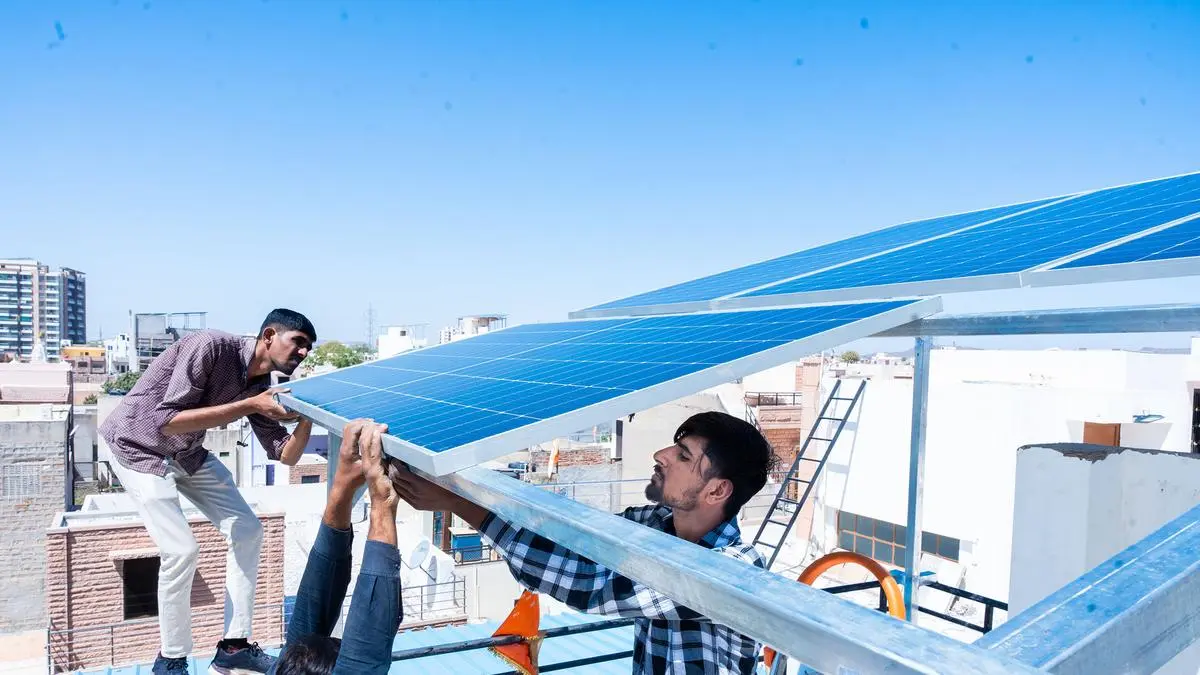
Prime Minister Surya Ghar Muft Bijli Yojana has achieved only 25 per cent of target, and mostly in seven states View More

Nvidia's influential GTC conference is taking a backseat to the war in the Middle East. View More
The Federal Reserve's latest interest rate decision, a batch of economic data, and several notable earnings reports are all on the docket this week. However, the biggest event for Wall Street will arguably be out in California, as Nvidia holds its influential AI technology conference. Well, that is what we would usually say heading into Nvidia's GTC â where Jim Cramer will be this week with a who's who of CEO interviews, including Jensen Huang himself. Not only is the AI chipmaker the world's most valuable company, but large swaths of the market are riding the AI buildout wave. But things are different this year. 1. The reality of the moment is that the most important thing for both Wall Street and Main Street is what happens with the Strait of Hormuz and, by extension, oil prices during the Iran war. It's not hyperbole to say that, as far as the stock market is concerned, it's all that matters. GTC takes a back seat. So does Fed Chair Jerome Powell, even if there's some intrigue around how the central bank would handle oil-driven inflation at the same time the labor market is cooling. As we discussed in the early days of the war, oil is the lifeblood of the global economy. From corporate income statements to bank accounts, higher oil prices represent a large, unavoidable cost that competes with all other purchases. For that reason, the stock market will likely continue taking its cue from oil. Investors will likely cheer anything that suggests vessels bearing flags other than Iran and China will soon be able to pass through the Strait safely. On the other hand, signs that the vital shipping route for a fifth of the world's oil remains largely off limits will pose a problem for stocks. Still, we must keep tabs on everything else that would usually hold more significant sway over the market. In the event the Strait does indeed open, we would expect to see buyers rush back into the market in search of anything that was taken back on fears of higher-for-longer oil prices. 2. Nvidia's GTC kicks off Monday with a keynote from Jensen. Perhaps the biggest thing to watch for is an update on Nvidia's rumored inference-focused AI chip, following its licensing agreement with startup Groq late last year. We did a deep dive into Groq on Friday, explaining why a chip targeting the daily use of AI models is so critical. Outside of any Groq-related news, we're listening for updates on Nvidia's next-generation Vera Rubin chip family, which is on pace to start shipping to customers in the second half of 2026. Additionally, any fresh details on Rubin's successor architecture â dubbed Feynman after theoretical physicist Richard Feynman and planned to debut in 2028 â will be noteworthy, as Nvidia continues to push the envelope on innovation to stay ahead of the competition. Despite being known for its graphics processing units (GPUs), we're also likely to hear a lot about Nvidia's central processing units (CPUs) thanks to the rise of agentic AI. Prepare to hear a lot about optics, too. With GPUs, CPUs and anything Groq-infused, we're talking about the brains of the computer, the processors that crunch the numbers. Optics are on the side of networking, a complementary basket of technology that serves as the highway for data, enabling all the "brains" to communicate with each other. Copper has historically been a key backbone of networking gear, but today's modern accelerated data centers are creating a bigger role for fiber-optics technology â the crux of our thesis in Corning. Right now, fiber-optics is being used to connect server racks across the data center, in what's known as "scale-out." But a major debate is the "scale-up" timeline for seeing more optical technology inside individual server racks, where copper is king. For example, a single full server rack of Nvidia's current generation Grace Blackwell platform has more than 5,000 copper cables in it . Earlier this month, Broadcom 's CEO Hock Tan made the case for copper staying relevant in "scale-up" uses for longer than perhaps some expected, sending the optical stocks lower on March 5. At GTC, Jensen's commentary on the copper-to-optics transition figures to have implications for shares of Corning , as well as others like Lumentum and Coherent , both of which recently partnered with Nvidia to further drive innovation in the optics space. Speaking of optics, we would be remiss to not call out that the Optical Fiber Communication Conference also takes place next week in Los Angeles. With the growing interest in optics, the commentary and announcements at this conference will likely move stocks in the group, too. On Friday, Broadcom announced that it would be presenting at the conference and showcasing "industry-leading solutions for scaling AI infrastructure". Financially, at GTC, we'll be looking for additional commentary on Nvidia's revenue backlog and perhaps any details beyond what management shared on its fourth-quarter conference call in late February. Here's what CFO Colette Kress said then: "We expect sequential revenue growth throughout calendar 2026, exceeding what was included in the $500 billion Blackwell and Rubin revenue opportunity we shared last year. We believe we have inventory and supply commitments in place to address future demand, including shipments, extending into calendar 2027." As mentioned, Jensen's keynote is on Monday. If we get anything new on the financials, that would come on Tuesday during Nvidia's financial analyst Q & A , which kicks off at noon ET. Jensen is set to be on "Mad Money" on Tuesday evening. 3. The Fed's March policy meeting concludes Wednesday afternoon, and it's largely expected that the Fed will leave its benchmark overnight lending rate unchanged. That means most of the intrigue will be Chair Powell's post-meeting press conference. This is also one of the four Fed meetings each year at which central bankers provide their Summary of Economic Projections (SEP) â on U.S. GDP growth, the unemployment rate, inflation, and year-end expectations for interest rates. With the February jobs report showing an unexpected decline in payrolls and oil spiking on the back of the Iran war, stoking inflation concerns, central bankers have their work cut out for themselves with these projections. At the Club, our investment decisions aren't guided by the Fed's SEP outlook, but it's capable of moving the market upon release, so it's helpful to know it's due out. 4. There are a few other economic developments on the horizon, most notably the February producer price index (PPI) on Wednesday morning, a few hours before the Fed decision. The PPI report is usually an important reading that provides insight into manufacturing input costs for businesses, which can foretell pricing actions in the future (think price hikes). But, as with the two inflation reports we got last week, the upcoming PPI data covers a period of time when the Strait of Hormuz was open â or, put another way, when oil was some $30 cheaper per barrel. At the least, the PPI will provide a refreshed baseline for wholesale inflation before the oil spike. On the manufacturing side, on Monday, we'll get the Fed's monthly look at industrial production and capacity utilization numbers. Then on Wednesday morning, the Census Bureau's full report on factory orders is due out. On housing, we've got pending home sales out Tuesday and new home sales out Thursday. As investors in Home Depot , which relies on housing turnover to drive business, we've been waiting for the market to pick up. But it's difficult to imagine housing activity getting any better as long as the Strait of Hormuz remains closed and energy prices remain elevated. With investors selling bonds due to renewed inflation concerns, leading to an increase in bond yields, we've seen the 30-year fixed mortgage rate go the wrong way , reaching its highest level since September on Friday. The 10-year Treasury yield influences mortgage rates. The bottom line for Main Street and Wall Street right now, as learned last week , is that nothing matters more than getting the Strait of Hormuz reopened. While governments are tapping petroleum reserves in an attempt to blunt the supply shock and the U.S. is easing sanctions on Russian crude, oil prices rallying despite these actions indicate they're nothing more than a temporary band-aid. On Friday, both U.S. oil standard WTI and global benchmark Brent settled at their highest levels since the summer of 2022, at $98.71 and $103.14, respectively. 5. A handful of earnings reports from companies outside the Club portfolio will offer some real-time insights into how their customers' behavior has evolved since the war in Iran broke out. Tech and other sectors will also be represented. On the consumer-oriented side, Dollar Tree is set to report Monday morning, followed by Five Below on Wednesday evening. Both cater to value-oriented shoppers, so what these management teams have to say about recent traffic trends is noteworthy. On the higher end, we'll hear from Lululemon on Tuesday evening, Macy's and Williams-Sonoma on Wednesday morning, and Signet Jewelers on Thursday morning. Also on Thursday morning, we'll get a sense of the consumer's appetite for eating out when Olive Garden parent Darden reports. Away from the consumer, Micron is slated to report Wednesday evening, and its commentary on supply-and-demand dynamics in the memory chip market may have ripple effects across the tech sector and beyond. While the recent surge in memory prices stems from booming AI data center demand, it's put companies in the consumer electronics space in a bind: eat the higher costs at the expense of your margins, or raise prices to offset them, potentially eroding sales. Israeli defense company Elbit Systems , which reports Tuesday morning, can provide some insight into global defense spending intentions now that there is a war in Iran. FedEx is out with results Thursday evening. FedEx is particularly notable because the company's 30,000-foot view on global commerce can provide important insight into consumer and business activity across industries. Week ahead Monday, March 16 Industrial production at 8:30 a.m. ET Before the bell: Dollar Tree (DLTR), KE Holdings (BEKE), Science Applications (SAIC) After the bell: Adecoagra (AGRO) Tuesday, March 17 Pending home sales at 10 a.m. ET Before the bell: Elbit (ESLT), Tencent Music (TME), Academy Sports and Outdoors (ASO) After the bell: Oklo (OKLO), lululemon (LULU), Docusign (DOCU), ZTO Express (ZTO) Wednesday, March 18 Producer price index (PPI) at 8:30 a.m. ET Factory orders at 10 a.m. ET Federal Reserve interest rate decision at 2 p.m. ET Chair Jerome Powell's post-meeting press conference at 2:30 p.m. ET Before the bell: General Mills (GIS), Macy's (M), Williams-Sonoma (WSM), Jabil (JBL) After the bell: Micron (MU), Red Cat (RCAT), Five Below (FIVE) Thursday, March 19 Initial jobless claims at 8:30 a.m. ET New home sales at 10 a.m. ET Before the bell: Alibaba (BABA), Accenture (ACN), Canadian Solar (CSIQ), Darden (DRI), Lands' End (LE), Signet (SIG) After the bell: FedEx (FDX) Friday, March 20 Before the bell: XPeng (XPEV) (Jim Cramer's Charitable Trust is long NVDA, AVGO and GLW. See here for a full list of the stocks.) As a subscriber to the CNBC Investing Club with Jim Cramer, you will receive a trade alert before Jim makes a trade. Jim waits 45 minutes after sending a trade alert before buying or selling a stock in his charitable trust's portfolio. If Jim has talked about a stock on CNBC TV, he waits 72 hours after issuing the trade alert before executing the trade. THE ABOVE INVESTING CLUB INFORMATION IS SUBJECT TO OUR TERMS AND CONDITIONS AND PRIVACY POLICY , TOGETHER WITH OUR DISCLAIMER . NO FIDUCIARY OBLIGATION OR DUTY EXISTS, OR IS CREATED, BY VIRTUE OF YOUR RECEIPT OF ANY INFORMATION PROVIDED IN CONNECTION WITH THE INVESTING CLUB. NO SPECIFIC OUTCOME OR PROFIT IS GUARANTEED.
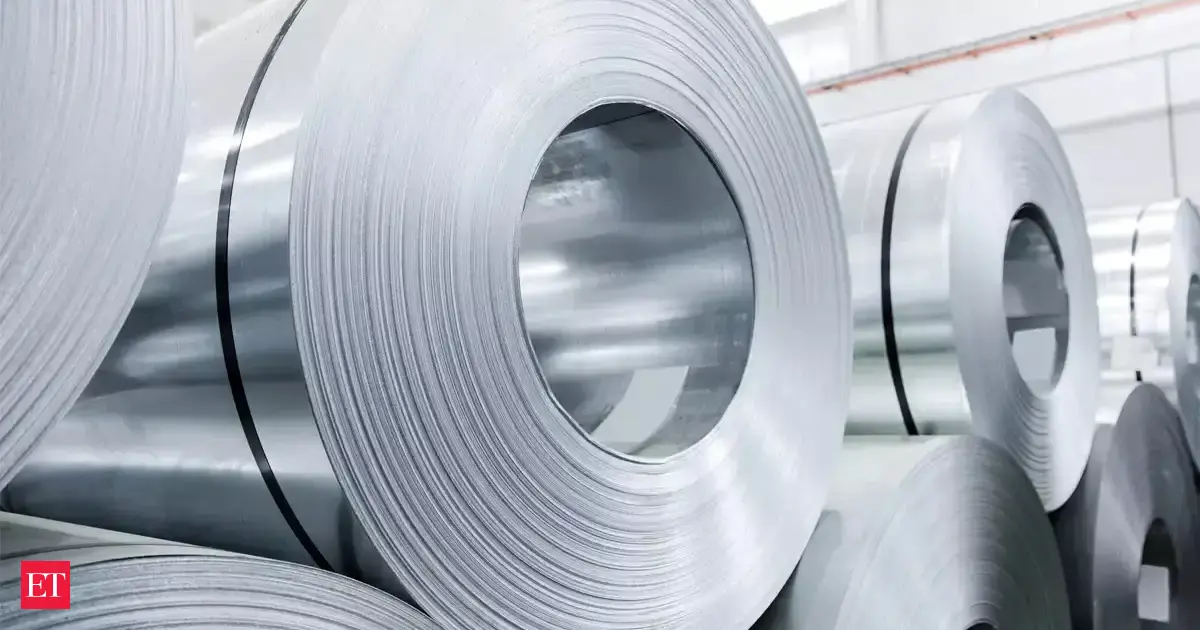
Hindalco Industries has stopped producing extruded aluminium. This value-added product is crucial for construction, electric vehicles, and solar panels. The company cited a severe gas shortage impacting its operations. India is facing its worst gas crisis in decades. Hindalco is taking steps to lessen the impact. Its aluminium smelters continue to operate. View More
NEW DELHI, - India's Hindalco Industries has halted output of extruded aluminium , a value-added aluminium product, due to a gas shortage in the wake of supply disruptions in the Middle East, according to a company notice seen by Reuters and two sources. The Aditya Birla Group-owned metals producer declared force majeure to all of its extruded aluminium customers on March 11, the notice showed. Hindalco denied any halt to output for its extrusions business in a statement to Reuters. Also Read | As oil surged, another commodity quietly caught fire in Iran war However, the company said that it had issued a communication to extrusion customers after a force majeure declaration by certain gas suppliers and that it was a "routine business intimation regarding a potential supply disruption in a segment of the extrusions business." Live Events The aluminium extrusions segment constitutes a small portion of Hindalco’s production capacity, the company added, and the potential impact is currently limited to less than 0.1% of its overall operations. "All other downstream, and upstream operations including primary aluminium, continue to operate normally, supported by captive power and alternate energy arrangements," Hindalco said. Extruded aluminium is used in construction, electric vehicles, electronics and solar panels. India is reeling under its worst gas crisis in decades due to the U.S.-Israeli war on Iran, with the government cutting supplies for industries to shield households from any shortage of cooking gas. "Hindalco has taken and continues to take all reasonable steps to mitigate the impact of the force majeure event," the company said in the notice. Hindalco's aluminium smelters, however, remain operational, according to the sources, who declined to be identified because they were not authorised to speak to media. .Pbanner{display:flex;justify-content:space-between;align-items:center;background-color:#ec1c40;margin-top:20px;padding:5px 10px;border-radius:4px;color:#fff;line-height:10px;} .Pbannertext{display:flex;align-items:center;font-size:16px;font-weight:600;font-family:'Montserrat';} .Pbannertext img{height:20px;margin:0 6px} .Pbannerbutton a{display:flex;align-items:center;background-color:#fff;color:#ec1c40;text-decoration:none;font-weight:600;padding:4px 8px;border-radius:6px;font-size:15px;font-family:'Montserrat';} .Pbannerbutton img{height:20px;margin-right:6px} .Pbannerbutton a:hover{background-color:#f7f7f7} Add as a Reliable and Trusted News Source Add Now! (You can now subscribe to our Economic Times WhatsApp channel) (You can now subscribe to our Economic Times WhatsApp channel)

Solar energy offers lower operating costs, reliable irrigation, additional income opportunities, and long-term sustainability View More

The project, which is part of a 481.49-MWh unit of battery energy storage system, is connected to the operational interstate transmission system, the company said in an exchange filing View More

Key stocks like Balaji Amines, Zydus, and Max Financial are in focus this Friday amid significant corporate developments View More

The projects will connect to Inter-State Transmission System (ISTS) substations and leverage the company’s existing night-time connectivity in high-irradiation zones in Rajasthan View More