
Latest Sectors News

Navin Mittal, Special Chief Secretary, Energy Department, Telangana Government will participate as the chief guest in the inaugural session View More
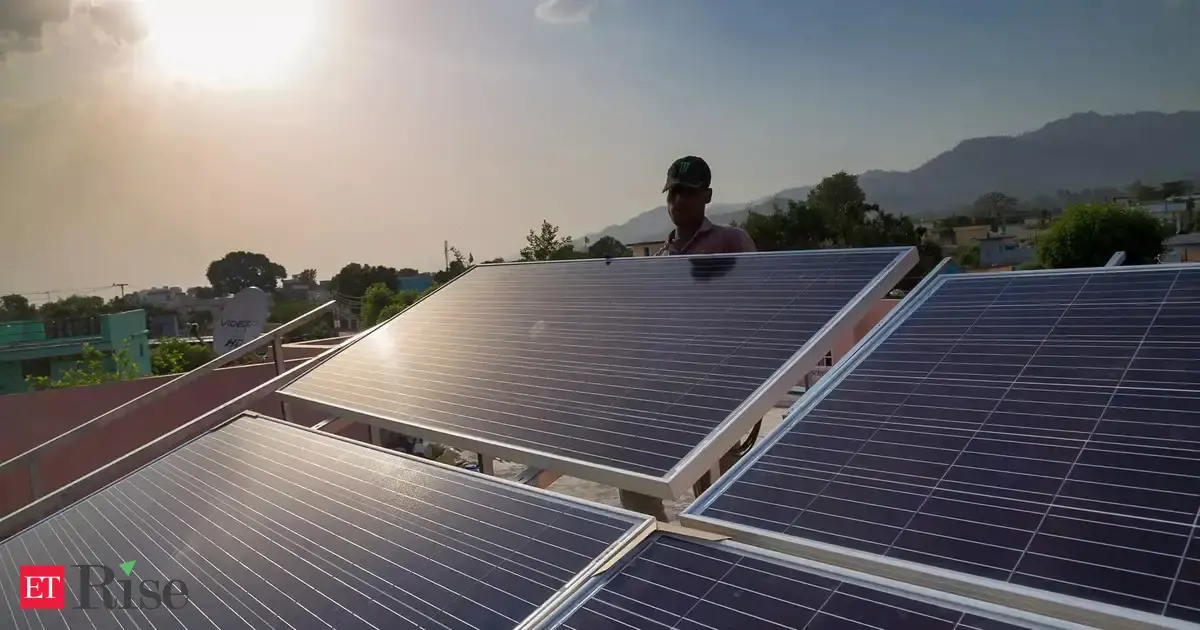
Axis Bank has launched Rooftop Solar Finance, a new program designed to help MSMEs transition to solar energy. The initiative offers collateral-free loans ranging from Rs 10 lakh to Rs 2 crore with flexible repayment options. View More
MUMBAI: Axis Bank , on Thursay, has announced the launch of Rooftop Solar Finance , a tailored financing solution to support Micro, Small, and Medium Enterprises ( MSMEs ) in transitioning to solar energy and optimising energy costs through energy self-reliance. Under this program, MSMEs can avail collateral-free loans from Rs 10 lakh to Rs 2 crore, with flexible repayment tenures of 4–7 years. This structure allows MSMEs to invest in rooftop solar systems without putting pressure on their balance sheets or working capital cycles. This is aimed to help them lower operating expenses, gain greater control over energy costs, and build long-term financial resilience. The product is available nationwide through Axis Bank’s branch network. The Bank has partnered with leading Original Equipment Manufacturers (OEMs). Axis Bank has also collaborated with a Technology Partner to provide MSMEs with enhanced transparency throughout the solar adoption journey, including system costs, projected savings, and execution timelines. .Pbanner{display:flex;justify-content:space-between;align-items:center;background-color:#ec1c40;margin-top:20px;padding:5px 10px;border-radius:4px;color:#fff;line-height:10px;} .Pbannertext{display:flex;align-items:center;font-size:16px;font-weight:600;font-family:'Montserrat';} .Pbannertext img{height:20px;margin:0 6px} .Pbannerbutton a{display:flex;align-items:center;background-color:#fff;color:#ec1c40;text-decoration:none;font-weight:600;padding:4px 8px;border-radius:6px;font-size:15px;font-family:'Montserrat';} .Pbannerbutton img{height:20px;margin-right:6px} .Pbannerbutton a:hover{background-color:#f7f7f7} Add as a Reliable and Trusted News Source Add Now!

GREW Solar currently operates 3.0 GW of manufacturing capacity at its Dudu facility in Rajasthan, producing high-efficiency M10 TOPCon modules up to 590 Wp View More

Musk says he wants to put as many as a million satellites into orbit to form vast, solar-powered data centres in space View More

Musk vows to put data centers in space and run them on solar power but experts have their doubts View More
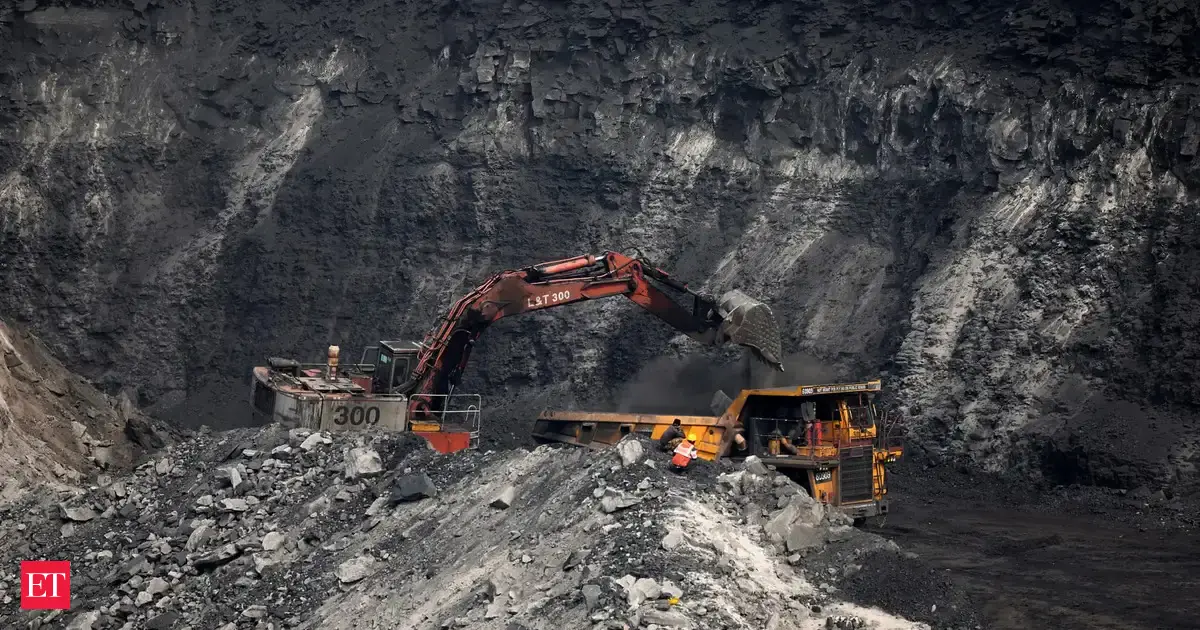
coal India: In a regulatory filing, CIL said it will hold 100 per cent equity in the proposed intermediate holding company in Chile. The incorporation will be subject to regulatory approvals from the Department of Investment and Public Asset Management (DIPAM) and the Ministry of Coal. View More
Kolkata: Coal India Ltd's board on Wednesday approved setting up an intermediate holding company in Chile to pursue critical minerals opportunities, including lithium and copper, as both countries move closer to finalising a free trade agreement. Commerce and Industry Minister Piyush Goyal had recently said negotiations between India and Chile for an FTA would be concluded soon and the pact would provide greater access to critical minerals for domestic businesses. Chile has large reserves of lithium, copper, rhenium, molybdenum and cobalt, which are key inputs for sectors such as electronics, automobiles and solar energy. In a regulatory filing, CIL said it will hold 100 per cent equity in the proposed intermediate holding company in Chile. The incorporation will be subject to regulatory approvals from the Department of Investment and Public Asset Management (DIPAM) and the Ministry of Coal. In a separate filing to the stock exchanges, the CIL board also approved an equity infusion of Rs 3,132.96 crore in a proposed energy joint venture with Damodar Valley Corporation (DVC). The investment forms part of the total indicative project cost of Rs 20,886.40 crore, with a debt-equity ratio of 70:30, officials said. Live Events Separately, the board cleared an investment of Rs 3,189.54 crore in its subsidiary Bharat Coal Gasification and Chemicals Ltd (BCGCL) to fund a coal-to-ammonium nitrate project. The approval covers Coal India's equity contribution towards its promoter stake in the joint venture. The coal-to-ammonium nitrate project, to be set up in Odisha, will have an annual capacity of 0.66 million tonnes per annum. "The project is under pre-implementation stage," CIL said. .Pbanner{display:flex;justify-content:space-between;align-items:center;background-color:#ec1c40;margin-top:20px;padding:5px 10px;border-radius:4px;color:#fff;line-height:10px;} .Pbannertext{display:flex;align-items:center;font-size:16px;font-weight:600;font-family:'Montserrat';} .Pbannertext img{height:20px;margin:0 6px} .Pbannerbutton a{display:flex;align-items:center;background-color:#fff;color:#ec1c40;text-decoration:none;font-weight:600;padding:4px 8px;border-radius:6px;font-size:15px;font-family:'Montserrat';} .Pbannerbutton img{height:20px;margin-right:6px} .Pbannerbutton a:hover{background-color:#f7f7f7} Add as a Reliable and Trusted News Source Add Now! (You can now subscribe to our Economic Times WhatsApp channel) (You can now subscribe to our Economic Times WhatsApp channel)

Solar flares are sudden releases of energy from the Sun’s surface. Scientists categorise them based on strength, beginning with A, B and C, followed by M and finally X. View More


If implemented consistently, India’s latest Budget could help shift the country’s export engine—from growth driven by a handful of large firms to deeper, broader exports supported by thousands of integrated suppliers. View More
Budgets are often evaluated by the size of allocations or the novelty of announcements, but their real economic impact lies in their ability to alter incentives and correct structural weaknesses. The Union Budget 2026-27 is a case in point. It does not position micro, small, and medium enterprises (MSMEs) as beneficiaries of isolated schemes; instead, it treats them as a central component of India’s supply-chain architecture. This shift is timely. The Economic Survey makes it clear that India’s growth momentum is intact, supported by resilient domestic demand and strong services exports. Yet it also highlights a persistent weakness: manufacturing scale and export competitiveness continue to be constrained by fragile MSME integration. Firms remain small, credit is cautious, and domestic value chains are insufficiently deep. The Union Budget 2026-27 addresses this challenge without headline-grabbing interventions by strengthening three foundational pillars that determine whether MSMEs can truly anchor India’s next phase of growth: predictable cash flows, de-risked access to credit, and meaningful participation in localised, high-growth supply chains. Pillar 1: Restoring predictability in MSME cash flows One of the most damaging constraints faced by MSMEs is delayed payment. The Economic Survey estimates that Rs 8.1 lakh crore is currently locked in outstanding receivables owed to MSMEs. While this is rightly treated as a working-capital problem, it results in a confidence problem. When cash flows are unpredictable, firms behave defensively. Investment is postponed, hiring is cautious, and formal scale becomes a risk rather than an aspiration. Over time, this shapes the structure of the manufacturing sector itself. The Economic Survey notes that 77% of manufacturing units remain small, yet they employ only 21% of the workforce. Unfortunately, this is a result of a rational response to uncertainty. Live Events The Union Budget 2026-27 strengthens the institutional environment needed to correct this. Its focus on financial-sector efficiency, improved regulatory processes, and expanded digital financial infrastructure supports the creation of more reliable payment cycles across supply chains. Importantly, the approach is systemic rather than punitive. This matters because predictability changes behaviour. When MSMEs can rely on timely cash conversion, they are more willing to invest in capacity, adopt technology, and build skilled teams. Over time, this is what allows firms to cross the threshold from survival to scale. Pillar 2: Expanding MSME credit through risk-sharing Credit access for MSMEs has improved, but it remains uneven and selective, particularly for smaller enterprises. Traditional collateral-based lending continues to dominate, even though it is poorly aligned with businesses whose primary strength lies in execution capability rather than asset ownership. The Union Budget 2026-27 builds on the credit guarantee framework to address this structural mismatch. As of December 2025, 1.34 crore guarantees, amounting to Rs 12.40 lakh crore, have been approved under CGTMSE. At this scale, lenders can expand MSME lending without worrying about concentrating risk. Budget 2026 deepens this impact by: Increasing the guarantee cover ceiling from Rs 5 crore to Rs 10 croreReducing guarantee fees to as low as 0.37% per annum Not only do these changes improve credit availability, but they also alter incentives. Lower-cost, higher-cover guarantees encourage lenders to move from case-by-case caution to portfolio-based lending. Credit decisions become faster, more standardised and better aligned with operating data. This shift is important in a context where growth is becoming more capital-intensive. Without timely and adequate MSME credit, output growth risks bypassing smaller suppliers, weakening employment generation and domestic value addition. De-risked credit, therefore, transcends from being a financial tool to a supply-chain enabler. Pillar 3: Embedding MSMEs in localised, high-growth supply chains The Economic Survey also highlights a strategic vulnerability. While sectors like electronics, electric vehicles (EVs), energy storage, and advanced manufacturing are expanding rapidly, imports of intermediate goods are rising faster than exports, widening the trade deficit in the short run. The Union Budget 2026-27 addresses this by improving the economics of domestic production. By reducing customs duties to nil on capital goods used in lithium-ion cell manufacturing for battery energy storage systems and on key inputs, such as sodium antimonate for solar glass, it lowers costs for MSME component manufacturers. This makes localisation commercially viable, not just strategically desirable. The proposal to develop dedicated rare earth corridors across Odisha, Kerala, Andhra Pradesh, and Tamil Nadu further strengthens this effort. By promoting domestic mining and processing, it reduces supply-chain dependence on EV motor manufacturing and creates new opportunities for MSMEs in upstream and midstream activities. Similarly, the near-doubling of the Electronics Components Manufacturing Scheme outlay to Rs 40,000 crore, alongside a comparable commitment to India Semiconductor Mission 2.0, signals a sustained push toward domestic value-chain depth. With such commitments, the Union Budget 2026-27 recognises the reality that manufacturing competitiveness depends not on final assembly alone, but on the strength of supplier ecosystems. Lowering non-financial barriers to scale Beyond finance and manufacturing incentives, compliance remains a key friction point for MSMEs. Procedural complexity often discourages smaller firms from formalising or expanding their operations. Budget 2026 takes a practical step by proposing a new cadre of Corporate Mitras, trained and accredited professionals who will provide affordable support for regulatory filings and compliance. This reflects an important evolution in policy thinking: ease of doing business is increasingly about execution support, not just regulatory change. It is about enabling smaller firms to navigate the system without disproportionate cost or effort. Why this matters for exports and the trade deficit Taken together, the measures in the Union Budget 2026-27 address a deeper macroeconomic challenge. India’s services exports have provided resilience, but manufacturing exports cannot scale sustainably without strong domestic supply chains. Import-heavy growth may raise output in the short term, but it widens the trade deficit and increases vulnerability to external shocks. India’s next growth phase depends less on new policies and more on execution quality and institutional coordination. MSME supply chains sit at the intersection of finance, manufacturing, exports, and jobs. By improving cash-flow predictability, de-risking MSME credit, and enabling localisation in high-growth sectors, the Budget strengthens the foundations of export competitiveness. If implemented with consistency, India’s latest Union Budget could help shift India from export growth driven by a few large firms to export depth supported by thousands of integrated suppliers. That transition will matter not just for MSMEs but for India’s ability to grow while managing its trade balance over the long term. The author is Founder & CEO, Vayana. Views are personal. .Pbanner{display:flex;justify-content:space-between;align-items:center;background-color:#ec1c40;margin-top:20px;padding:5px 10px;border-radius:4px;color:#fff;line-height:10px;} .Pbannertext{display:flex;align-items:center;font-size:16px;font-weight:600;font-family:'Montserrat';} .Pbannertext img{height:20px;margin:0 6px} .Pbannerbutton a{display:flex;align-items:center;background-color:#fff;color:#ec1c40;text-decoration:none;font-weight:600;padding:4px 8px;border-radius:6px;font-size:15px;font-family:'Montserrat';} .Pbannerbutton img{height:20px;margin-right:6px} .Pbannerbutton a:hover{background-color:#f7f7f7} Add as a Reliable and Trusted News Source Add Now!

Gold and silver prices rebounded after suffering a historic selloff, with analysts suggesting that the recent violent correction was more a positioning reset. View More
In this article@SI.1XAU=Follow your favorite stocksCREATE FREE ACCOUNT watch nowVIDEO4:3204:32Gold, silver fundamental underpinnings still support a rally in prices: Blue Line's Phil StreiblePower Lunch Gold and silver prices rebounded on Tuesday after suffering a historic sell-off, pulling global stocks and funds linked to the metals higher.Spot gold was last up about 5.6% to $4,930.97 per ounce. Gold futures gained about 6.4%, hovering at around $4,949.Spot silver rose over 6% to trade at around $84.29 per ounce. Silver futures were up nearly 10% at $84.12. Stock Chart IconStock chart iconGold and silver prices rebound after steep selloff The moves marked a slight recovery from a decline on Monday that came after a fall of nearly 10% for gold on Friday, and a 30% collapse in silver prices that marked the metal's worst one-day performance since 1980. Mining stocks and exchange-traded funds listed across the globe also notched gains, as the metals continued to rise Tuesday. London-listed mining giants notched gains on Tuesday, with Rio Tinto up 2.2%, Anglo American up more than 3%, and Antofagasta jumping 2.5%. Fresnillo â the world's leading silver producer and the top performing stock on London's FTSE 100 in 2025 â was last seen trading 3.1% higher.In U.S. markets, the ProShares Ultra Silver ETF was last seen trading 15% higher ahead of the opening bell, while the abrdn Physical Silver Shares ETF gained around 8.3%. The iShares Silver Trust (SLV) â which has been at the center of a retail investment frenzy â had also gained 8.3%.Shares of U.S.-listed gold and silver miners were also significantly higher. Endeavour Silver jumped 7.5% in pre-market trading, while Coeur Mining added 7.7%. Hecla Mining and First Majestic Silver were both up by around 8%. Will the gold and silver rally continue? The rebound came as investors reassessed whether the rout signaled a structural turning point or an exaggerated reaction to short-term catalysts.Strategists at Deutsche Bank said history suggests it is short-term catalysts, even as the scale of the sell-off has raised fresh questions about market positioning. The bank said that while signs of elevated speculative activity have been building for months, they are insufficient on their own to explain the magnitude of last week's move."The adjustment in precious metal prices overshot the significance of its ostensible catalysts. Moreover, investor intentions in precious (official, institutional, individual) have not likely changed for the worse."The sell-off was triggered by a combination of factors, including a rebound in the U.S. dollar, shifts in expectations around Federal Reserve leadership following President Donald Trump's nomination of Kevin Warsh as the next Fed chair, and position-trimming ahead of the weekend.Deutsche Bank said the broader investment case for gold and silver remains intact."Gold's thematic drivers remain positive and we believe investors' rationale for gold (and precious) allocations will not have changed. The conditions do not appear primed for a sustained reversal in gold prices, and we draw some contrasts between today's circumstance and the context for gold's weakness in the 1980s and 2013."Barclays struck a similar tone, acknowledging overheated technicals and stretched positioning, but said that the broader "bid" for gold can remain resilient amid geopolitical and policy uncertainties and reserve-diversification themes.Silver's whipsaw has been more dramatic, reflecting its smaller market, higher volatility and heavier retail participation. However, some analysts still maintain a bullish case for the white metal."Speculative positioning has definitely played a role in the short term. Silver has attracted more retail participation than gold and that makes it that much more sensitive to fast-moving sentiment and short-term trading," said Zavier Wong, market analyst at eToro.Wong, however, added it may be "too simplistic" to attribute the entire move to speculation. Silver has genuine industrial demand, particularly tied to areas linked to data centers and AI infrastructure. A study published in January projected that global silver demand will surge this decade, driven largely by solar photovoltaics and the shift to more silver-intensive cell technologies. Total demand is forecast to reach 48,000 tonnes to 54,000 tonnes a year by 2030, while supply is expected to rise only to about 34,000 tonnes, meaning just 62%-70% of demand would be met.The solar sector alone is seen consuming 10,000-14,000 tonnes annually, or up to 41% of global supply."That demand hasn't gone away. What we're seeing here is silver running ahead of itself, which is something it has always done during strong phases," said Wong.