
Latest Sectors News

India's power sector tendering pipeline is now shifting towards hybrid and storage-based projects, reflecting a growing focus on improving energy reliability and supporting renewable energy integration, according to a report by Nuvama Research. View More

The solar eclipse on 17 February will be a Ring of Fire event. Live coverage will be available online via NASA and Google, allowing global audiences to safely witness the rare phenomenon. View More

The ?30,000 crore expansion to add 50GW of capacity is led by companies including Waaree Energies, Adani Solar, Reliance Industries Ltd, ReNew Energy Global Plc, Avaada Group and Premier Energies. The immediate reason: The impending debut of ALMM rules for the solar sector. View More


The first solar eclipse of 2026 will occur on February 17, but the annular “Ring of Fire” event will be visible only from limited parts of the world—not including India or the US. View More

Upcoming capacity addition includes two major solar power projects in Gujarat – 100 MW in Patan and 300 MW in Khavda View More

"You could see easily a world where maybe most of the world's population is running on a Chinese tech stack in five to 10 years time," one analyst told CNBC. View More
In this articleNVDAFollow your favorite stocksCREATE FREE ACCOUNT China is focusing on large language models in the artificial intelligence space.Blackdovfx | Istock | Getty Images China's rapid advancement in AI is threatening to shake up U.S. dominance in the market, with one analyst warning of a tech shock that is just getting started. Rory Green, TS Lombard's chief China economist and head of Asia research, told CNBC's "Squawk Box Europe" on Monday that America's "perceived monopoly" on tech and AI has been broken by China. "I think the China tech shock is just getting started. It's not just AI, DeepSeek, and electric vehicles. China is moving up the value chain very rapidly... It's the first time in history that an emerging market economy is at the forefront of science and technology," Green said in a conversation with CNBC's Steve Sedgewick and Ben Boulos. China is pairing dominant-market level tech with emerging-market production costs, backed by its massive supply chain, Green said. He added that with Xi Jinping being like a "tech bro" that is chucking money into these sectors, it makes for a powerful mix that is really rapidly accelerating the China tech story.Indeed, Beijing quietly launched a 60.06 billion yuan ($8.69 billion) national AI fund last year, and has an initiative called "AI+" which will see the tech integrated across its economy, industries, and society. watch nowVIDEO9:4709:47'Xi Jinping is a tech bro': Analyst says China's rally has room to runSquawk Box Europe China is quickly catching up to the U.S. in the AI arms race, developing highly advanced models powered by homegrown chips, particularly through massive Huawei chip clusters and abundant low-cost energy. While U.S. chip giant Nvidia is viewed as the gold standard for semiconductors used to train AI models, Huawei is narrowing the gap by deploying larger volumes of chips and leveraging cheaper power to scale compute.TS Lombard's Green explained that a "China tech sphere" could easily form, as the world's second-largest economy's low-cost tech offerings may be more attractive to developing economies. "China is a top trade partner for most of the world, particularly in emerging and frontier economies. What happens if that repeats on tech?" Green said. Developing economies that don't have a national security issue with China have a choice between "low-cost China tech, Huawei, 5G batteries, solar panels, AI, probably some cheap RMB financing," or "high-cost American and European alternative," he said. "For these economies, I think the choice is fairly simple, and you could see easily a world where maybe most of the world's population is running on a Chinese tech stack in five to 10 years time," he added. Additionally, Demis Hassabis, the CEO of Google DeepMind, one of the world's leading AI labs, told CNBC in January that China's AI models might be just "a matter of months" behind U.S. and Western rivals and are closer to those capabilities than "maybe we thought one or two years ago." U.S. hyperscaler spending U.S. hyperscalers Amazon, Microsoft, Meta, and Alphabet recently announced capital expenditure of up to $700 billion on AI this year, which raised alarms about returns and caused $1 trillion to be wiped from the market caps of tech giants. Some stocks have since pared their losses.Karim Moussalem, Selwood Asset Management's chief investment officer, told "Squawk Box Europe" on Monday that there's a lot of "nervousness around U.S. exceptionalism," especially after the sell-off in the U.S. software sector earlier this month. "When I think of the hyperscalers' capex, we're seeing a race that's on and a lot of money being spent, and more and more question marks around whether you know all that investment, all that capex, is going to result in meaningful return on investments," Moussalem said. "I think that's really what's driving this big question mark about the U.S. versus China, and whether the U.S. will be the winner in that race. But for the time being, there's a lot of capital being spent, actually a lot more than even what was expected a few months ago, with more and more question marks about the ROI," he added. â CNBC's Steve Sedgwick and Ben Boulos contributed to this report


Some analysts argue that the solar boom has peaked and installations are set to slow. But silver—used for solar panels—has seen its price soar lately. Usage efficiency could spell a silver glut ahead, but panel proliferation is going strong. View More
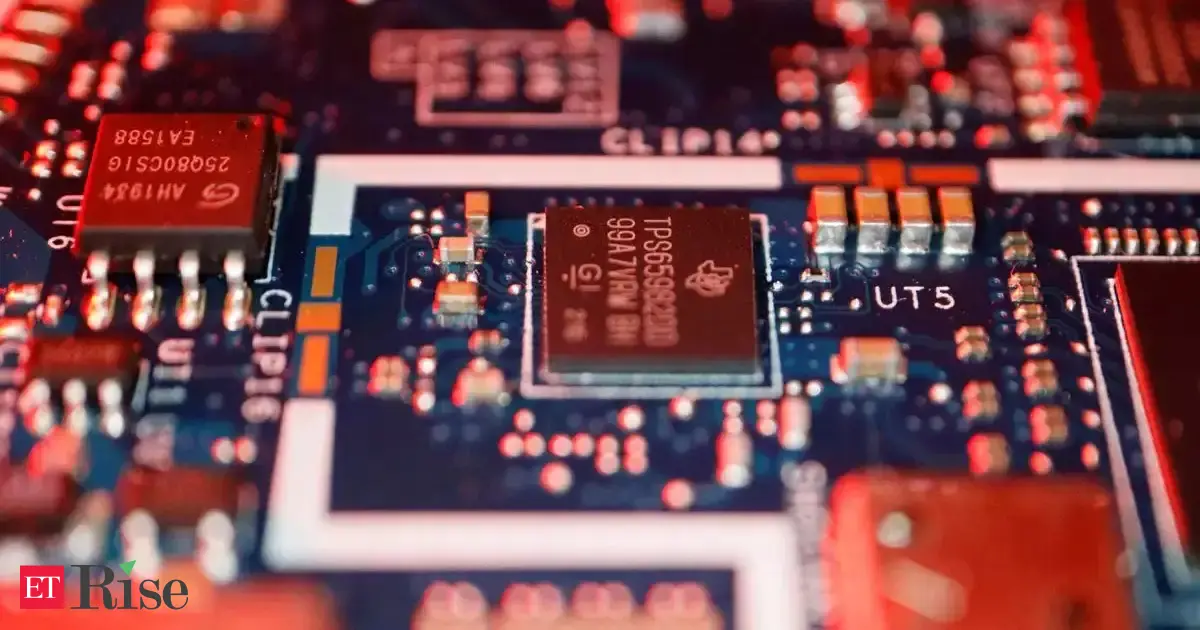
This move has caused concern among scientists about continued access and potential loss of institutional synergy. View More
The U.S. National Science Foundation said Thursday that the management and operations of a supercomputer used by more than 2,000 climate and weather scientists across the country would be transferred from a leading research lab to an undisclosed third party. Foundation officials said stewardship of the supercomputer, located at a National Center for Atmospheric Research facility in Cheyenne, Wyoming, would "transition to a third-party operator" but declined to give details about the new operator or the timeline. The national center, known as NCAR , has 835 scientists and engineers at its headquarters in Boulder, Colorado, and has managed the Cheyenne facility since it opened in 2012. The announcement took many scientists by surprise. Ramalingam Saravanan, a professor of atmospheric sciences at Texas A&M University, said he was concerned that he would no longer be able to run computer models that predict weather and climate conditions around the globe down to a scale of 1 square kilometer. Live Events "If you are able to use the computers just as before, we can do business as usual," Saravanan said. "But there's a bigger context, which is, they're dismantling other parts of NCAR as well, and this seems to be related to that." "There's certain synergy in having different parts of an institution that work together," he added. "If it is dismantled, those synergies could be lost." Marc Alessi, a climate science fellow at the Union of Concerned Scientists, a science advocacy group, said researchers like himself were "freaking out a little bit" because of the uncertainty. "If you talk to any meteorologist, climate scientist, we have all used this supercomputer," Alessi said. "But now, there's no clear guidelines about who it will go to or if scientists can continue using it." The foundation said in a statement that it was "working with all parties to ensure continuity of operations, and additional information will be shared as it becomes available." A spokesperson for the National Center for Atmospheric Research declined to comment. The center, founded in 1960, is responsible for many of the biggest scientific advances in humanity's understanding of weather and climate. Its research aircraft and sophisticated computer models of the Earth's atmosphere and oceans are widely used in disaster warning and weather forecasting around the United States. The supercomputer, named Derecho for a fast-moving and powerful type of windstorm, has the theoretical ability to perform 19.87 quadrillion calculations per second, using 328 graphics processing units built by Nvidia. That computing power is the equivalent of every person on the planet solving one calculation every second for a month, according to the NCAR website. About 2,000 scientists use Derecho to study air pollution, wildfires, hurricanes and solar storms, among other climate and weather events. Scientists say understanding these phenomena requires the analysis of millions of pieces of data to identify trends that can help with warnings and emergency preparedness as well as basic science. In December, White House officials announced that they planned to dismantle the National Center for Atmospheric Research. Russell Vought, the director of the Office of Management and Budget, called the center "one of the largest sources of climate alarmism in the country" and said that the federal government would be "breaking up" the institution. Vought wrote that a "comprehensive review is underway" and that "any vital activities such as weather research will be moved to another entity or location." .Pbanner{display:flex;justify-content:space-between;align-items:center;background-color:#ec1c40;margin-top:20px;padding:5px 10px;border-radius:4px;color:#fff;line-height:10px;} .Pbannertext{display:flex;align-items:center;font-size:16px;font-weight:600;font-family:'Montserrat';} .Pbannertext img{height:20px;margin:0 6px} .Pbannerbutton a{display:flex;align-items:center;background-color:#fff;color:#ec1c40;text-decoration:none;font-weight:600;padding:4px 8px;border-radius:6px;font-size:15px;font-family:'Montserrat';} .Pbannerbutton img{height:20px;margin-right:6px} .Pbannerbutton a:hover{background-color:#f7f7f7} Add as a Reliable and Trusted News Source Add Now!