Latest Sectors News

Speculation about what's next for Havana comes as the U.S. continues to attack Iran and shortly after Trump ordered U.S. forces to depose Venezuela's president. View More
Cuba's President Miguel Diaz-Canel (C) takes part in the "Anti-Imperialist" protest in front of the US Embassy against the US incursion in Venezuela, where 32 Cuban soldiers lost their lives, in Havana on January 16, 2026.Yamil Lage | Afp | Getty Images "Cuba's next," said Sen. Lindsey Graham, a Republican and ally of U.S. President Donald Trump, after the U.S. and Israel began strikes on Iran.The U.S. has imposed an oil blockade on the communist-run island nation since January, shortly after its ally and a key provider of oil, Venezuelan President Nicolás Maduro, was seized in an extraordinary U.S military operation. It has caused a worsening economic crisis and left Cuba facing its biggest test since the collapse of the Soviet Union.Now Iran, with which Cuba has a strategic partnership, is under sustained attack. "This communist dictatorship in Cuba, their days are numbered," Graham told Fox News's "Sunday Night in America."Before the Iran strikes, Trump said he wanted a "friendly takeover" of the island, without giving details. The comments, alongside the U.S. attacks on Iran and Venezuela, have done little to allay growing fears in Havana, experts told CNBC. The message from Cuba is one that has been constant since 1959: survival will only be achieved through adaptation to the changing geopolitical context.Par Kumaraswamiprofessor at the University of Nottingham A "friendly takeover" could resemble Venezuela in the aftermath of Maduro's removal, "where you still have an authoritarian regime in power but moving in the direction and at the speed that the US determines," said Carlos Solar, senior research fellow, Latin American Security at RUSI, a London-based defense think tank.Solar told CNBC by email that Cuba had lost support from Venezuela and Iran "at a moment of maximum pressure" from the Trump administration.But he added: "What is unclear is how the US will make the Cuban regime break, forcing Havana to capitulate.""We are not seeing the kind of military buildup prelude to operation Absolute Resolve that eventually led to Maduro being captured in January. It could well be that the US approaches Cuba in a totally different way," Solar said. A Turkish Airlines plane takes off at Jose Marti International Airport in Havana on February 9, 2026.Yamil Lage | Afp | Getty Images A spokesperson for the White House and Cuba's embassy in London did not respond to a CNBC request for comment.Cuba's Foreign Affairs Ministry has called for an end to the Middle East conflict and said it "condemns in the strongest terms" the joint U.S. and Israel attack on Iran on Feb. 28. 'Cubans are increasingly concerned' Russia recently warned that the situation in Cuba appeared to be escalating after Cuban forces killed four people who were off its coast in a U.S.-registered speedboat.The blockade has effectively cut Cuba off from Venezuelan oil since launching a military operation to capture Maduro on Jan. 3. Cuba said 32 of its citizens were killed in the attack.Trump has also said Cuba's government poses "an unusual and extraordinary threat" and pledged to impose tariffs on any country that supplies it with oil. The U.S. Treasury said late last month, however, that it would allow the resale of Venezuelan oil to Cuba's private sector.The move appeared to reflect a small step to alleviate the island's acute fuel shortage, which has forced a wave of airlines cut flights to the country. Tourism has long been a significant source of revenue for Cuba's cash-strapped government. A bicitaxi rides past garbage piled up on a street in Havana on February 17, 2026.Yamil Lage | Afp | Getty Images Par Kumaraswami, professor of Latin American Studies at the U.K.'s University of Nottingham, told CNBC the Trump administration's strikes against Iran and recent comments about Cuba's regime had increased the mood of uncertainty and anxiety in Havana."Cubans are increasingly concerned about how they will survive in the midst of such global chaos, and the recent violence against Iran will have done nothing to allay their fears," Kumaraswami said by email."At the same time, there are indications that the US administration is negotiating with the Cuban government regarding changes to Cuba's economy, and this is indeed mirrored by Cuban President Miguel DÃaz-Canel's current focus on economic improvement as the priority," she added.Kumaraswami said the "message from Cuba" had been "constant" since the communists came to power in 1959: "Survival will only be achieved through adaptation to the changing geopolitical context." 'Cuba just bought itself a window' Cuba has adopted measures to protect essential services and ration fuel supplies for key sectors. The United Nations has previously warned of a possible humanitarian "collapse" as the country's oil supplies dwindle."Cuba just bought itself a window â but it's a narrow one," Robert Munks, head of Americas research at risk intelligence company Verisk Maplecroft, told CNBC by email."The operation against Iran removes Cuba â temporarily â from Washington's sights, as the US administration will be preoccupied with the Gulf campaign in the coming weeks." Read moreRussia says Cuba situation is escalating after deadly incident with U.S.-tagged speedboatWhat's next for Cuba? Trump turns the screws as the island runs out of jet fuelCuba says international airlines can no longer refuel there as energy crisis deepens But Munks said he expected Cuba to return to the headlines, adding that the Cuban diaspora in South Florida would apply pressure and Washington has shown it is prioritizing the Western Hemisphere in its remodeled national security strategy. "The regime in Havana remains in control, for the moment. Any unrest caused by economic hardship could be sudden and spontaneous, which would give Washington a pretext to refocus on pressuring the regime," Munks said. Choose CNBC as your preferred source on Google and never miss a moment from the most trusted name in business news.

The stock opened at ?227 on Wednesday, touched a high of ?229.04, and slid to a low of ?221.04 against a previous close of ?232.28, suggesting the market was unmoved by the announcements View More
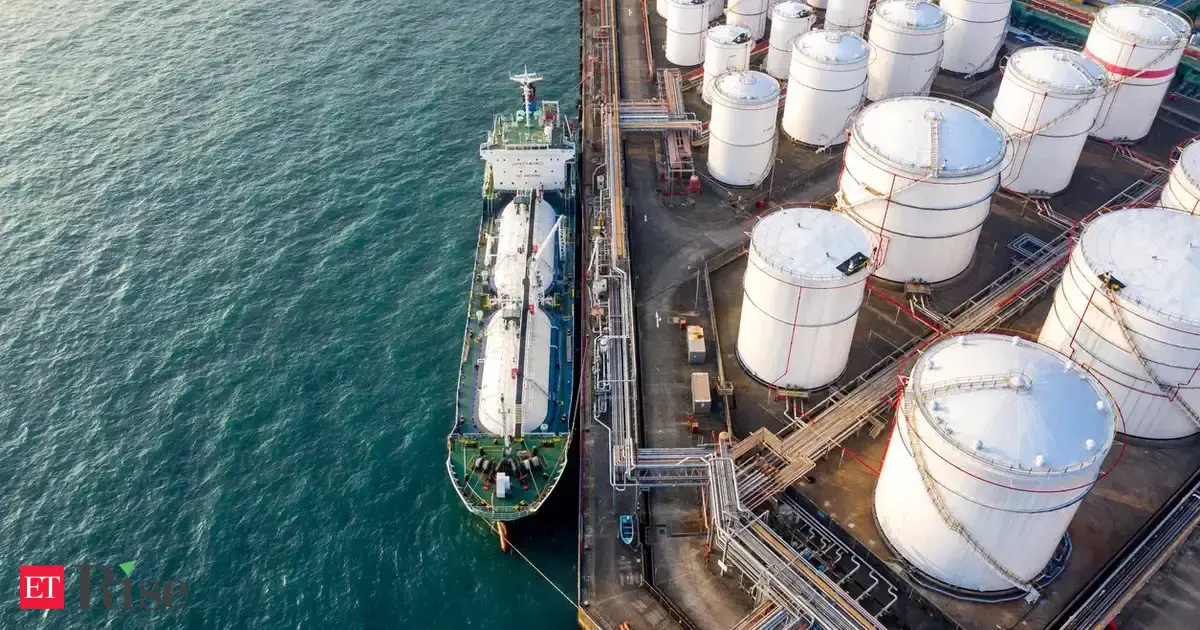
While countries hold reserves, a prolonged conflict or blockade could severely impact their already delicate economic balances and energy security. View More
Last year, as President Donald Trump swung from one erratic tariff policy to the next, Asian economies largely withstood the chaos. That resilience is now under threat as a conflict in the Middle East rapidly escalates, after Trump said that the U.S. military would continue to strike Iran for several weeks. Concern spiked in many Asian capitals Monday over the disruption to the flow of oil from the Middle East, a region that supplies half or more of the oil that several large economies consume. In China, Japan, South Korea, Taiwan and India, leaders are focused on the Strait of Hormuz, a narrow shipping corridor on Iran's southern border through which one-fifth of the world's supply of oil flows, much of it eventually landing in Asia. Countries have stockpiles of oil and gas that can see them through the next weeks and months, but a longer war in the region or decision by Iran to blockade the Strait of Hormuz would pose a more serious threat to their economies. Experts said that Iran was unlikely to try to block the waterway because the country depends on its oil and gas exports to China for revenue. It would also be catastrophic for the global economy, economists warned. Live Events Nevertheless, there was palpable concern in the oil markets, with prices spiking Monday. Tankers avoided the area and diverted to longer routes, while the cost of insuring them began to climb, and ports started to contend with backlogs. The price swings and uncertainty are complicating an already delicate balance governments have struck between domestic economic challenges and geopolitical calculations. China on Monday called on "all parties to immediately cease military operations, avoid further escalation of tensions and prevent the regional instability from exerting a greater impact on global economic development," according to Mao Ning, a spokesperson for China's foreign ministry. Oil from the Middle East is crucial to China's overall energy security. If the conflict were to drag on, "China does not have the capacity to cushion the shock," said Muyu Xu, a senior crude oil analyst based in Singapore for Kpler, a market research firm. "It would be catastrophic not just for China, but for the global market," Xu said. Beijing is already facing an economic slowdown at home, where a property crisis weighs heavily on households that invested their savings in real estate. Excessive competition among local companies in China has set off a deflationary spiral, and youth unemployment is high. Beijing has turned to manufacturing to help fuel its economic growth and weather a fierce trade war with the United States that led to punishing U.S. tariffs on Chinese goods that at one point hit 145%. In a few weeks, China's top leader, Xi Jinping, is expected to meet with Trump in what may now become an even more tense encounter. China imports a little over half its seaborne crude oil from the Middle East. Around a quarter of that comes from Iran. A loss of Iranian supply would eventually force China to purchase more oil, likely at higher prices, from other sources. China has enough crude oil onshore to last 115 days, according to Kpler. It also operates three major crude pipelines, two of which transport oil from Russia and Kazakhstan and are shielded from Middle East disruptions. The ruling Communist Party has poured billions of dollars into developing renewable energy like solar power and electric vehicles. But, in the short term, it would have to look for new supplies of oil in a prolonged crisis. "China can't pivot to domestic demand fast enough to offset collapsing export margins and absorb an oil price shock simultaneously," said Han Lin, the country director for the Asia Group, a consulting firm. "The U.S. trade war compresses the very profits Chinese industry needs to fund the green-energy transition that would reduce Middle East exposure." Japan and South Korea are even more vulnerable to disruptions in the Strait of Hormuz because of heavy reliance on Middle Eastern oil and gas and limited domestic energy production. Japan, in particular, imports more than 90% of its oil through the strait. South Korea depends on the Middle East for about 70% of its crude imports. On Sunday, Japanese shipping giant Mitsui O.S.K. Lines, one of the world's largest transporters of fuel, announced that it was halting operations in the Persian Gulf following reports that the Iranian military was cautioning vessels to avoid the strait. For now, both countries have measures to offset the immediate effects. Japan holds a total of 254 days of private and state-held oil reserves, according to government data. South Korea had enough in store to cover more than 210 days of consumption as of the end of last year, data from the country's state-owned national oil and gas company indicated. "We will take every possible measure to ensure the stable supply of energy for our nation," Prime Minister Sanae Takaichi of Japan said, speaking in parliament on Monday. In South Korea, officials began examining contingency plans, including the release of oil reserves should there be a prolonged closure of the Strait of Hormuz, according to local media reports. But even if oil keeps flowing, a continuing surge in energy prices will probably take a significant economic toll. Japan and South Korea already spend well over $100 billion annually on energy imports, meaning that further price increases would worsen their trade balances. Japan, in particular, is also grappling with a prolonged bout of inflation that is weighing on household budgets. Any government moves to lighten the burden on consumers, such as cash handouts or tax cuts, risk exacerbating Japan's immense sovereign debt levels and could spur further jitters in its debt markets. .Pbanner{display:flex;justify-content:space-between;align-items:center;background-color:#ec1c40;margin-top:20px;padding:5px 10px;border-radius:4px;color:#fff;line-height:10px;} .Pbannertext{display:flex;align-items:center;font-size:16px;font-weight:600;font-family:'Montserrat';} .Pbannertext img{height:20px;margin:0 6px} .Pbannerbutton a{display:flex;align-items:center;background-color:#fff;color:#ec1c40;text-decoration:none;font-weight:600;padding:4px 8px;border-radius:6px;font-size:15px;font-family:'Montserrat';} .Pbannerbutton img{height:20px;margin-right:6px} .Pbannerbutton a:hover{background-color:#f7f7f7} Add as a Reliable and Trusted News Source Add Now!

Industrialized nations are now prioritizing energy security and affordability over ambitious emission reduction targets, acknowledging the economic realities and challenges of the transition. View More
In diplomacy, words matter. When the world’s richest nations got together in 2022 for their biennial energy meeting, their communique mentioned “net zero” 13 times; in 2024, the references went up to 15. After last week’s gathering? Just one occurrence — and that was to underline the lack of universal support. The word-count collapse is illustrative of the direction of global energy policy: Net zero is, effectively, dead. The movement was designed to cut carbon emissions to a residual amount by 2050, so total emissions would be equal to those removed either naturally by forests or artificially by carbon sequestration projects. On a net basis, the accumulation of greenhouse gases in the atmosphere would drop to zero. Even at the peak of its popularity, net zero looked far-fetched. One had to believe, as a matter of faith, that consumption of oil, natural gas and coal would drop following stylized cliff-like curves. With current energy-related annual CO2 emissions running above 35,000 million metric tons, reducing them to something that would equal net zero was an impossible task. On current trends, emissions are likely to remain close to current levels for the next 25 years. Even if countries adopt most of the energy policies they’ve announced — a big if — they’ll remain above 25,000 million tons a year until the middle of the century. Despite the enormity of the challenge, industrialized countries put net zero as their lodestar – not just for energy and climate , but for industrial and economic policy too. In 2021, the International Energy Agency published an influential report listing more than 400 milestones across multiple sectors needed to “transform the global economy from one dominated by fossil fuels into one powered predominantly by renewable energy like solar and wind.” Bloomberg For a while, ideology rather than economic or technical realities was the driving force. Climate change was seen as the world’s most important problem, with everything else subordinated. Renewable projects got green lighted even when the grid wasn’t ready, inflating the costs of transforming the system. At times, European countries shut down energy production — say, nuclear power reactors in Germany — when renewables had not yet matured. The idea that trillions of dollars’ worth of fossil-fuel reserves would be left stranded became pervasive, prompting investors to offload their stakes in oil and gas companies. But here we are in 2026 with global demand for oil, natural gas and coal at an all-time high and likely to climb further, a far cry from the trajectory required to achieve net zero. When rich nations got together last week to debate their energy policy, ministers were more worried about the security of energy supplies — and prices. Climate change remains important, but no longer dominates the agenda. Fatih Birol, the head of the International Energy Agency and a longtime cheerleader of the net-zero movement, was paradigmatic of the shift. In his opening speech at the IEA ministerial meeting last week in Paris, he mentioned “energy security” eight times; “affordability” got four citations; “climate,” two. And what about “net zero”? Well, ahem, zero. Live Events Economic needs are driving the shift in emphasis. When I asked outgoing Dutch Deputy Prime Minister Sophie Hermans, who chaired the meeting, what was happening, she was blunt: “We see our heavy industry struggling,” she told me. “We don’t want them to simply relocate to produce elsewhere.” A few nations insisted on keeping the net-zero idea alive — notably the UK and Spain — some merely acknowledged it as a concept, while others basically ignored it. And then there was Chris Wright, the outspoken oil executive turned US energy secretary. He put the probability that the world would hit the target of net zero emissions by 2050 at exactly “zero point zero.” It would be a mistake to dismiss his comment as just another outburst from the pro-fossil fuel Trump administration. The data backs Wright’s view. On oil, for example, the original net zero scenario called for demand to drop to little more than 70 million barrels a day by 2030, and to about 25 million barrels by 2050. With consumption currently running near 105 million barrels a day and set to hit about 106 million next year, it’s clear the world has no chance of hitting the interim 2030 target. Words, meantime, are trickling into policies — and quickly. Days after the IEA meeting, the Danish government, once one of the leaders of the green movement in Europe, said it was considering extending oil and gas drilling in the North Sea. The justification given by Lars Aagaard, the country’s climate and energy minister, for contemplating keeping fossil fuel development ongoing until, precisely, 2050 is worth reading: “I would have preferred that Europe could make do with green energy. But the reality is different, and I fundamentally believe that it is better for Europe to get gas from Denmark than from countries outside our continent.” I don’t think the reality is different from what it truly was five years ago; what’s changed today is the political perception of how costly the energy transition will be. But don’t mistake the death of net zero for the end of renewable energy. The latter is very much alive. For the foreseeable future, electricity will be the fastest growing form of energy — and renewables will cover a significant chunk of the increase. The world will remain addicted to fossil fuels, but more of its additional power needs will be covered by solar, wind, hydro, geothermal and other green sources. While renewables will erode the market share of fossil fuels, it will take a long time. By 2050, global energy-related CO2 emissions will remain well above the amount envisaged by net zero. But increasingly it looks like emissions will soon peak as the growth in demand for coal flattens out. Bending the annual curve down toward 30,000 million metric tons, and perhaps even to 25,000 metric tons, looks increasingly realistic. But, at risk of stating the very obvious, that’s well above zero. .Pbanner{display:flex;justify-content:space-between;align-items:center;background-color:#ec1c40;margin-top:20px;padding:5px 10px;border-radius:4px;color:#fff;line-height:10px;} .Pbannertext{display:flex;align-items:center;font-size:16px;font-weight:600;font-family:'Montserrat';} .Pbannertext img{height:20px;margin:0 6px} .Pbannerbutton a{display:flex;align-items:center;background-color:#fff;color:#ec1c40;text-decoration:none;font-weight:600;padding:4px 8px;border-radius:6px;font-size:15px;font-family:'Montserrat';} .Pbannerbutton img{height:20px;margin-right:6px} .Pbannerbutton a:hover{background-color:#f7f7f7} Add as a Reliable and Trusted News Source Add Now!


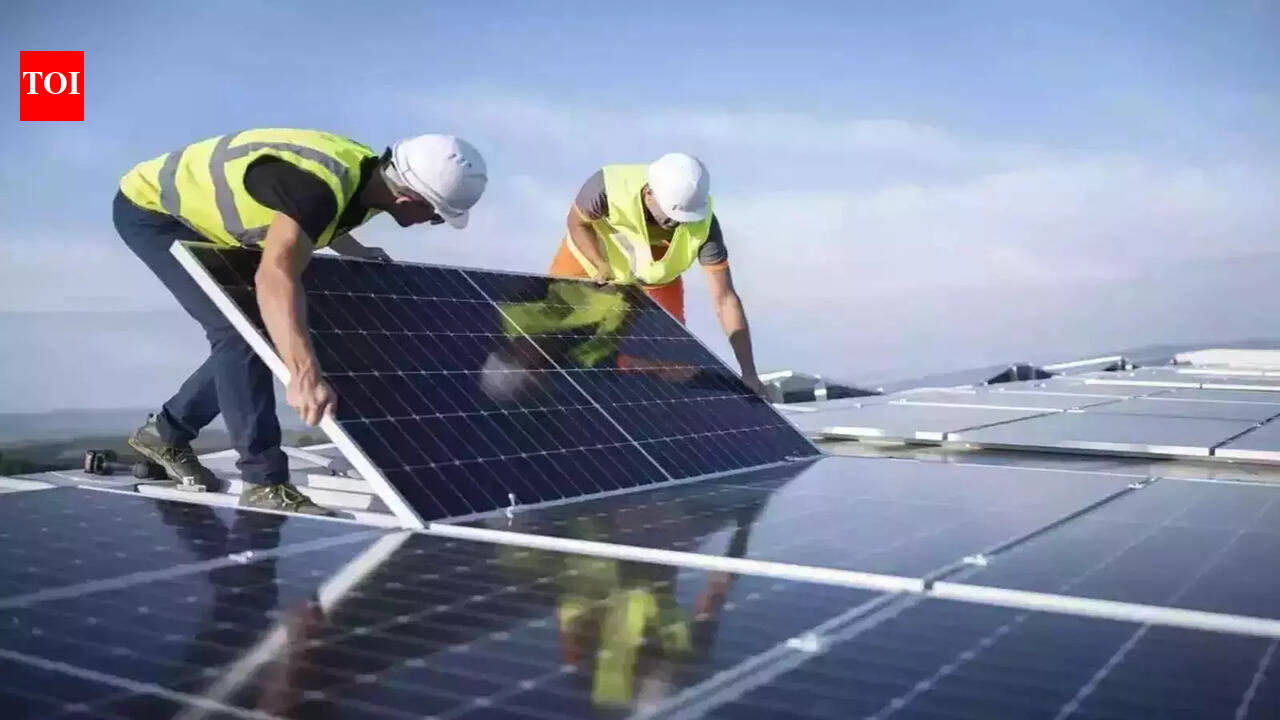
A new countervailing duty by the US on Indian solar modules are reshaping trade patterns. India's renewable energy ministry sees Africa as a strong alternative for both module exports and for developers setting up projects. View More

Shree Ram Twistex IPO, subscribed 43.66 times, is set to finalize allotment today. Despite strong investor demand, especially from retail and NII segments, the grey market premium is negative, indicating potential listing concerns. The company plans to utilize IPO funds for renewable energy projects and debt repayment. View More
The allotment for the Shree Ram Twistex IPO is expected to be finalised today after the public issue closed with strong investor demand. The Rs 110 crore IPO was subscribed 43.66 times overall, driven by heavy participation from non-institutional and retail investors. The retail portion was subscribed 76.63 times and the NII category saw 220.30 times subscription. The QIB portion was booked 3.94 times. The strong oversubscription, especially in the NII and retail segments, indicates significant listing interest. GMP and listing outlook The grey market premium is currently negative, reflecting expectations of negative listing gains. However, final performance will depend on broader market conditions on March 2 when the shares are scheduled to list on BSE and NSE. Live Events How to check Shree Ram Twistex IPO allotment status Investors can check the allotment status online once it is finalised. To check via Bigshare Services: Visit Bigshare Services Allotment page: https://ipo.bigshareonline.com/ipo_status.html Select Shree Ram Twistex IPO Enter your PAN, application number, or DP/Client ID to check the allotment. On NSE Website Visit NSE Allotment page: https://www.nseindia.com/invest/check-ipo-allotment Select Equity Choose Shree Ram Twistex Enter your PAN or application number. Refunds for non-allottees are expected to be initiated on February 27, while shares will be credited to demat accounts the same day. Company overview Shree Ram Twistex is engaged in manufacturing cotton yarns, including Compact Ring Spun and Carded Yarns, both combed and carded. The yarn is used in knitting and weaving applications such as denim, terry towels, shirting, sheeting, sweaters, socks, bottom wear, home textiles and industrial fabrics. The company also manufactures value-added yarns such as Eli Twist, Compact Slub Yarns and Lycra-blended yarns. It operates on a B2B model, supplying to textile manufacturers, garment exporters and fabric processors across multiple Indian states and also exports internationally. Financials For FY25, the company reported total income of Rs 256 crore and PAT of Rs 8 crore. EBITDA stood at Rs 22 crore. For the six months ended September 2025, total income was Rs 132 crore and PAT was Rs 7 crore. The company plans to use the IPO proceeds towards setting up a 6.1 MW solar power plant, a 4.2 MW wind power plant for captive use, repayment of borrowings, working capital requirements and general corporate purposes. (Disclaimer: Recommendations, suggestions, views and opinions given by the experts are their own. These do not represent the views of Economic Times) .Pbanner{display:flex;justify-content:space-between;align-items:center;background-color:#ec1c40;margin-top:20px;padding:5px 10px;border-radius:4px;color:#fff;line-height:10px;} .Pbannertext{display:flex;align-items:center;font-size:16px;font-weight:600;font-family:'Montserrat';} .Pbannertext img{height:20px;margin:0 6px} .Pbannerbutton a{display:flex;align-items:center;background-color:#fff;color:#ec1c40;text-decoration:none;font-weight:600;padding:4px 8px;border-radius:6px;font-size:15px;font-family:'Montserrat';} .Pbannerbutton img{height:20px;margin-right:6px} .Pbannerbutton a:hover{background-color:#f7f7f7} Add as a Reliable and Trusted News Source Add Now! (You can now subscribe to our ETMarkets WhatsApp channel) (You can now subscribe to our ETMarkets WhatsApp channel)

Just when India-US trade ties seemed to be on the mend, Washington imposed a 126% tariff on Indian solar panels. Is this self-defeating protectionism, petty geopolitics or plain policy confusion? View More

Imposing a 126% duty on Indian solar imports by the US has led to declines in solar stocks. Companies like Waaree Energies assert they can adapt with diversified supply chains. View More