
Latest Sectors News
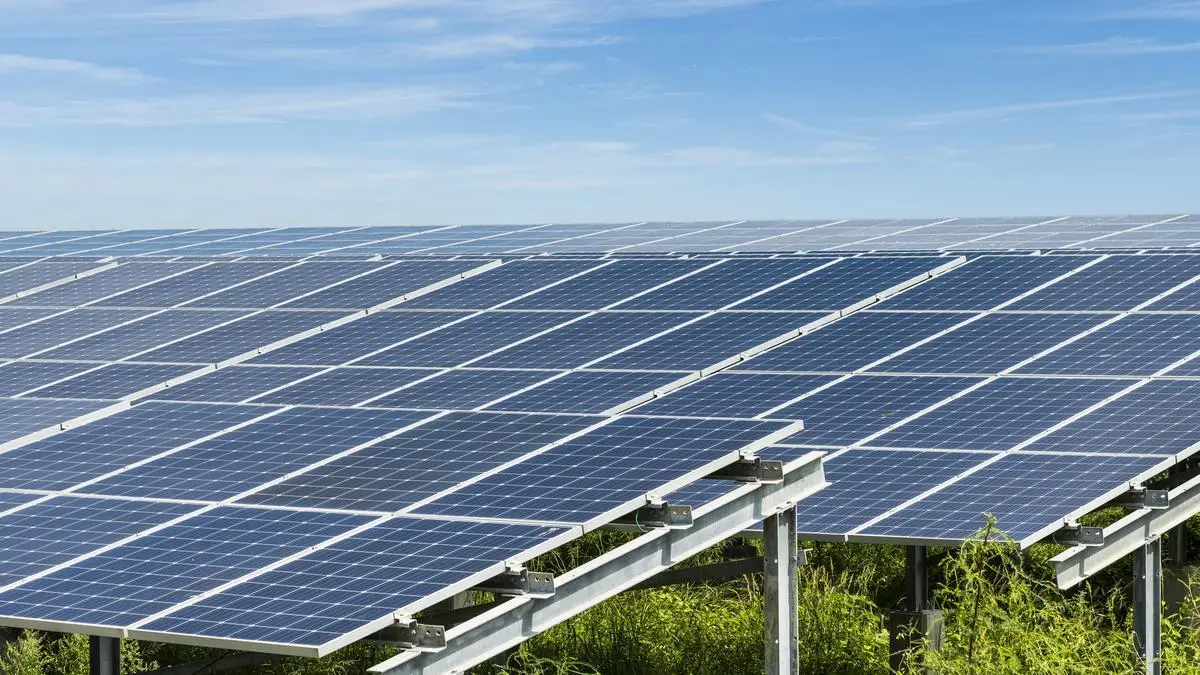
The order involves the supply of high-efficiency bifacial modules engineered to deliver superior energy yield, enhanced durability and reliable performance across utility-scale solar projects View More

The southern European country has ramped up its investment in solar and wind technologies in recent years. View More
Wind turbines operated by Gamesa Eloica SA near Zaragoza, Spain, on Wednesday, March 25, 2026. Renewables are helping cushion the blow of higher oil and gas prices in Europe.Bloomberg | Bloomberg | Getty Images Spanish Economy Minister Carlos Cuerpo lauded the country's energy resilience to the Iran war, saying a pivot to solar and wind power has shielded Madrid from the worst impacts of the resulting energy shock.His comments come at a time when Spain's government has emerged as one of the European Union's leading critics of the U.S.-Israel war against Iran, with Prime Minister Pedro Sánchez having described the ongoing Middle East crisis as a "disaster."U.S. President Donald Trump pledged to cut off trade with Madrid after Spain prevented two jointly operated bases in its territory from being used in strikes against Iran. Speaking to CNBC's Karen Tso on Thursday, Cuerpo said that Spain had been better prepared for this crisis, pointing out that the country has been the fastest-growing advanced economy in Europe over the last couple of years. watch nowVIDEO4:0904:09Spain's Cuerpo: Anti-war position strengthened by public supportSquawk Box Europe Spain also created 40% of all new jobs in the euro zone last year, Cuerpo said, while noting that on budgetary terms, the country's debt has nearly returned to pre-Covid levels."In energy terms, we're also better prepared because we've pursued our agenda on renewables," Cuerpo said on the sidelines of the IMF and World Bank Group Spring Meetings in Washington this week. Spain's reliance on gas for electricity prices has dropped to just 16% this year, Cuerpo said, down from 75% in 2019. "So, it kind of increases our energy sovereignty and reduces the exposure to the shock," he added. Cuerpo acknowledged, however, that citizens and businesses were still suffering the consequences of the Iran war through higher fuel and fertilizer prices.Analysts have pointed to Spain as a prime example of how countries have been able to limit their exposure to fossil fuel price volatility in recent weeks.Spain, alongside Portugal and some Nordic countries, is among the countries to have registered the lowest gas prices across the 27-nation bloc since the Middle East conflict began. Spanish Prime Minister Pedro Sánchez (R) and Ukrainian President Volodymyr Zelensky (L) meet at Moncloa Palace on March 18, 2026 in Madrid, Spain.Pablo Cuadra | Getty Images News | Getty Images Spain's renewables push has not been without its critics. Indeed, the country's government was sharply criticized last year following a catastrophic blackout. The outage, which some U.S. lawmakers blamed on Spain's green agenda, was one of Europe's worst in living memory. Spain's government subsequently denied renewable energy was to blame for the blackout, and a report by Entso-e, which had been investigating the root cause of the April 2025 incident, later found that there was no single cause and instead said there was a combination of "many interacting factors" which led to the outage. Spain's anti-war stance Speaking alongside German Chancellor Friedrich Merz last month, Trump pledged to sever trade ties with Spain, saying the White House did not want anything to do with the country. The U.S. president has also repeatedly criticized Madrid for its refusal to meet the NATO defense spending target of 5% of gross domestic product.Trump's threat to punish Spain on trade is said to be challenging, however, given that the 27 EU nations negotiate trade agreements collectively. "Spain did not want to participate in this unilateral conflict that is outside of international law. And that's actually what we did," Cuerpo said when asked about Spain's anti-war position and Trump's trade threats. Read moreSpain PM Sánchez says fire starters donât deserve applause as he welcomes Iran ceasefireâAsiaâs Ukraine momentâ: How the Iran war could accelerate a shift into renewablesSpainâs unprecedented power outage sparks a blackout blame game over green energy "We're not alone in this position against the current situation and the participation in the war in Iran, many other European countries and partners have also expressed a very similar position," he continued. "And when it comes to trade relations with the U.S., Spanish companies operate in the exact same environment as French, German or Italian ones, because we have a unique trade relation. I mean within the EU with respect to the U.S., and we're trying to go ahead with a deal that we signed last August, and that's actually where we should put all our efforts to be able to fulfil that deal and make good on it." Choose CNBC as your preferred source on Google and never miss a moment from the most trusted name in business news.
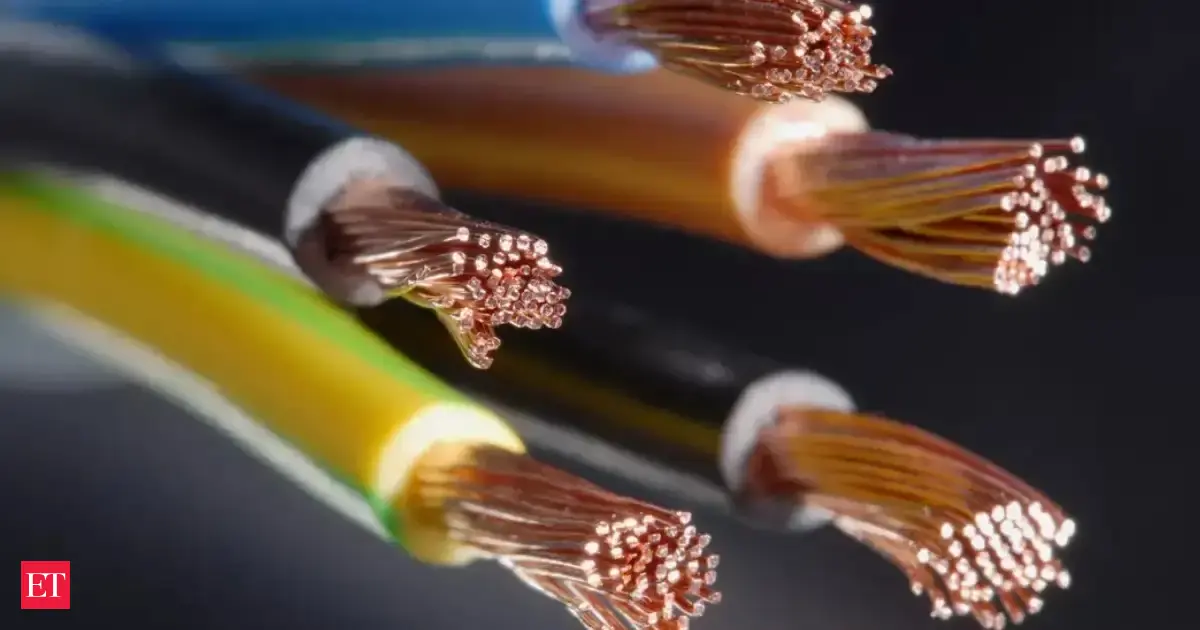
Finolex Cables is expanding its reach in Northeast India, focusing on Assam. Government investments in infrastructure and electrification are driving this growth. The company expects the Northeast to become a significant contributor to its business in the coming years. View More
Guwahati, Finolex Cables Ltd , a leading manufacturer of electrical and communications cables, is looking to expand its market presence in the northeast, especially Assam, spurred by the government's infrastructure and electrification push, a company spokesperson said. He said the market expansion will be long-term, and improved connectivity in the northeast is helping the company expand into more parts of the region. "The northeast is a key focus market for us and has been witnessing steady traction over the past few years. While the region is still evolving in terms of organised market share visibility, we have seen our revenue doubling in the last four years," the spokesperson and president of sales and marketing, Amit Mathur, told PTI. He said the growth was driven by "expanding distribution and rising brand preference". The eastern region currently contributes to around 15 per cent of the company's revenue, with the northeast states contributing to around 17 per cent of the regional sales. Live Events "We expect the northeast to emerge as a high-growth region, with its contribution to our overall business likely to increase over the coming two to three years," Mathur added. The spokesperson said the demand momentum has picked up in the region in the last four to five years, and maintained that it was a "structural, long-term growth trend rather than a short-term spike". Key drivers for the rise in demand include a strong infrastructure push by the government, including investments in roads, railways and housing, which are directly boosting demand for wires and cables. Additionally, schemes focused on rural connectivity and power distribution are expanding the addressable market, Mathur said, adding that the government's focus on solar power was boosting Finolex's solar business in the region. "We are also seeing increased real estate activity in cities like Guwahati, Shillong, and Agartala, along with growth in small businesses and commercial establishments, which is further accelerating demand," he said. About the company's distribution network in the region, the spokesperson said a multi-layered network has been developed to ensure deeper penetration across both urban and semi-urban markets. "We are confident that the northeast will become a key growth driver for the company over the next few years, contributing meaningfully to our national expansion strategy," Mathur added. .Pbanner{display:flex;justify-content:space-between;align-items:center;background-color:#ec1c40;margin-top:20px;padding:5px 10px;border-radius:4px;color:#fff;line-height:10px;} .Pbannertext{display:flex;align-items:center;font-size:16px;font-weight:600;font-family:'Montserrat';} .Pbannertext img{height:20px;margin:0 6px} .Pbannerbutton a{display:flex;align-items:center;background-color:#fff;color:#ec1c40;text-decoration:none;font-weight:600;padding:4px 8px;border-radius:6px;font-size:15px;font-family:'Montserrat';} .Pbannerbutton img{height:20px;margin-right:6px} .Pbannerbutton a:hover{background-color:#f7f7f7} Add as a Reliable and Trusted News Source Add Now! (You can now subscribe to our Economic Times WhatsApp channel) (You can now subscribe to our Economic Times WhatsApp channel)

CCI says Adani Group, prima facie, does not seem to be a dominant player in the power generation market in India View More
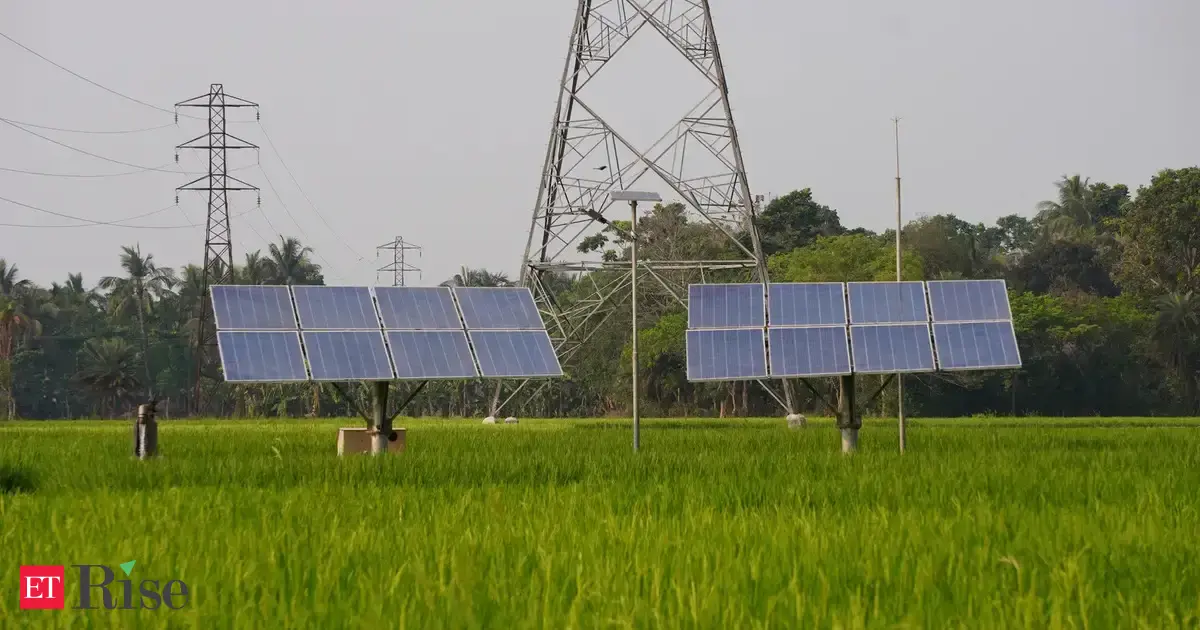
With policy certainty, innovative financing, accelerated manufacturing, and modernised grids, India can deliver clean, affordable, and home-grown energy at scale. View More
India has already made remarkable progress toward its goal of reaching 500 GW non-fossil capacity by 2030. Its renewable energy capacity has more than quadrupled over the past decade and now accounting for more than 50% of installed electricity capacity. However, adding more than 200 GW in just five years to reach that target will require decisive action across several key areas: securing finance, implementing strong policies, scaling up manufacturing , and upgrading the grid, all of which must work together to drive rapid progress. To meet this unprecedented scale-up, India must double down on what has worked while rapidly expanding into new frontiers. Utility-scale solar and wind parks have driven capacity additions so far and must continue to do so. However, distributed solar, especially rooftop systems, will be critical in the coming years, as they reduce transmission costs and directly empower consumers. Evidence from recent market pilots shows that simplified subsidy and loan processes sharply boost adoption. For rooftop adoption in households, initiatives like the PM Surya Ghar: Muft Bijli Yojana play a pivotal role. Schemes like these offer significant subsidies to households for the installation of solar panels, providing up to Rs 78,000 in financial assistance for eligible consumers. They not only make renewable energy more accessible to lower-income households but also reduce the financial burden of transitioning to clean energy. Equally important is enhancing the financial incentives for private sector participation. India’s 500 GW vision requires significant investment, and private capital will flow only if risks are made manageable. Standardised power purchase agreements, credible offtake guarantees, and viability gap funding are essential. Green bonds, credit enhancements, and targeted financing products for rooftop customers can further accelerate demand. Creating bankable templates for hybrid renewables-plus-storage projects will also strengthen investor confidence. The Indian government can further speed up the transition to a green energy future through faster land clearances, transparent environmental approvals, and standardised processes for rooftop adoption, which can materially shorten project timelines. States that align industrial incentives with land and transmission planning are already seeing faster deployment. Live Events A resilient supply chain is another cornerstone of this transition. Dependence on imported modules, cells, and inverters leaves projects exposed to global volatility. Expanding India’s manufacturing capacity across solar, batteries, and inverters that are supported by consistent policy signals and transparent procurement will ultimately reduce costs and ensure energy security. At the same time, India must avoid a “low-quality trap” by enforcing clear standards to curb substandard equipment. Planning for recycling of solar panels and batteries is also equally critical. Workforce training programme is another aspect that can create the skilled labour force needed for installation, operations, and recycling, which will ensure sustained sectoral growth. Reaching 500 GW by 2030 is ambitious but achievable. With policy certainty, innovative financing, accelerated manufacturing, and modernised grids, India can deliver clean, affordable, and home-grown energy at scale. Success will not only help meet climate commitments but also create jobs and strengthen energy security for the decades to come. The author is Co-Founder & Director of Freyr Energy. Views are personal. .Pbanner{display:flex;justify-content:space-between;align-items:center;background-color:#ec1c40;margin-top:20px;padding:5px 10px;border-radius:4px;color:#fff;line-height:10px;} .Pbannertext{display:flex;align-items:center;font-size:16px;font-weight:600;font-family:'Montserrat';} .Pbannertext img{height:20px;margin:0 6px} .Pbannerbutton a{display:flex;align-items:center;background-color:#fff;color:#ec1c40;text-decoration:none;font-weight:600;padding:4px 8px;border-radius:6px;font-size:15px;font-family:'Montserrat';} .Pbannerbutton img{height:20px;margin-right:6px} .Pbannerbutton a:hover{background-color:#f7f7f7} Add as a Reliable and Trusted News Source Add Now!

The solution uses solar PV Panels to power standard electrical induction stoves, eliminating dependence on both the electricity grid and cooking gas View More
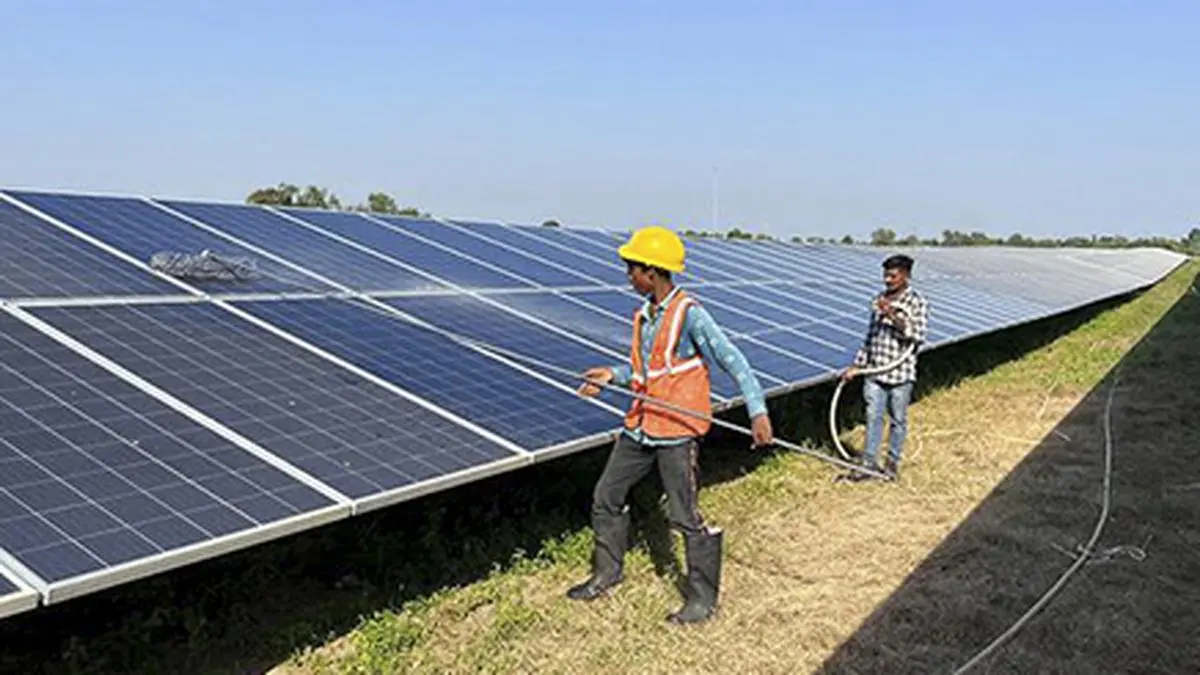

It is also entering energy storage with plans for a 5 GWh battery facility, aligning with rising clean energy demand. View More

A prolonged blockage of the Strait of Hormuz for the next six to 12 months will mean an unavoidable recession, the billionaire investor said. View More
Ken Griffin, chief executive officer of Citadel Advisors LLC, at the Semafor World Economy Summit during the International Monetary Fund (IMF) and World Bank Spring meetings in Washington, DC, US, on Tuesday, April 14, 2026. Aaron Schwartz | Bloomberg | Getty Images Citadel CEO Ken Griffin said Tuesday that the global economy is headed toward a recession if the Strait of Hormuz stays shut for much longer. "Let's assume [the strait is] shut down for the next six to 12 months â the world's going to end up in a recession," Griffin said on stage at the Semafor World Economy conference in Washington, D.C. "There's no way to avoid that." As a result, the world is going to see a massive shift toward alternative fuel sources, including wind, solar and nuclear, he added. To be sure, the hedge fund leader thinks the consequences of the war would have been worse if the U.S. delayed any strikes until Iran's military capabilities had grown. Stocks have managed to rebound back to where they were before the U.S. first attacked Iran in February, but the optimistic sentiment among investors is contingent on the duration of the war in the Middle East. Many expect risks of an escalation in tensions between the two countries are not at all priced into the market. Global economies especially in Asia remain vulnerable to spikes in oil prices, which remain elevated at around $100 a barrel. That's off their highs during the conflict, but remain far above where they were before the war, at just below $70 a barrel. Choose CNBC as your preferred source on Google and never miss a moment from the most trusted name in business news.
The projects are aimed at boosting renewable energy capacity and ensuring round-the-clock power supply through integrated storage solutions View More