
Latest Sectors News

While the overall market was soaring over the past two weeks, Berkshire wasn't doing much of anything, as its shares slipped to MTD drops of just under 1%. View More
In this articleBRK.B.SPXBRK.BFollow your favorite stocksCREATE FREE ACCOUNT (This is the Warren Buffett Watch newsletter, news and analysis on all things Warren Buffett and Berkshire Hathaway. You can sign up here to receive it every Friday evening in your inbox.) Berkshire shares left behind as S&P 500 rallies to record high Optimism that the U.S. conflict with Iran is approaching a resolution helped lift the S&P 500 index to its first close above 7,100.The benchmark is up more than 9% so far this month as fears about global conflict, earnings, artificial intelligence, and inflation all eased since the S&P 500 hit its lowest level of the year in late March, when it was nearing a 10% correction.It's one of the market's fastest turnarounds in at least 36 years.But while the overall market was soaring, Berkshire wasn't doing much of anything, as its A and B shares slipped to month-to-date drops of just under 1%. Zoom In IconArrows pointing outwards At the close on March 31, Berkshire shares were almost even with the S&P with year-to-date losses of around 4.7%. Zoom In IconArrows pointing outwards The day before, Berkshire B was running 1.8 percentage points ahead of the S&P, its biggest lead of the year.Friday, it closed 9.7 percentage points behind the index, its biggest gap so far in 2026. Zoom In IconArrows pointing outwards On their own terms, Berkshire shares have not been performing well since they closed at record highs on May 2, 2025, just before Warren Buffett announced he would be stepping down as CEO at the end of that year. Zoom In IconArrows pointing outwards While they are around 3% above their early-August lows, both classes are now down a bit more than 12% since Buffett's announcement. Berkshire's financial history gets an update With Berkshire's annual shareholders meeting now just two weeks away, this is the time of year to publish books about Buffett and his company."The Complete Financial History of Berkshire Hathaway, Second Edition" will be out on April 28 from Pan Macmillan's Harriman House.The update will include a full analysis of the company's first six decades, covering events through 2024.Author Adam Mead tells me there will also be some thoughts about 2025 in the introduction. BUFFETT & BERKSHIRE AROUND THE INTERNET Some links may require a subscription:Wall Street Journal on MSN: Greg Abel has been leading Berkshire for 100 days. Things are already changing.Barron's on MSN: Berkshire Hathaway's big utility business could be worth close to $100 billionBarron's on MSN: America's next great business oracle may not be American. Meet the next Warren Buffett.Investopedia: What Forces Shaped Warren Buffett's Path to Wealth? Lessons on Compound Interest and OpportunityZacks on Yahoo Finance: Berkshire Taps Yen Bonds: Does This Signal Confidence in Japan? HIGHLIGHTS FROM CNBC'S BUFFETT ARCHIVE 'We don't begrudge the taxes we pay' (2014) Warren Buffett and Charlie Munger explain why they don't try to get around paying U.S. taxes.ANDREW ROSS SORKIN: "Berkshire paid $8.9 billion in taxes in 2013. Pfizer is currently contemplating an acquisition that would allow it to move its technical holding company overseas and thereby save income tax expense and create shareholder value. Is this something you and Charlie would ever consider if it would create value for Berkshire shareholders?"WARREN BUFFETT: I think the answer to that is no.What do you say, Charlie? (Applause)CHARLIE MUNGER: I think it would be â I think it would be crazy to be as prosperous as Berkshire and get our tax to zero while we remain this prosperous. That would not be a legitimate ideal. (Applause)WARREN BUFFETT: Yeah.We could not have done Berkshire in any other country except the United States, either. You know, and just look at what we've acquired and everything.America has, in a very, very, very big way, helped Charlie and I become very, very, very rich. (Laughs). Charlie?CHARLIE MUNGER: I've got no complaints. And I look around at this group, I see you at breakfast, it's a very happy group of people.I don't think a lot of people are gnashing their teeth that somebody else has a little more.WARREN BUFFETT: But we don't pay â I don't want to make it holier than thou, this stuff. We don't pay anything beyond that â when we get all through figuring out tax on our 20,000 page-plus return, we just don't â we don't add a tip of 20 percent or 15 percent or anything.  (Laughter)And we do certain transactions which are tax driven. We're in low-income housing tax credits, which, actually, George Bush 41 congratulated me for. So it's bipartisan.We â the wind energy deals we do, the solar deals we do, they are tax driven to â I mean, they won't make economic sense otherwise.So, we follow the rules.But we don't begrudge the taxes we pay. We've earned a lot of money while paying U.S. taxes. (Applause) BERKSHIRE STOCK WATCH Four weeks Zoom In IconArrows pointing outwards Twelve months Zoom In IconArrows pointing outwards BRK.A stock price: ~$711,558.8BRK.B stock price: $474.58BRK.B P/E (TTM): 15.29Berkshire market capitalization: $1,023,449,080,531Berkshire Cash as of Dec. 31: $373.3 billion (Down 2.2% from Sept. 30)Excluding Rail Cash and Subtracting T-Bills Payable: $369.0 billion (Up 4.1% from Sept. 30)Berkshire resumed stock repurchases on March 4, 2026, but has not said whether it made any additional buys after that date.(All figures are as of the date of publication, unless otherwise indicated) BERKSHIRE'S TOP EQUITY HOLDINGS - Apr. 17, 2026 Zoom In IconArrows pointing outwards Berkshire's top holdings of disclosed publicly traded stocks in the U.S. and Japan, by market value, based on the latest closing prices.Holdings are as of Sept. 30, 2025, as reported in Berkshire Hathaway's 13F filing on Nov. 14, 2025, except for:Mitsubishi, which is as of Aug. 28, 2025MitsuiThe full list of holdings and current market values is available from CNBC.com's Berkshire Hathaway Portfolio Tracker. QUESTIONS OR COMMENTS Please send any questions or comments about the newsletter to me at alex.crippen@nbcuni.com. (Sorry, but we don't forward questions or comments to Buffett himself.)If you aren't already subscribed to this newsletter, you can sign up here.Also, Buffett's annual letters to shareholders are highly recommended reading. There are collected here on Berkshire's website.-- Alex Crippen, Editor, Warren Buffett Watch Choose CNBC as your preferred source on Google and never miss a moment from the most trusted name in business news.

The Securities and Exchange Board of India has approved IPOs for four companies, including Avaada Electro, Brookfield-backed Avaada Group's solar PV manufacturing arm. Chennai-based Grand Housing will launch an entirely offer-for-sale IPO by its promoter. Sebi provided observations for Avaada Electro's confidential DRHP filed in October 2025. View More
Mumbai: The Securities and Exchange Board of India ( Sebi ) last week granted approval to four companies-Avaada Electro, Grand Housing , Sonaselection India and Vishal Nirmiti-to launch their initial public offerings ( IPOs ). Avaada Electro , the solar PV manufacturing subsidiary of Brookfield-backed Avaada Group had filed a confidential Draft Red Herring Prospectus (DRHP) with Sebi in October 2025. The company received Sebi observations on April 15. Chennai-based real estate developer Grand Housing's proposed IPO will entirely be an offer-for-sale (OFS) of 3.55 crore shares by the promoter, with no fresh issue. .Pbanner{display:flex;justify-content:space-between;align-items:center;background-color:#ec1c40;margin-top:20px;padding:5px 10px;border-radius:4px;color:#fff;line-height:10px;} .Pbannertext{display:flex;align-items:center;font-size:16px;font-weight:600;font-family:'Montserrat';} .Pbannertext img{height:20px;margin:0 6px} .Pbannerbutton a{display:flex;align-items:center;background-color:#fff;color:#ec1c40;text-decoration:none;font-weight:600;padding:4px 8px;border-radius:6px;font-size:15px;font-family:'Montserrat';} .Pbannerbutton img{height:20px;margin-right:6px} .Pbannerbutton a:hover{background-color:#f7f7f7} Add as a Reliable and Trusted News Source Add Now! (You can now subscribe to our ETMarkets WhatsApp channel) (You can now subscribe to our ETMarkets WhatsApp channel)
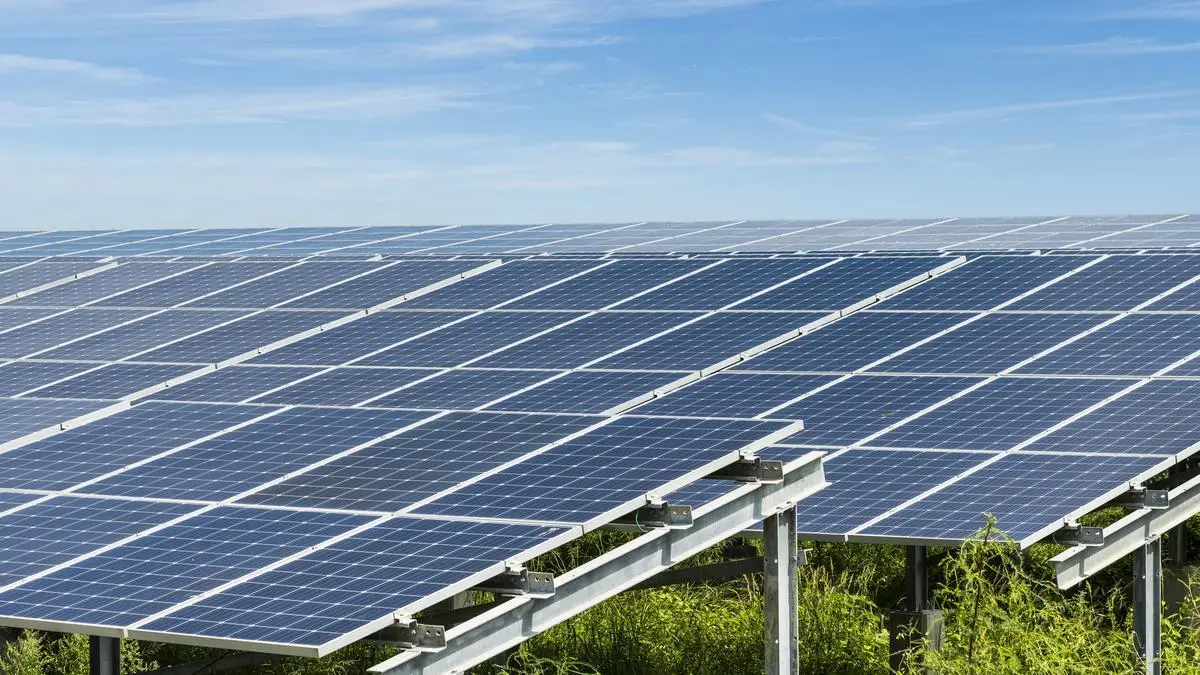
The order involves the supply of high-efficiency bifacial modules engineered to deliver superior energy yield, enhanced durability and reliable performance across utility-scale solar projects View More

The southern European country has ramped up its investment in solar and wind technologies in recent years. View More
Wind turbines operated by Gamesa Eloica SA near Zaragoza, Spain, on Wednesday, March 25, 2026. Renewables are helping cushion the blow of higher oil and gas prices in Europe.Bloomberg | Bloomberg | Getty Images Spanish Economy Minister Carlos Cuerpo lauded the country's energy resilience to the Iran war, saying a pivot to solar and wind power has shielded Madrid from the worst impacts of the resulting energy shock.His comments come at a time when Spain's government has emerged as one of the European Union's leading critics of the U.S.-Israel war against Iran, with Prime Minister Pedro Sánchez having described the ongoing Middle East crisis as a "disaster."U.S. President Donald Trump pledged to cut off trade with Madrid after Spain prevented two jointly operated bases in its territory from being used in strikes against Iran. Speaking to CNBC's Karen Tso on Thursday, Cuerpo said that Spain had been better prepared for this crisis, pointing out that the country has been the fastest-growing advanced economy in Europe over the last couple of years. watch nowVIDEO4:0904:09Spain's Cuerpo: Anti-war position strengthened by public supportSquawk Box Europe Spain also created 40% of all new jobs in the euro zone last year, Cuerpo said, while noting that on budgetary terms, the country's debt has nearly returned to pre-Covid levels."In energy terms, we're also better prepared because we've pursued our agenda on renewables," Cuerpo said on the sidelines of the IMF and World Bank Group Spring Meetings in Washington this week. Spain's reliance on gas for electricity prices has dropped to just 16% this year, Cuerpo said, down from 75% in 2019. "So, it kind of increases our energy sovereignty and reduces the exposure to the shock," he added. Cuerpo acknowledged, however, that citizens and businesses were still suffering the consequences of the Iran war through higher fuel and fertilizer prices.Analysts have pointed to Spain as a prime example of how countries have been able to limit their exposure to fossil fuel price volatility in recent weeks.Spain, alongside Portugal and some Nordic countries, is among the countries to have registered the lowest gas prices across the 27-nation bloc since the Middle East conflict began. Spanish Prime Minister Pedro Sánchez (R) and Ukrainian President Volodymyr Zelensky (L) meet at Moncloa Palace on March 18, 2026 in Madrid, Spain.Pablo Cuadra | Getty Images News | Getty Images Spain's renewables push has not been without its critics. Indeed, the country's government was sharply criticized last year following a catastrophic blackout. The outage, which some U.S. lawmakers blamed on Spain's green agenda, was one of Europe's worst in living memory. Spain's government subsequently denied renewable energy was to blame for the blackout, and a report by Entso-e, which had been investigating the root cause of the April 2025 incident, later found that there was no single cause and instead said there was a combination of "many interacting factors" which led to the outage. Spain's anti-war stance Speaking alongside German Chancellor Friedrich Merz last month, Trump pledged to sever trade ties with Spain, saying the White House did not want anything to do with the country. The U.S. president has also repeatedly criticized Madrid for its refusal to meet the NATO defense spending target of 5% of gross domestic product.Trump's threat to punish Spain on trade is said to be challenging, however, given that the 27 EU nations negotiate trade agreements collectively. "Spain did not want to participate in this unilateral conflict that is outside of international law. And that's actually what we did," Cuerpo said when asked about Spain's anti-war position and Trump's trade threats. Read moreSpain PM Sánchez says fire starters donât deserve applause as he welcomes Iran ceasefireâAsiaâs Ukraine momentâ: How the Iran war could accelerate a shift into renewablesSpainâs unprecedented power outage sparks a blackout blame game over green energy "We're not alone in this position against the current situation and the participation in the war in Iran, many other European countries and partners have also expressed a very similar position," he continued. "And when it comes to trade relations with the U.S., Spanish companies operate in the exact same environment as French, German or Italian ones, because we have a unique trade relation. I mean within the EU with respect to the U.S., and we're trying to go ahead with a deal that we signed last August, and that's actually where we should put all our efforts to be able to fulfil that deal and make good on it." Choose CNBC as your preferred source on Google and never miss a moment from the most trusted name in business news.
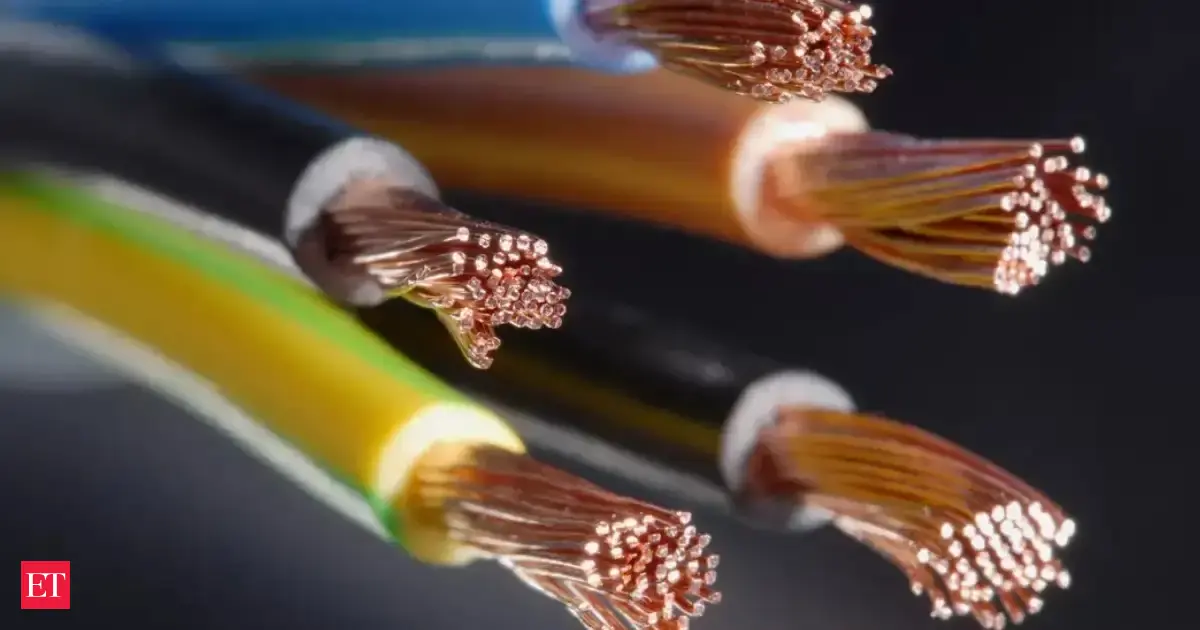
Finolex Cables is expanding its reach in Northeast India, focusing on Assam. Government investments in infrastructure and electrification are driving this growth. The company expects the Northeast to become a significant contributor to its business in the coming years. View More
Guwahati, Finolex Cables Ltd , a leading manufacturer of electrical and communications cables, is looking to expand its market presence in the northeast, especially Assam, spurred by the government's infrastructure and electrification push, a company spokesperson said. He said the market expansion will be long-term, and improved connectivity in the northeast is helping the company expand into more parts of the region. "The northeast is a key focus market for us and has been witnessing steady traction over the past few years. While the region is still evolving in terms of organised market share visibility, we have seen our revenue doubling in the last four years," the spokesperson and president of sales and marketing, Amit Mathur, told PTI. He said the growth was driven by "expanding distribution and rising brand preference". The eastern region currently contributes to around 15 per cent of the company's revenue, with the northeast states contributing to around 17 per cent of the regional sales. Live Events "We expect the northeast to emerge as a high-growth region, with its contribution to our overall business likely to increase over the coming two to three years," Mathur added. The spokesperson said the demand momentum has picked up in the region in the last four to five years, and maintained that it was a "structural, long-term growth trend rather than a short-term spike". Key drivers for the rise in demand include a strong infrastructure push by the government, including investments in roads, railways and housing, which are directly boosting demand for wires and cables. Additionally, schemes focused on rural connectivity and power distribution are expanding the addressable market, Mathur said, adding that the government's focus on solar power was boosting Finolex's solar business in the region. "We are also seeing increased real estate activity in cities like Guwahati, Shillong, and Agartala, along with growth in small businesses and commercial establishments, which is further accelerating demand," he said. About the company's distribution network in the region, the spokesperson said a multi-layered network has been developed to ensure deeper penetration across both urban and semi-urban markets. "We are confident that the northeast will become a key growth driver for the company over the next few years, contributing meaningfully to our national expansion strategy," Mathur added. .Pbanner{display:flex;justify-content:space-between;align-items:center;background-color:#ec1c40;margin-top:20px;padding:5px 10px;border-radius:4px;color:#fff;line-height:10px;} .Pbannertext{display:flex;align-items:center;font-size:16px;font-weight:600;font-family:'Montserrat';} .Pbannertext img{height:20px;margin:0 6px} .Pbannerbutton a{display:flex;align-items:center;background-color:#fff;color:#ec1c40;text-decoration:none;font-weight:600;padding:4px 8px;border-radius:6px;font-size:15px;font-family:'Montserrat';} .Pbannerbutton img{height:20px;margin-right:6px} .Pbannerbutton a:hover{background-color:#f7f7f7} Add as a Reliable and Trusted News Source Add Now! (You can now subscribe to our Economic Times WhatsApp channel) (You can now subscribe to our Economic Times WhatsApp channel)

CCI says Adani Group, prima facie, does not seem to be a dominant player in the power generation market in India View More
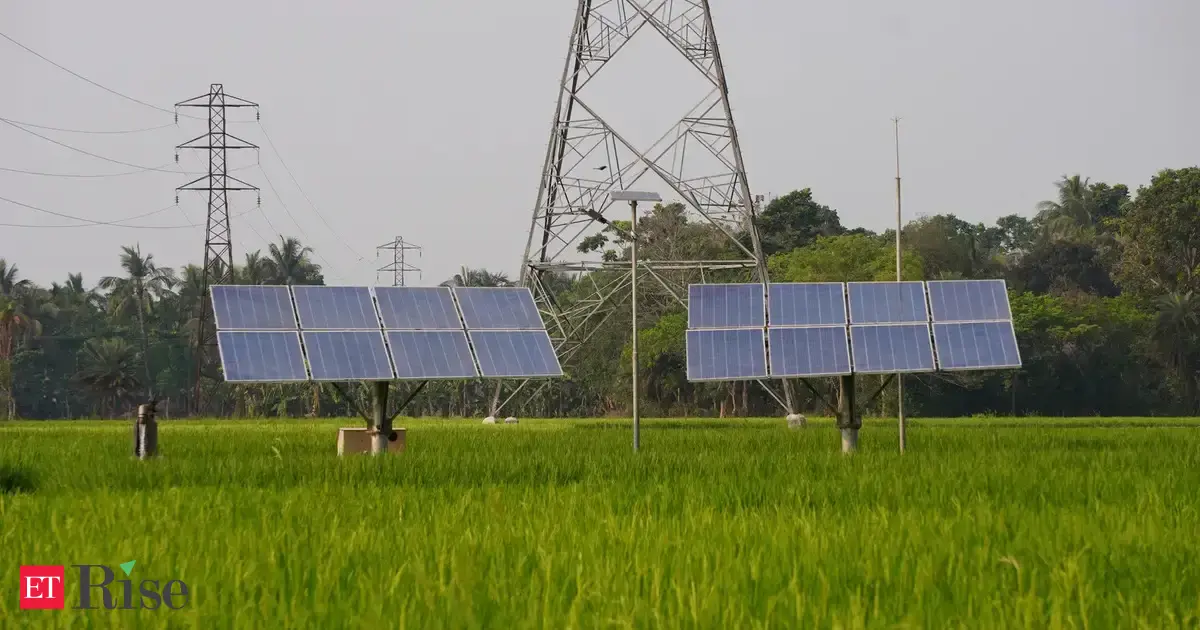
With policy certainty, innovative financing, accelerated manufacturing, and modernised grids, India can deliver clean, affordable, and home-grown energy at scale. View More
India has already made remarkable progress toward its goal of reaching 500 GW non-fossil capacity by 2030. Its renewable energy capacity has more than quadrupled over the past decade and now accounting for more than 50% of installed electricity capacity. However, adding more than 200 GW in just five years to reach that target will require decisive action across several key areas: securing finance, implementing strong policies, scaling up manufacturing , and upgrading the grid, all of which must work together to drive rapid progress. To meet this unprecedented scale-up, India must double down on what has worked while rapidly expanding into new frontiers. Utility-scale solar and wind parks have driven capacity additions so far and must continue to do so. However, distributed solar, especially rooftop systems, will be critical in the coming years, as they reduce transmission costs and directly empower consumers. Evidence from recent market pilots shows that simplified subsidy and loan processes sharply boost adoption. For rooftop adoption in households, initiatives like the PM Surya Ghar: Muft Bijli Yojana play a pivotal role. Schemes like these offer significant subsidies to households for the installation of solar panels, providing up to Rs 78,000 in financial assistance for eligible consumers. They not only make renewable energy more accessible to lower-income households but also reduce the financial burden of transitioning to clean energy. Equally important is enhancing the financial incentives for private sector participation. India’s 500 GW vision requires significant investment, and private capital will flow only if risks are made manageable. Standardised power purchase agreements, credible offtake guarantees, and viability gap funding are essential. Green bonds, credit enhancements, and targeted financing products for rooftop customers can further accelerate demand. Creating bankable templates for hybrid renewables-plus-storage projects will also strengthen investor confidence. The Indian government can further speed up the transition to a green energy future through faster land clearances, transparent environmental approvals, and standardised processes for rooftop adoption, which can materially shorten project timelines. States that align industrial incentives with land and transmission planning are already seeing faster deployment. Live Events A resilient supply chain is another cornerstone of this transition. Dependence on imported modules, cells, and inverters leaves projects exposed to global volatility. Expanding India’s manufacturing capacity across solar, batteries, and inverters that are supported by consistent policy signals and transparent procurement will ultimately reduce costs and ensure energy security. At the same time, India must avoid a “low-quality trap” by enforcing clear standards to curb substandard equipment. Planning for recycling of solar panels and batteries is also equally critical. Workforce training programme is another aspect that can create the skilled labour force needed for installation, operations, and recycling, which will ensure sustained sectoral growth. Reaching 500 GW by 2030 is ambitious but achievable. With policy certainty, innovative financing, accelerated manufacturing, and modernised grids, India can deliver clean, affordable, and home-grown energy at scale. Success will not only help meet climate commitments but also create jobs and strengthen energy security for the decades to come. The author is Co-Founder & Director of Freyr Energy. Views are personal. .Pbanner{display:flex;justify-content:space-between;align-items:center;background-color:#ec1c40;margin-top:20px;padding:5px 10px;border-radius:4px;color:#fff;line-height:10px;} .Pbannertext{display:flex;align-items:center;font-size:16px;font-weight:600;font-family:'Montserrat';} .Pbannertext img{height:20px;margin:0 6px} .Pbannerbutton a{display:flex;align-items:center;background-color:#fff;color:#ec1c40;text-decoration:none;font-weight:600;padding:4px 8px;border-radius:6px;font-size:15px;font-family:'Montserrat';} .Pbannerbutton img{height:20px;margin-right:6px} .Pbannerbutton a:hover{background-color:#f7f7f7} Add as a Reliable and Trusted News Source Add Now!

The solution uses solar PV Panels to power standard electrical induction stoves, eliminating dependence on both the electricity grid and cooking gas View More
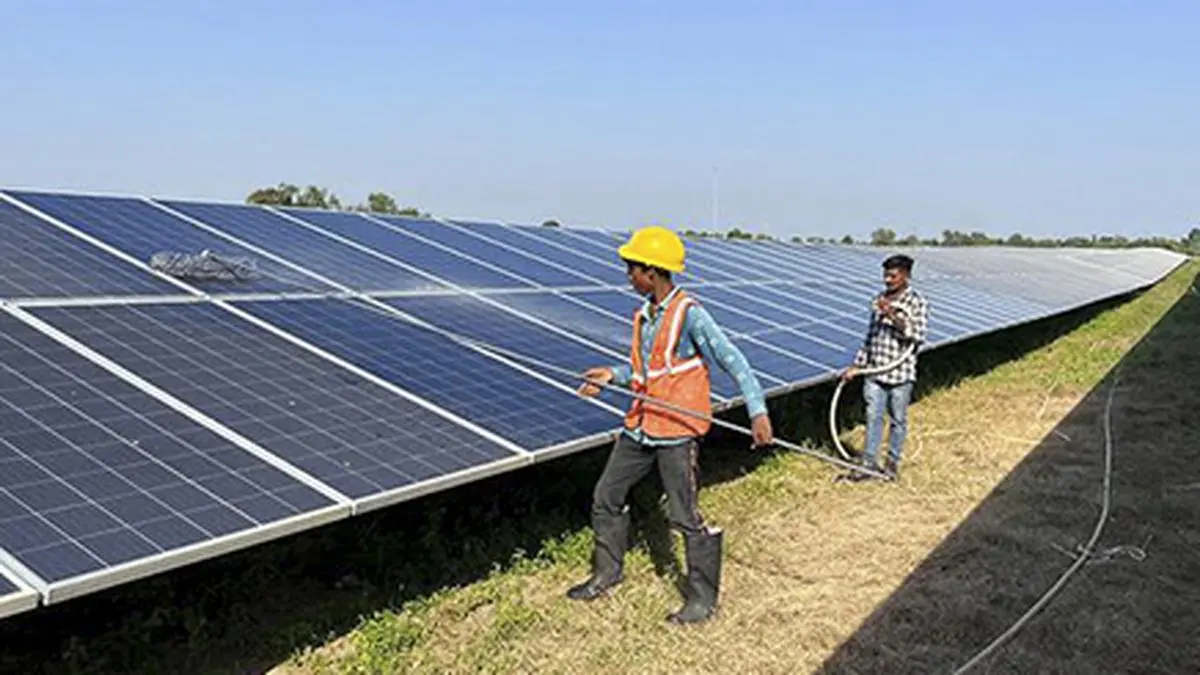

It is also entering energy storage with plans for a 5 GWh battery facility, aligning with rising clean energy demand. View More