
Latest Sectors News
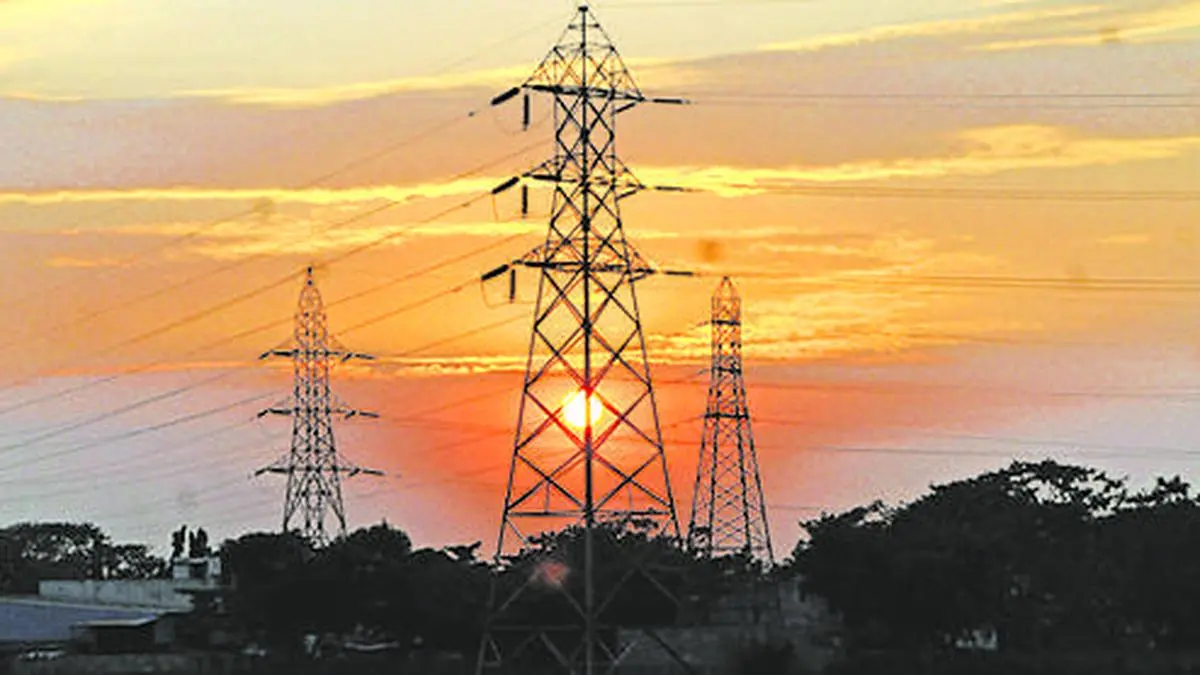
A high of 267.45 GW was recorded at 1529 hours on Friday, against the all-time high of 270.82 GW recorded on Thursday View More

Beijing says consultations with India failed to resolve matter; a panel will be constituted on second request View More
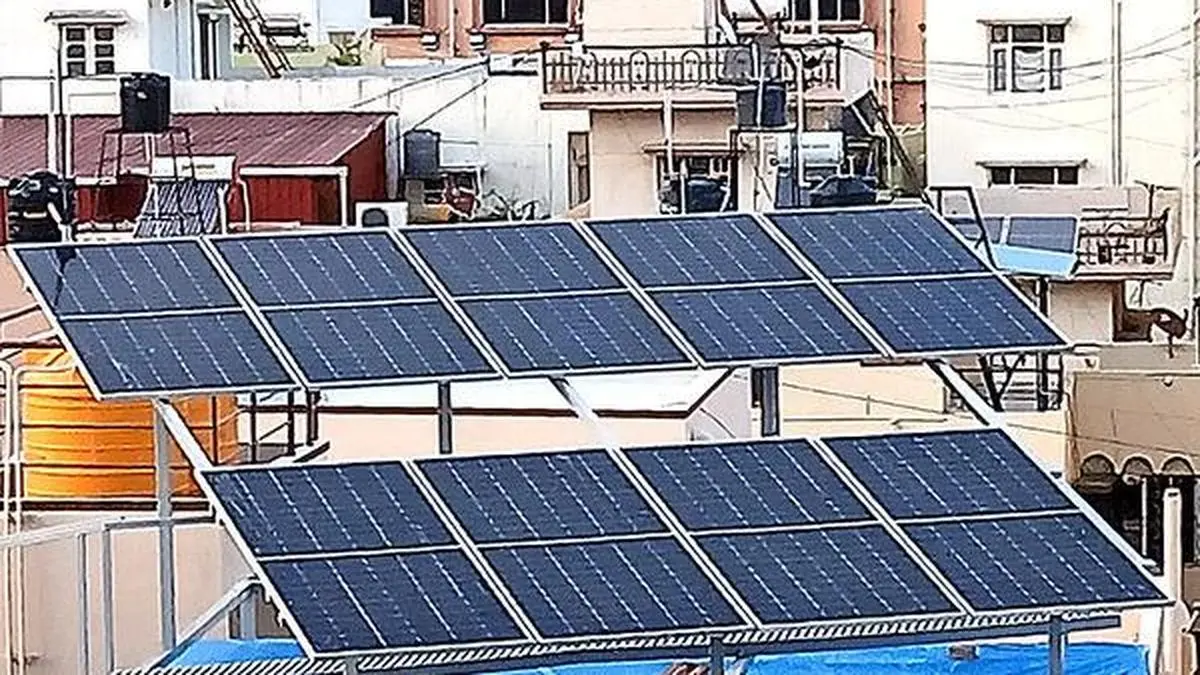
KDSPC also stressed the need for specialised job training programmes and research incentives to create employment opportunities in the green energy sector View More

India has blocked China's request for a World Trade Organization (WTO) dispute settlement panel concerning New Delhi's support for its solar and IT sectors. China alleged that India's measures discriminate against its goods, violating WTO provisions. India rejected these claims, asserting its measures align with WTO rules. View More
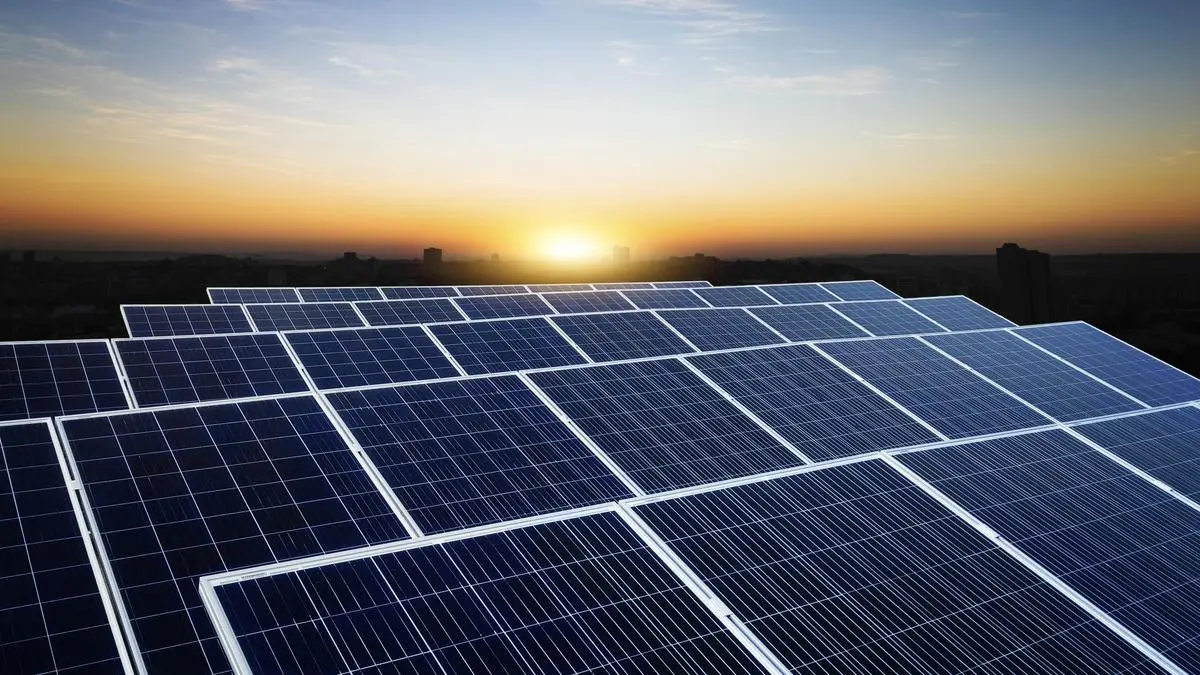
The projects comprise two 300 MW AC solar facilities spread across 2,400 acres in Kurnool district View More

Mining company Perpetua Resources has secured a $2.9 billion loan from the U.S. Export-Import Bank as the U.S. looks to secure access to critical minerals. View More
In this articlePPTAFollow your favorite stocksCREATE FREE ACCOUNT The Stibnite Gold Project from Perpetua Resources is a proposed open-pit gold and antimony mine in a remote area of the Payette National Forest in Valley County, Idaho, as seen aboard an EcoFlight. Sarah A. Miller | Idaho Statesman | Tribune News Service | Getty Images Mining company Perpetua Resources has secured a $2.9 billion loan from the U.S. Export-Import Bank, CNBC has learned. The deal comes as the U.S. looks to secure access to critical minerals and break China's stronghold on essential supply chains.The financing, which is the largest loan under EXIM's "Make More in America" initiative and the agency's fourth largest loan on record, will fund Perpetua's Stibnite Gold project in Idaho. The mine will also produce antimony, which is essential for defense applications â including for munitions â as well as semiconductor manufacturing and renewable energies including solar panels and wind turbines, among other things.Perpetua shares rose more than 12% on the news. The U.S. Geological Survey deems antimony a "critical mineral." There are no antimony mines currently in operation in the U.S. China is the dominant producer of antimony globally, satisfying more than half of U.S. demand, according to USGS.The Stibnite site is the only source of domestic antimony that can meet the U.S.' requirements for weapons production, according to the company, with the ability to supply about 35% of U.S. demand within the first six years of production. watch nowVIDEO1:0201:02U.S. Export-Import Bank finalizes $2.9 billion loan for Perpetua ResourcesClosing Bell: Overtime This is the latest in a string of deals from the government focused on shoring up domestic production of critical minerals, especially as China has in the past weaponized natural resources by curbing exports.In February, the White House unveiled "Project Vault," a first-of-its-kind public-private partnership focused on stockpiling minerals. The $12 billion initiative includes $10 billion in funding from the Export-Import Bank, and an additional $2 billion in private capital. The administration has also taken equity stakes in mining companies directly, including rare earths producer MP Materials. In July the Pentagon announced an investment in the company that includes an offtake agreement as well as a price floor. The U.S. was once the largest rare earths producer, but output plummeted after China flooded the market and depressed prices. The government has also inked deals with miners including USA Rare Earth, Lithium Americas and Trilogy Metals. Shares of all three stocks traded higher on Thursday. Perpetua has begun construction on the Stibnite site and said it should be operational in 2029. The company is working with the Department of Defense to supply antimony, and is in the process of securing additional commercial partners. watch nowVIDEO4:0004:00Can Project Vault reduce U.S. dependence on ChinaDiversified Metals and Mining Choose CNBC as your preferred source on Google and never miss a moment from the most trusted name in business news.

If you put the same money into a basket of companies that are building out AI infrastructure and energy sources, you’ve done much better than stocks like Nvidia. View More
In this articleWULFFollow your favorite stocksCREATE FREE ACCOUNT (This is CNBC's "Power Insider" newsletter, your inside look at the investments, people and companies powering the global energy industry. Click here to subscribe.) POWER POINT What I'm hearing from energy insidersOil prices are off their highs this week and media reports are citing Trump's comments that Iran negotiations are in their "final stages." But that's not the real reason. The real catalyst is that ships are starting to move through the Strait of Hormuz. Crude prices started pulling back as soon as hedge funds started seeing that traffic pick up, even before the Trump headlines hit.Sure enough, oil prices have ticked higher Thursday morning on more negative "headlines." Just keep watching the strait traffic as your guide.Thankfully, that's not my focus today.There's so much more going on in the energy industry beyond Iran and investors can't afford to be consumed by the barrage of headlines on the conflict and miss the other big money-making themes unfolding.In last week's Power Insider, I talked about the massive scale of A.I.'s electricity demand. (I'll have another interesting trade idea on that lower in today's edition.)Well...a few days later, I was on a plane to visit two huge liquefied natural gas (LNG) facilities in states near the forefront of the power story: Louisiana and Texas. About 48 hours after that, NextEra Energy (NEE) rolled out a blockbuster deal to buy Virginia's Dominion Energy (D) and create America's biggest utility. Let's start with the Dominion Deal.   NextEra shocked the energy world by announcing a mega-merger with Dominion. The all-stock deal is worth about $67 billion, but the combined enterprise value of the new company will be about $420 billion - if the deal is approved. That's a pretty good-sized 'if,' because some on Wall Street aren't convinced this deal will be approved by regulators. The Jefferies team notes that NextEra "doesn't have a great track record of approval" and they think the deal "could get rejected." But Jefferies also notes that Dominion wasn't "loved in Virginia" - its home state - and is probably pleased to have a potential buyer in NextEra.   Another energy insider I spoke with called the sale "surprising" and added that it will be a complex process to get this through multiple state approvals. He understands the NextEra side - the Florida company likely wants to grow its regulated utility base and can use the big recent stock gains to help cover the cost. But on the Dominion side, my insider calls it "perplexing" and notes that it might come down to a board frustrated by Virginia policies ⦠and likely enticed by the promise of a big payout for its executives.Don't undersell the scale of regulatory approval, says Evercore ISI.  Analyst Nick Amicucci highlights that this potential merger will require approval from the Federal Energy Regulatory Commission (FERC), the Nuclear Regulatory Commission (NRC), some combination of the FTC and DOJ, and all three of Dominion's state commissions.  What is clear is that NextEra and Dominion wouldn't have entered into a deal if they and their high-priced lawyers had already thought of these hurdles. Less clear is the ultimate outcome of the proposed deal.Hot take â If you're looking to make a trade on this, Jefferies says people are now likely to bid up both Duke Energy (DUK) and Southern Company (SO) as potentially "safer places" in the near-term.Hot take #2 â Deal or no deal, the lawyers on all sides of this transaction are going to get paid. Consider law school, kids!Now, to our inside look at the already huge - but still growing - world of liquefied natural gas. In LNG, we had two big conversations. Actually, three if we're being honest (and we always are). The first two were with the U.S. Secretary of Energy Chris Wright, the third with the Governor of Louisiana.  We began the day before the sun came up, and spoke with Secretary Wright in Port Arthur, Texas. The interview was also a first-look inside Exxon Mobil's huge new Golden Pass export facility.   Note â QatarEnergy is the primary owner of Golden Pass, and because its assets in the Middle East were struck by Iran, security is at a premium. We appreciate Exxon Mobil letting us in the gatesIn the morning interview, Wright was bullish on China becoming a bigger buyer of U.S. crude oil.  He also believes that America will soon have more oil coming out of Alaska, something my friend and colleague Morgan Brennan spoke with ConocoPhillips' CEO Ryan Lance about in Alaska on the same day. Friends, never let it be said that CNBC doesn't go the distance for you.We then hopped in our rented VW Touareg and zipped about 60 miles east to Cameron, Louisiana and the energy-famous Calcasieu Pass. The Pass - or CP to the insiders - is the future home of Commonwealth LNG's huge new export facility.  We were there during the groundbreaking, about ten years in the making (see the Inside Line below for more). watch nowVIDEO5:5305:53Energy Secretary Chris Wright: China will be buying more U.S. crude oil because of IranSquawk Box We also had the honor to speak with Louisiana's enthusiastic Governor Jeff Landry. Landry is fired up about the possibilities he has around natural gas, LNG and AI.  The Governor was proud to highlight that his state is powering America to the top of the ranks for LNG exports.  But our main question was direct: does Louisiana have enough natural gas to power both the LNG export boom and fuel the electricity dreams of AI? Landry said the answer is yes. watch nowVIDEO4:5404:54Louisiana Gov. Jeff Landry on new LNG project, AI data center growthPower Insider WALL STREET'S TAKE â What if oil and bond yields stay higher for longer?Power Insider is about energy, and so is the recent stock market.  Energy stocks are up an average of 35% this year, more than double Information Tech, the next-best-performing group, which is up 16%. Though energy is still just a small portion of the overall stock market, investors in ETFs like the XLE, XOP, OIH have done very well.As oil keeps moving up, so do government borrowing costs. This week the 30-year U.S. Treasury hit 5.17%, its highest since just before the subprime crisis in 2007. Oil is a big part of the inflation story, so it's also a major part of the bond market move. As oil moves higher, bond yields often follow. Zoom In IconArrows pointing outwards As Bespoke Investment Research notes, the CPI's energy component has jumped to a 130% annualized pace in just two months. That's the second-worst two-month spike in recent history, second only to the reaction after Hurricane Katrina in 2005.So what now?The 'battle' ahead is going to be between rising inflation risks and the super spending cycle from A.I. If the hundreds of billions in capital spending every few months around A.I. infrastructure holds up - and there is no indication that it won't - it may trump higher energy and inflation risks in the market.  Goldman Sachs says earnings are the key to stocks right now. The firm notes that the recent rally has "corresponded with surging near-term earnings estimates," which are up 8% YTD. But don't get complacent.  Goldman also warns that we could have some medium-term weakness in stocks. The firm's data shows that since 1980 there have been just 11 similar stock rallies. In those, markets historically move higher for a short time and then face "soft returns during the following few months." In other words, it might be a flat - or even lower - summer.Evercore ISI's Julien Emanuel appears more optimistic. The strategist has a year-end 7,750 target on the S&P 500 .. but he also shows off an ultra "bull case to 9,000."  Emanuel highlights that the "pandemic changed everything," including how the market moves. He writes that the odds of what he calls "extreme outcomes" are higher on both ends. Emanuel recommends investors look to the options market, advising them to buy the SPY July 775C/725P collar if near-term "unimaginable upside" is in both the bond market and oil prices.My take â Here's an AI trade involving energy that's doubled your moneySpeaking of the stock market. This would be a great RBI (random but interesting!) if we didn't have another one for you this week.If you invested in a basket of the "AI giants" - the companies that are spending hundreds of billions to build out the data centers - you have done okay. An equal-weighted basket put you only up about 7% this year, but a much nicer 43% gain over the last 12 months.  However, if instead you put the same money into a basket of companies that are building out AI infrastructure and energy sources, you've done much better. In fact, over the last year you have literally doubled your money.    Meta and Microsoft shares are actually lower over the past year. Nvidia appears stuck after earnings last night.But look at the infrastructure list. And yes, while TeraWulf (WULF) has provided the bulk of the gains, data center builder Equinix (EQIX), engineering and power management company Eaton (ETN), and keeping-it-cool company Trane (TT) have also done well. The investor money has shifted, at least for now. Zoom In IconArrows pointing outwards Take a look â Lately, the only thing moving through the Strait of Hormuz has been water. But there are early signs that tanker traffic may finally be starting to rebound. I break it down in this video: watch nowVIDEO1:5001:50Will transits tick up in the Strait of Hormuz?Power Insider INSIDE LINE This week's Inside Line is with Ben Dell, Managing Partner of big energy investment firm Kimmeridge and Executive Chair of Commonwealth LNG. Ben didn't take the usual route to natural gas. He's a graduate of St Peters College, Oxford. We asked him a few questions about his $10 billion dollar-plus new LNG export facility. Zoom In IconArrows pointing outwards Zoom In IconArrows pointing outwards RANDOM, BUT INTERESTING This week's RBI gives it to you straight: The Strait of Hormuz is getting all the attention, but Asia's little talked about Strait of Malacca is actually the large oil and liquids transit point. JPMorgan commodity analysts lay it out nicely. Zoom In IconArrows pointing outwards THE GRID National average gasoline prices keep creeping higher, and pretty much every state is now at or above $4/galllon: AAA Fuel Prices As always, we are watching "the map:" MarineTraffic: Global Ship Tracking Intelligence | AIS Marine Traffic Michigan opens bidding for 1GW of solar power: RFP alert: DTE Energy opens bidding for 1 GW of solar and wind capacity â pv magazine USA Singer Peter Gabriel never really went away, but now he's back with a new song and forthcoming new album. One for your mellower evenings: Peter Gabriel - Won't Stand Down (Bright-Side Mix) Catch up with more on energy including interviews and video content from CNBC and Power Insider.   Read last week's Power Insider here: Hyperscalers' AI buildout will require massive amounts of energy. Two under-the-radar stocks will benefit Note - There will be no Power Insider next week due to the Memorial Day holiday on Monday and what is generally a quiet week for the markets. Choose CNBC as your preferred source on Google and never miss a moment from the most trusted name in business news.

SpaceX's IPO prospectus underscores the importance of Starlink to the company's operations. View More
A Starlink user terminal being set up.SpaceX Elon Musk's SpaceX is best known for its reusable rockets, and has been capturing headlines this year for its high-priced move into artificial intelligence through its merger with xAI. But as the company pitches investors ahead of its mammoth IPO, there's another part of its business that dwarfs the rest in terms of growth and profits: Starlink. In its long-awaited prospectus on Wednesday, SpaceX said its connectivity unit, which is primarily comprised of Starlink, generated $11.39 billion in revenue last year, accounting for 61% of total sales. That number went up to 69% in the first quarter of this year. Additionally, Starlink is the company's profit engine. It was the only profitable division last year, generating income of $4.42 billion, while the rocket launching unit, which includes contracts with NASA and the Department of Defense, lost $657 million, and the AI division had a deficit of $6.35 billion. Starlink provides global high-speed internet coverage using a constellation of more than 10,200 satellites in low Earth orbit, a region of space that's within 1,200 miles of Earth's surface. Since launching its first batch of satellites in 2019, Starlink has emerged as the leader among internet-from-space providers. It's now available on all seven continents and in over 160 countries. Musk, the world's richest person, has ambitions to colonize Mars, and even has a large incentive pay plan tied to his ability to do so. He also wants to build orbital data centers and has visions of being a key player in the AI race that's currently being led by OpenAI, Anthropic and Google. watch nowVIDEO4:3604:36SpaceX IPO gives more insight into public AI-related companies, says Sand Hill's VingielloClosing Bell: Overtime Those things may or may not happen, but in the meantime, Starlink has a dominant position in a market that Amazon and others are chasing. Starlink's user base more than doubled to 10.3 million in the first quarter from a year ago. Earlier this year, SpaceX filed with the Federal Communications Commission to launch up to 1 million low Earth orbit satellites.SpaceX launched Starlink in 2015 as a way to take advantage of the company's access to space, creating a satellite constellation that could underpin a powerful internet service. Starlink has for years been viewed as a cash cow that can help fund SpaceX's other costly efforts. In its IPO filing, SpaceX said capital expenditures in the first quarter totaled $10.1 billion, more than doubling from a year earlier. The vast majority of those costs â $7.7 billion â were for AI.Starlink has emerged as a popular offering with consumers, but it's also used by dozens of airlines, including United, Southwest and Hawaiian, for offering in-flight wireless internet. Musk said in December that Starlink's commercial service was "by far" the largest contributor to SpaceX's revenue. Starlink cracked the Brand Finance top 500 rankings for the first time in 2026, with an estimated brand value of $5.19 billion.Competition is on the rise. OneWeb, operated by France's Eutelsat, has a constellation of more than 600 satellites. Amazon has also sent up more than 300 satellites over the past year as it inches closer to launching its Leo service, which will eventually include a constellation of roughly 7,700 satellites. Jeff Bezos' Blue Origin also plans to deploy about 5,400 satellites, beginning in the fourth quarter of 2027. China's Guowang, which has around 163 satellites in orbit, is aiming to build out a mega constellation.SpaceX named more than 20 companies as competitors to Starlink in its prospectus, including Amazon, Blue Origin, Viasat, AT&T and T-Mobile. Some competitors are also customers, using SpaceX launches to get their satellites into orbit. Politics of Starlink Musk brought Starlink internet service into U.S. federal government offices when he was leading DOGE, an effort by the Trump administration to slash the federal workforce. States, charities and non-governmental organizations frequently purchase Starlink terminals and service after natural disasters or other emergencies. SpaceX also runs a classified tier of its Starlink service, called Starshield, for military use.While the brand is gaining resonance with consumers, it's not universally beloved, due in part to Musk's endorsements of far-right leaders around the world. And some regulators overseas view Starlink as a security risk because it is foreign-owned.In March, Namibia's telecommunications regulator denied Starlink's application for an operating license, saying it didn't comply with local ownership rules. Musk, who was born in South Africa and is a naturalized U.S. citizen, has falsely accused the South African government of denying Starlink a license to operate there because he's white. South Africa's Electronic Communications Act requires foreign-owned communications licensees to sell 30% of equity in their local subsidiaries to historically disadvantaged groups. The South African regulator ICASA is weighing a proposal that would make it easier for SpaceX, and other foreign operators of satellite internet services, to obtain licenses. watch nowVIDEO5:5405:54Gulf Air expects to restore full flight capacity by JuneAccess Middle East Meanwhile Taiwan's government has ruled out deploying Starlink because SpaceX wouldn't agree to a joint venture with a local partner, the Financial Times reported. Taiwan officials have pointed out Musk's business ties in China, and his previous comments referring to Taiwan as an "integral part of China." Starlink has also been a contentious player in Ukraine, following Russia's invasion of its neighbor in 2022. That year, according to Reuters, Musk ordered SpaceX to actively shut off Starlink coverage over a battlefield in Kherson, hampering Ukraine's efforts to reclaim the territory. SpaceX and Musk denied the report. SpaceX took measures this year to stop Russia's unauthorized use of Starlink to guide some of its long-range drones to attack Ukraine.SpaceX said in its IPO filing that further expansion of its Starlink business, including satellite deployments and spectrum distribution, is dependent upon regulatory and licensing approvals. "There can be no assurance that our applications to renew, modify, or expand our authorizations will be granted on a timely basis, or at all, or without additional conditions," the company wrote. Starlink also faces challenges around retiring and replacing satellites in its megaconstellation. Satellites in geostationary orbit have a lifespan of around 15 years, but Starlink satellites are launched into lower orbit and last about three to five years. The upper stage of a Falcon 9 rocket deploys a stack of Starlink "V2 Mini" satellites in orbit.SpaceX SpaceX said in the risk factors section of its filing that space is "inherently hostile," and that Starlink satellites are subject to harsh conditions in orbit that could cause them to malfunction or fail.Excessive space debris could trigger what's known as the Kessler syndrome, a catastrophic chain reaction of collisions in space. Scientists have pointed to the increased risk of Kessler syndrome as one reason to object to SpaceX's proposal to launch 1 million satellites into orbit.Following SpaceX's FCC proposal, DarkSky, a nonprofit that advocates for reducing light pollution, wrote an open letter to the company urging it to commit to "true satellite invisibility standards," conduct an environmental assessment before it expands its constellation and to engage the astronomical and environmental communities about its plans. SpaceX's proposal would increase the number of satellites in the sky "by nearly 70 times," the group wrote. "Without meaningful oversight, this project could permanently alter the night sky as we know it," DarkSky said. Orbital data centers SpaceX has announced plans to build and launch orbital data centers, comprised of swarms of satellites equipped with graphics processing units and powered by solar photovoltaics. Earlier this year, Musk said data centers in space would be the cheapest way to train AI, "and that will be true within two years, maybe three at the latest."Experts say it will take much longer for orbital data centers to become feasible, if they ever do, in part because rocket launches remain capacity constrained and expensive. Orbital data centers would also require cooling systems and chips that can withstand extreme temperatures, as well as protection from radiation.SpaceX said in the prospectus that it expects to deploy space-based data centers as early as 2028. Its long-term vision would require thousands of rocket launches per year, according to the filing. The company has developed thermal control systems that disperse heat generated by data centers, and said in Wednesday's filing, "We have already solved the hardest part in the development of AI compute satellites."WATCH: Bezos says 2-3 year timeline for space data centers is a 'little ambitious' watch nowVIDEO2:4702:47Jeff Bezos: 2-3 year timeline for space data centers is a 'little ambitious'Squawk Box Choose CNBC as your preferred source on Google and never miss a moment from the most trusted name in business news.
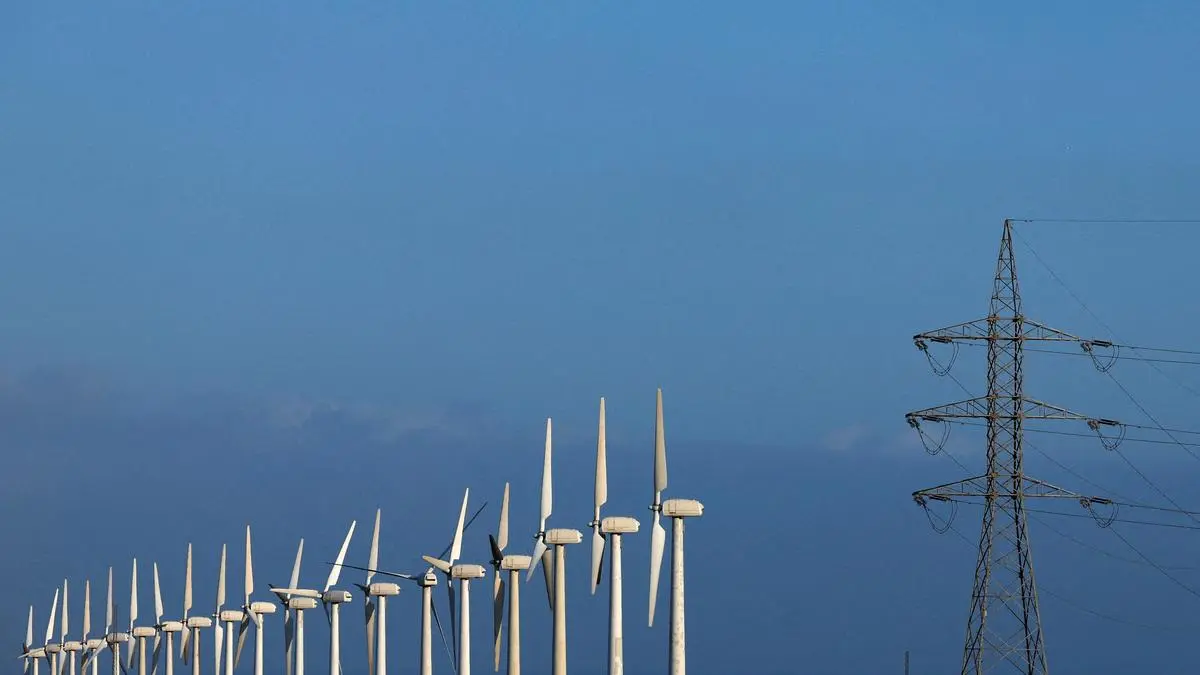
According to Ember, renewables accounted for 22% of global electricity compared to 20% from gas View More

Through the partnership, Redington will distribute FIMER’s technology for C & I customers, solar developers, EPCs and rooftop installers View More