
Latest Sectors News

We aspire to become a 5 GW solar power company by 2030, says Coal India Chairman and Managing Director B Sairam View More
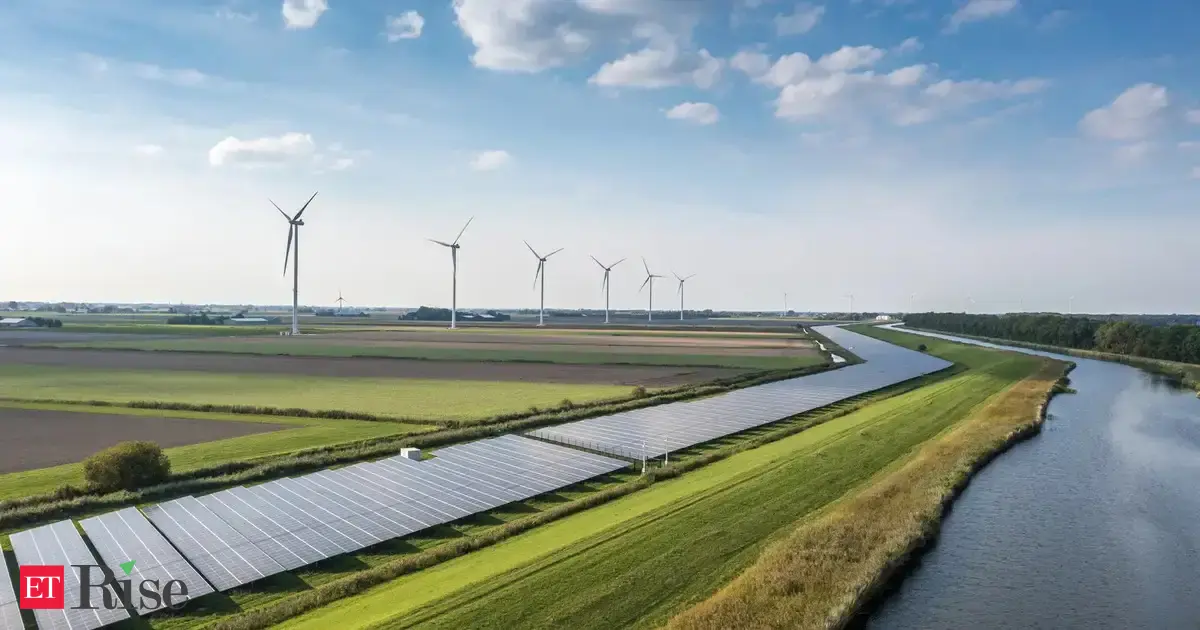
Global clean-energy manufacturing capacity now exceeds demand. Asia, led by China, dominates production, pushing prices down. This oversupply benefits clean energy as an alternative to rising oil prices. View More
Clean-energy manufacturers around the world now have double the production capacity needed to meet global renewable energy demand as factory output surges in Asia while the US and Europe lag behind. Production of the parts required to make solar, battery and wind energy far outstripped demand last year across the entire supply chain, BloombergNEF said in its 2026 Energy Transition Supply Chain report released Wednesday, reflecting rapid manufacturing growth in parts of Asia despite China’s enduring dominance. The oversupply pushed renewable-energy prices lower in 2025 before oil prices soared as a result of the war in Iran, strengthening the appeal of clean energy as an alternative to fossil fuels. Countries including Myanmar, Laos, Vietnam, Cambodia and Chile are responding to higher fuel prices with policies aimed at accelerating clean-technology adoption, according to the report. Bloomberg Expanded manufacturing capacity outside China is contributing to a worsening global supply glut, according to the report, as India, Turkey and countries in Southeast Asia ramp up solar output. Meanwhile, the US has tried to capture a larger share of the solar supply chain, though with limited success. US solar companies have won several trade cases aimed at shielding domestic producers through steep tariffs on cells and panels imported from China and Southeast Asian nations. Even so, excess global supply has continued to weigh on American manufacturers, and many new factory projects are being canceled or delayed due to policy uncertainty and international competition. “China is dominant on the manufacturing capacity side,” said Stephanie Muro, a BNEF analyst and one of the report’s authors. Other countries are slowly gaining ground, particularly for solar manufacturing, she said. Still, China controls more than 70% of manufacturing capacity for almost every renewable-energy segment. Live Events Bloomberg China’s dominance in finished solar modules is lingering behind solar cells, which are the components that convert sunlight into energy. That’s because the nature of solar output is shifting as more countries import components from China in order to build and export the final products themselves, according to the report. That trade shift was more noticeable last year, with solar cells making up 44% of solar-related global trade in 2025, up from 25% a year earlier. However, solar panel manufacturers across Southeast Asia still reflects China’s influence. About 80% of solar manufacturers in the region are Chinese companies as the country seeks lower labor costs and ways to avoid tariffs by building and exporting final products abroad, Muro said. Global battery-cell manufacturing was almost double demand last year and battery-powered electric vehicle demand also remained strong. Global plug-in hybrid EV sales climbed 83% in 2025 from a year earlier and pure battery EV sales rose 15%, helping total EV shipments climb to 6.4 million units from 4.9 million in 2024. .Pbanner{display:flex;justify-content:space-between;align-items:center;background-color:#ec1c40;margin-top:20px;padding:5px 10px;border-radius:4px;color:#fff;line-height:10px;} .Pbannertext{display:flex;align-items:center;font-size:16px;font-weight:600;font-family:'Montserrat';} .Pbannertext img{height:20px;margin:0 6px} .Pbannerbutton a{display:flex;align-items:center;background-color:#fff;color:#ec1c40;text-decoration:none;font-weight:600;padding:4px 8px;border-radius:6px;font-size:15px;font-family:'Montserrat';} .Pbannerbutton img{height:20px;margin-right:6px} .Pbannerbutton a:hover{background-color:#f7f7f7} Add as a Reliable and Trusted News Source Add Now!

Silver's rally of over 140% last year is deterring buyers in various industries and its elevated price levels are beginning to weigh on demand, UBS said. View More
In this articleXAG=@SI.1Follow your favorite stocksCREATE FREE ACCOUNT Silver bars stacked at the Perth Mint Refinery, operated by Gold Corp., in Perth, Australia, Feb. 5, 2026.Matt Jelonek | Bloomberg | Getty Images Silver's breakneck 2025 rally has created the conditions for demand destruction among buyers of the precious metal, according to analysts, who say prices could fall even further from last year's highs. The metal's wide range of industrial purposes means it is more sensitive to the economic cycle than gold, as an essential component in a variety of goods, from computers and mobile phones to solar panels and cars.  Silver price gains of around 140% last year have been deterring buyers in various industries and its elevated price levels are beginning to weigh on demand, UBS said in a note published on May 22. "The demand erosion is likely to persist as long as prices remain at current levels," they wrote. "Unlike gold, which benefits from robust central bank buying, silver lacks this strategic demand anchor and remains absent from official sector reserves. As a result, silver is more vulnerable to shifts in private investment and industrial demand, and is likely to lag gold." Stock Chart IconStock chart iconHow silver Comex futures have fared year-to-date. UBS believes the current investment case does not sufficiently reward investors for the associated volatility and, as such, it remains an "unappealing" position for them. Silver's remarkable run reached its peak on January 28 of this year when it punched through $120 an ounce before an almighty crash of almost 30% in a single day. Prices have recovered ground since hitting a 2026 low of $67.60 on March 20, but remain well below levels prior to the Iran war. Both spot silver and silver futures rose in May to trade at around $87 an ounce on May 14, before another selloff saw prices consolidate around the $75-78 mark over the past two weeks.Spot silver was last seen trading 3.7% lower at around $72.13 an ounce on Thursday, while front-month U.S. silver futures were also down 3.7% to settle at $72.16. But analysts at HSBC say the metal is "fundamentally overvalued" and could diverge from gold in its trajectory."We believe further room to the upside is limited as silver remains overvalued, in our view," they wrote in a note published on Thursday. "Gold prices will likely remain influential, but we believe the gold:silver ratio is likely to widen, allowing silver to ease even if gold rallies."Macquarie analysts also see little scope for a recovery in silver prices. Its strategists think the Federal Reserve will hike interest rates in the first half of 2027, lifting downward pressure on precious metal prices."Whilst we expect average silver prices to remain around this level for the rest of the year, volatility will remain until the situation in the Middle East is resolved, with meaningful downside risk if the macro situation deteriorates further," the Macquarie analysts wrote in a note published on May 21. Choose CNBC as your preferred source on Google and never miss a moment from the most trusted name in business news.
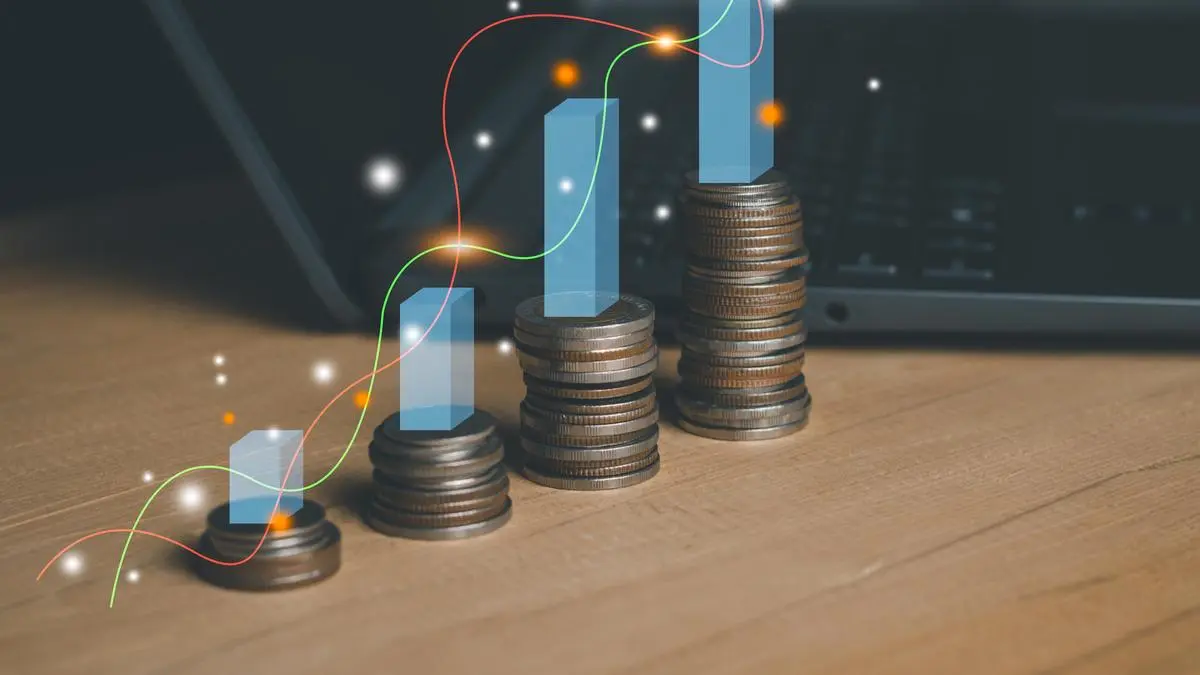
Energy investment in India has grown at an average annual rate of 11% over the past five years, with solar PV investment rising 25% annually and oil refining investment growing 23% View More

With SpaceX headed for the public markets next month, industry experts and people close to Elon Musk are speculating about a potential tie-up with Tesla. View More
In this articleTSLAFollow your favorite stocksCREATE FREE ACCOUNT watch nowVIDEO3:3803:38Speculation around SpaceX-Tesla merger builds upTechCheck As Elon Musk prepares to lead a second trillion-dollar company into the public market, a move that will likely put him in charge of two of the 10 most valuable U.S. enterprises, chatter is building that Musk's ultimate goal is to combine the entities into one. SpaceX is expected to start trading on the Nasdaq in just over two weeks after obtaining a private market valuation of $1.25 trillion earlier this year, when it merged with xAI, Musk's artificial intelligence company. Tesla's market cap currently sits at around $1.6 trillion. The two companies already have a laundry list of shared resources, and Musk has discussed with colleagues the possibility of folding the companies together, according to people familiar with the talks who asked not to be named due to the sensitivity of the topic. A current Tesla employee told CNBC that many workers at the electric vehicle company have long expected such a transaction to eventually take place and that the topic is openly discussed internally. Another person close to the company said that shared challenges tied to power and compute constraints have led to regular collaborations. watch nowVIDEO3:2703:27Wall Street is punishing companies not using AI: UniphoreInside India While a company launching rockets based on contracts with the government may not seem to have a lot in common with an EV manufacturer, both of the businesses are increasingly focused on AI and the talent and computing resources necessary to build AI infrastructure and services. More than three-quarters of SpaceX's $10.1 billion in capital expenditures in the first quarter were tied to AI, and Tesla said in its latest earnings report that capex will roughly triple this year, topping $25 billion. "Tesla has to run powerful AI systems inside a moving vehicle with tight limits on power, cooling, latency, reliability and cost," said Tomasz Tunguz, a former engineer who's now a venture capitalist at Theory Ventures. "SpaceX has to think about compute in orbit, where radiation, thermal cycling, launch mass, power generation and heat rejection all become existential design constraints."Tunguz said a potential merger has captured the attention of tech enthusiasts in Silicon Valley, but he concedes that a deal of that size would be "complex."Representatives from SpaceX and Tesla didn't respond to requests for comment. Musk, the world's richest person, is set to kick off SpaceX's roadshow next week, as he tries to sell Wall Street on the promises of the 24-year-old company that's already a big conglomerate. It consists of the reusable rocket business, the Starlink internet satellite service and xAI, which includes social media site X, formerly known as Twitter. SpaceX also has an agreement on the table to purchase AI coding startup Cursor for $60 billion. "I think it's been proven by Elon himself," said Tejpaul Bhatia, a longtime SpaceX investor and CEO of Nebex, a startup that's creating the financial infrastructure for space-related transactions. "Parallel entrepreneurship seems to work for him." Hefty overlap Tesla and SpaceX have spent years pooling resources and even sharing personnel. Musk sits on both boards, as does venture capitalist Ira Ehrenpreis, founder of DBL Partners. Musk's brother Kimbal is currently on Tesla's board and used to be a SpaceX director. SpaceX board members Antonio Gracias and Steve Jurvetson previously served on Tesla's board. And Charles Kuehmann is vice president of materials engineering for Tesla and SpaceX, joining from Apple a decade ago, and is known for playing a key role in troubleshooting key design issues.In January, Tesla revealed it had invested $2 billion in xAI. Those shares became holdings in SpaceX following that company's merger with xAI the following month. SpaceX said in its prospectus that it bought $697 million worth of Tesla's Megapack battery energy storage systems in 2024 and 2025 to power the data centers owned and operated by xAI in the area surrounding the company's Colossus facilities in Memphis, Tennessee. SpaceX also said it spent $131 million on Tesla Cybertrucks in 2025, purchased at the manufacturer's suggested retail price. Prior transactions between the companies included Tesla selling solar equipment and car parts to SpaceX, Tesla using SpaceX private jets, and Tesla leaning on SpaceX to develop a special alloy for its Cybertruck.Suppliers sometimes view Musk's companies as one big customer. In 2024, Nvidia agreed to divert a $500 million order of GPUs from Tesla to xAI at Musk's request. A Tesla Cybertruck drives past SpaceX facilities in Hawthorne, California, US, on Monday, April 13, 2026.Ethan Swope | Bloomberg | Getty Images Legal experts said that a SpaceX-Tesla merger likely wouldn't spark antitrust issues but it would potentially raise concerns among shareholders in each of the two companies. Questions around which company would be the parent, how a stock swap would take place, and who determines the appropriate price are among the thorny challenges. One thing that's almost certain is Musk won't have to worry about pushback from SpaceX's board, given that the the CEO has 85% voting power. In the risk factors section of its prospectus, SpaceX notes that it's a "controlled company," which allows for exceptions when it comes to governance rules and means that Class A shareholders "will not have the same protections afforded to shareholders of companies that are subject to all of the corporate governance requirements" of the Nasdaq. The biggest beneficiary of a tie-up between SpaceX and Tesla could be Musk. SpaceX has linked Musk's compensation rewards to two milestones: achieving a $7.5 trillion market cap and colonizing Mars with at least 1 million inhabitants. Meanwhile, Tesla shareholders approved a pay plan late last year that consists of 12 tranches, with each payout tied to market cap gains and operational achievements. Ross Gerber, CEO of investment firm Gerber Kawasaki, previously told CNBC that a merger of SpaceX and Tesla would allow Musk to fulfill a dream of running one big company and that it would make it easier to raise and borrow the kinds of cash needed to compete in AI with the likes of Google. Bhatia said a combination would be more about recognizing the opportunity ahead in SpaceX's core market. "I believe that the space market is huge right now," Bhatia said. "And it's just going to get bigger after the SpaceX IPO." Correction: A prior version of this story incorrectly identified Kimbal Musk's current board seats.WATCH: Betting on Musk's space ambitions watch nowVIDEO7:2007:20Betting on Musk's space ambitions: ARK Invest's Brett Winton on SpaceX's valuationSquawk Box Choose CNBC as your preferred source on Google and never miss a moment from the most trusted name in business news.
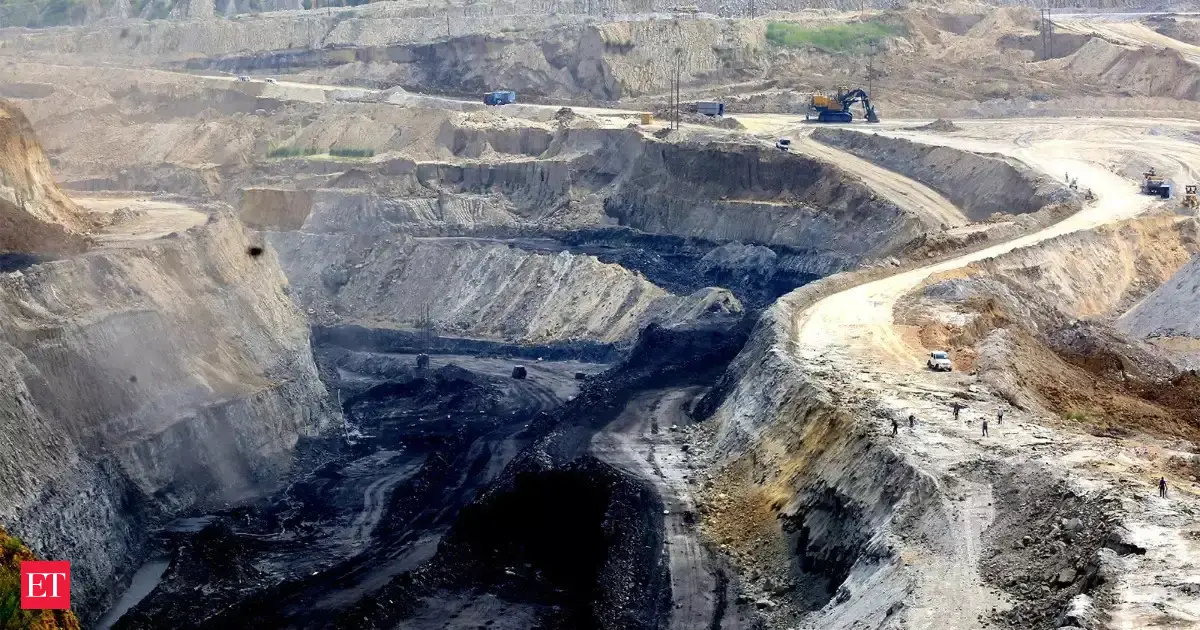
Coal India has built a substantial buffer of 168 million tonnes to meet rising summer power demand. Stocks at power plants and mine heads are robust, ensuring adequate supply for domestic coal-based plants. This proactive measure addresses concerns about potential shortages. India's peak power demand has reached new highs due to heatwaves. Coal India's preparedness aims to prevent any disruption. View More
New Delhi: State-owned CIL on Tuesday allayed fears of coal shortage , saying it has built up a buffer of 168 million tonnes (MT) to meet increased demand during the summer season. The company said it has an adequate quantity to meet the generation capacity of domestic coal-based plants, even as daily consumption of the dry fuel by thermal power plants soared. In a statement, the PSU said its coal stocks at domestic coal-based power plants stood at 47.6 million tonnes (MT) as on May 23, while inventory at the mine heads was at a comfortable 113.5 MT on May 24, up about 10 per cent from the year-ago, adding that this level is sufficient to meet 19 days of consumption. Also Read: India’s scorching nights strain power grid and threaten health "Added to this, around three MT of coal is awaiting transit points such as goods sheds, private washeries and ports. Rakes on Run, that is, coal in transit at any point of time is around 4 MT, making a total of 168 MT of coal available in the system," the statement said. Live Events Compression of coal stock levels at coal-fired plants during peak summer is a natural occurrence rather than a supply-side crisis, the PSU said. Along with coal adequacy, there is around 50 million tonnes of in-situ mine coal on tap, ready for quicker extraction and supply if the demand necessitates. Of the 21 plants categorised under criticality (as of May 20), 11 are domestic coal-based plants, of which seven source their coal from CIL. CIL has been corresponding with power plants to build up their stocks for peak demand periods in advance, when there is ample coal, especially in the case of the plants located at difficult logistic points. Coal India accounts for over 80 per cent of domestic coal output. India's peak power demand hit a record high of 270.82 GW on Thursday, surpassing its previous record of 265.44 set on Wednesday, as the prevailing heat wave increased the use of cooling devices like air conditioners and desert coolers. Also Read: Solar surge hits coal wall, 300 GWh of clean power wasted in Q1 of 2026 Last summer, the peak power demand was 242.77 GW, recorded in June, 2025, but stayed below the government's estimate of 277 GW. In May 2024, the peak power demand reached 250 GW, a record at that time and exceeding the previous all-time peak of 243.27 GW set in September 2023. .Pbanner{display:flex;justify-content:space-between;align-items:center;background-color:#ec1c40;margin-top:20px;padding:5px 10px;border-radius:4px;color:#fff;line-height:10px;} .Pbannertext{display:flex;align-items:center;font-size:16px;font-weight:600;font-family:'Montserrat';} .Pbannertext img{height:20px;margin:0 6px} .Pbannerbutton a{display:flex;align-items:center;background-color:#fff;color:#ec1c40;text-decoration:none;font-weight:600;padding:4px 8px;border-radius:6px;font-size:15px;font-family:'Montserrat';} .Pbannerbutton img{height:20px;margin-right:6px} .Pbannerbutton a:hover{background-color:#f7f7f7} Add as a Reliable and Trusted News Source Add Now! (You can now subscribe to our Economic Times WhatsApp channel) (You can now subscribe to our Economic Times WhatsApp channel)
Waaree Energies has targeted 20 Giga Watt Hours in BESS capacity by FY28, Vikram Solar 15GWh by 2030, and Premier Energies 6GWh by March 2027 View More

ACME Solar's shares rebounded with a 3% increase following its announcement of a 25-year power purchase agreement with SECI for 300 MW. The stock has seen a 28% year-to-date gain. View More
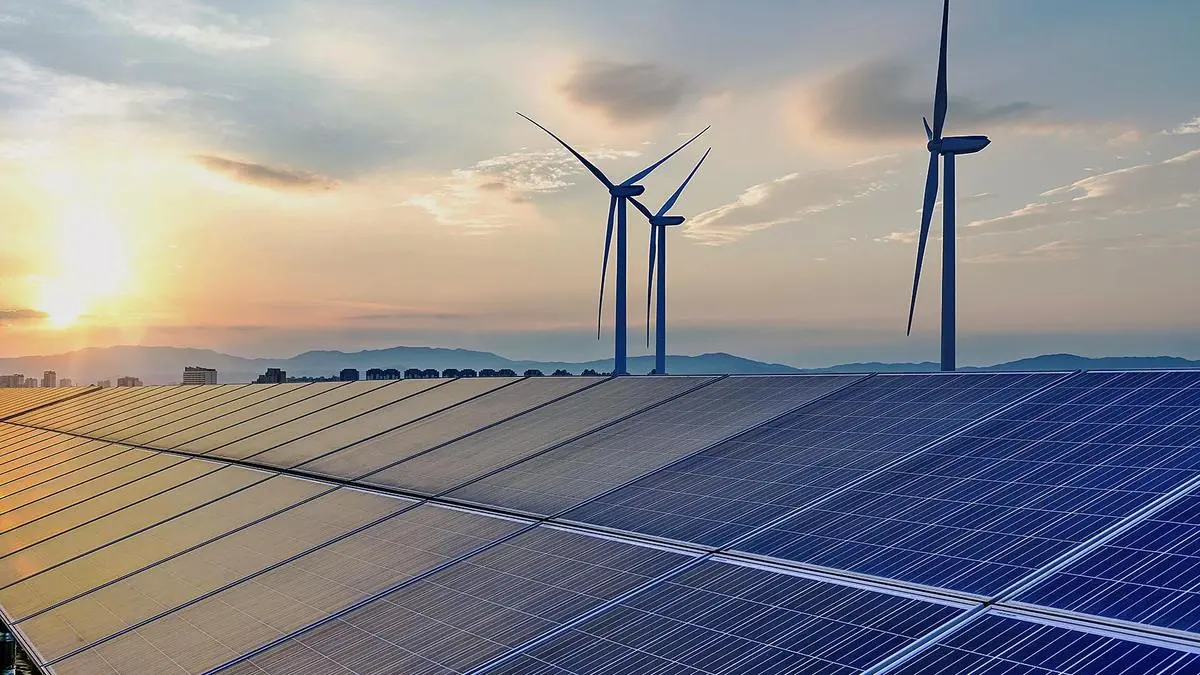
The community declared that solar prosumers should no longer be viewed as passive electricity consumers, but as active investors and partners in Kerala’s clean energy transition View More

All but one of India’s top listed solar module companies reported nil exports during the quarter ended 31 March. Market leader Waaree Energies Ltd, which had so far managed to protect its exports to the US, also reported fewer outbound shipments during the fourth quarter of FY26. View More